

Slow fashion cultural wear is the deliberate creation and use of garments that honor both sustainable production and living cultural traditions. Unlike fast fashion, which prioritizes speed and low cost, this approach treats clothing as a carrier of identity, history, and community memory. The UN Environment Programme reports that fast fashion accounts for approximately 10% of global carbon emissions. That number reveals how much damage disposable clothing causes, and why a more intentional path matters. Slow fashion cultural wear sits at the intersection of slow fashion ethics, artisanal craft, and cultural preservation, making it one of the most meaningful ways to engage with what is sustainable fashion today.
What is slow fashion cultural wear and how does it work?
Slow fashion cultural wear is defined by three core commitments: ethical labor, environmental stewardship, and the preservation of cultural heritage through clothing. The term builds on the broader slow fashion movement, which opposes fast fashion cycles by prioritizing quality, longevity, and fair wages. What makes cultural wear distinct is the added layer of meaning. Each garment carries story, technique, and identity passed down through generations.
This is not nostalgia. Traditional textile revitalization actively reconstructs cultural identity and historical continuity in modern communication. A hand-woven Kente cloth from Ghana, a naturally dyed indigo garment from West Africa, or an embroidered piece rooted in indigenous craft traditions all function as living records of a people’s knowledge. Slow fashion cultural wear treats those records as worth protecting, not mass-producing.
The contrast with fast fashion is sharp. Fast fashion strips cultural motifs from their context and reproduces them cheaply, without credit or compensation to origin communities. Slow fashion cultural wear does the opposite. It centers the artisan, the technique, and the community, then builds a garment around that foundation.
How do traditional craftsmanship methods shape slow fashion cultural wear?
Artisanal techniques are the backbone of sustainable cultural attire. Hand-weaving, natural dyeing with plant-based pigments, and hand embroidery each require time, skill, and cultural knowledge that cannot be replicated by a factory machine. These methods are not inefficiencies to be eliminated. They are the point.
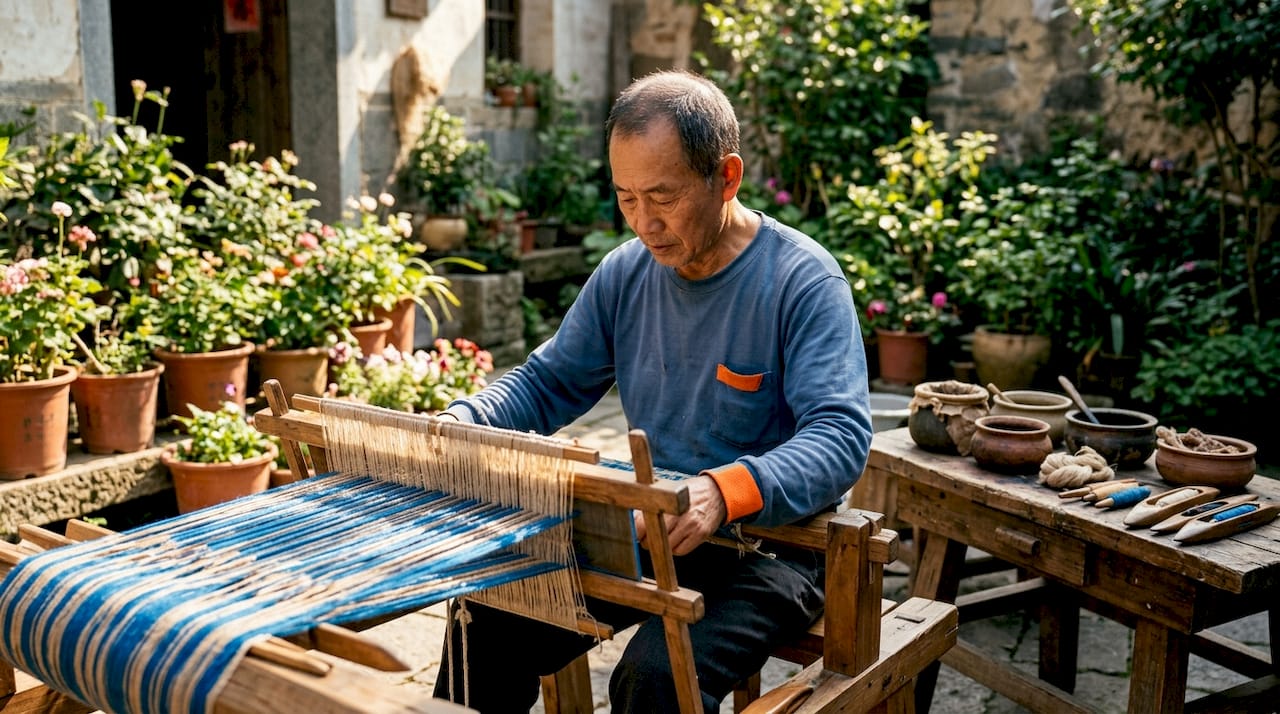
Indigenous knowledge shapes what we wear, make, and value in ways that mass production cannot. When an artisan uses a dyeing technique passed down over centuries, the resulting garment holds cultural authority that a screen-printed replica never will. Slow fashion cultural wear preserves that authority by keeping production in the hands of the communities who created these traditions.
The table below shows how traditional craftsmanship differs from mass production across key dimensions:
| Dimension | Traditional craftsmanship | Mass production |
|---|---|---|
| Production speed | Weeks to months per piece | Hours per unit |
| Labor source | Skilled artisans, often community-based | Factory workers, often underpaid |
| Materials | Natural, locally sourced fibers and dyes | Synthetic, globally sourced |
| Cultural knowledge | Embedded in every technique | Absent or superficial |
| Environmental impact | Low waste, biodegradable | High waste, synthetic pollution |
| Garment lifespan | Decades with care | Often less than one season |
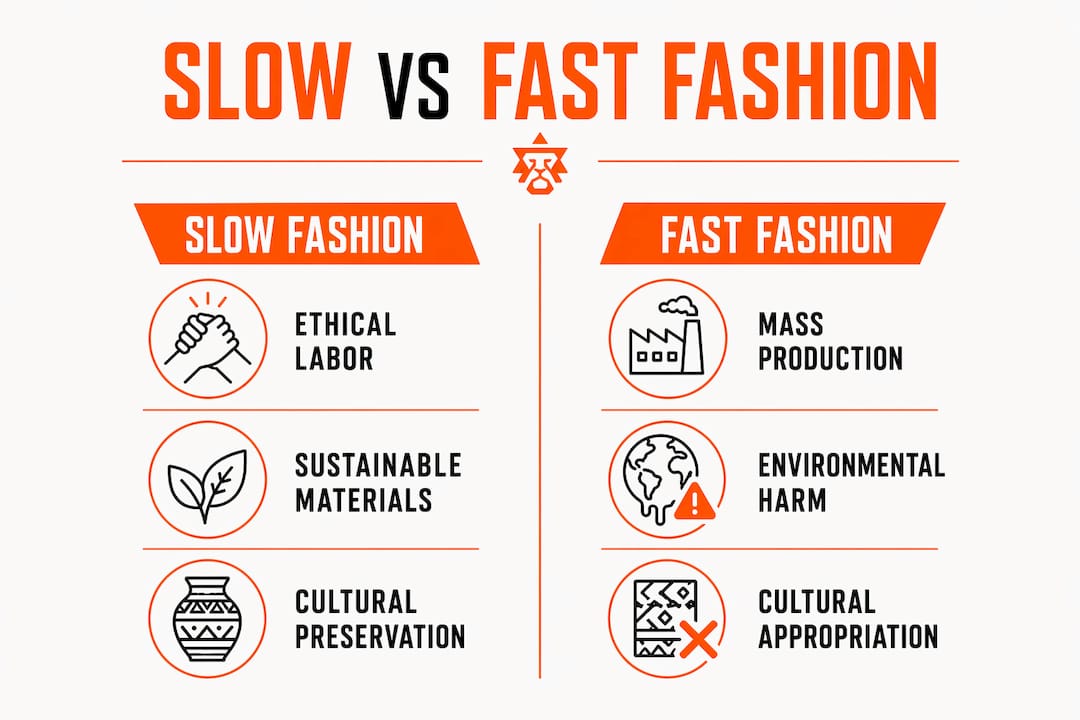
Slow fashion also resists cultural homogenization. When global fashion trends flatten regional aesthetics into a single commercial style, entire visual languages disappear. Artisanal slow fashion cultural wear keeps those languages alive by maintaining the integrity of traditional motifs in contemporary design. The cultural impact of fashion is most positive when it centers the source community rather than extracting from it.
Key characteristics of traditional craftsmanship in slow fashion cultural wear include:
- Hand techniques: weaving, embroidery, and natural dyeing that encode cultural meaning
- Community production: artisans working within their origin communities, not displaced factories
- Material integrity: natural fibers like cotton, linen, and wool that biodegrade and age well
- Knowledge transfer: skills passed from elder to apprentice, keeping traditions alive
What are the ethical and environmental impacts of slow fashion cultural wear?
The environmental case for slow fashion cultural wear is direct. Fast fashion’s 10% share of global carbon emissions comes from overproduction, synthetic materials, and rapid disposal. Slow fashion counters each of those drivers. Garments made in small batches or made-to-order generate less waste. Natural materials biodegrade. Higher quality means longer use.
The labor case is equally clear. Higher prices reflect the true cost of fair wages and sustainable practices, compared to fast fashion’s hidden subsidies of poverty wages and environmental damage. When you pay more for a slow fashion cultural garment, you are paying the artisan what their skill is worth. That is not a premium. That is the actual price.
Small batch and made-to-order production models extend garment life and personalize wardrobes in ways that mass production cannot. A garment made specifically for you, using techniques refined over generations, fits differently in every sense of the word.
The benefits of slow fashion cultural wear over fast fashion include:
- Reduced textile waste from small batch and made-to-order production
- Lower carbon footprint through natural materials and local supply chains
- Fair wages for artisans who carry specialized cultural knowledge
- Longer garment lifespan through quality construction and natural fibers
- Circular lifecycle practices like repair, hand-me-downs, and natural material composting
Pro Tip: When evaluating a brand’s slow fashion ethics, ask three questions: Who made this? What materials were used? Can I trace the supply chain? Brands with genuine commitments answer all three without hesitation.
How does slow fashion cultural wear express identity and preserve culture?
Clothing has always been a form of communication. Slow fashion cultural wear takes that function seriously by treating garments as socio-cultural identity badges that mediate the tension between globalization and cultural belonging. For members of the African diaspora, wearing culturally rooted garments is not a costume choice. It is an act of memory and affiliation.
Clothing carries story, culture, and connection when made with knowledge and responsibility. A graphic tee featuring Adinkra symbols, a hoodie drawing on Pan-African color traditions, or an accessory rooted in West African textile patterns all function as wearable storytelling. They communicate group identity, historical continuity, and pride without a single word.
Cultural appropriation is the shadow side of this conversation. Proper credit and compensation of indigenous artisans are not optional courtesies. They are the ethical floor of slow fashion cultural wear. When cultural motifs are used without authentic collaboration with origin communities, the harm is real: economic extraction, misrepresentation, and the erosion of cultural meaning.
Respecting cultural protocols in slow fashion cultural wear means:
- Buying directly from or through brands that partner authentically with origin communities
- Learning the meaning behind motifs before wearing them
- Avoiding pieces that use sacred or ceremonially restricted designs in casual contexts
- Prioritizing brands that name and compensate their artisans publicly
Pro Tip: Authentic engagement with cultural wear starts with curiosity. Ask the brand where the design comes from and who created it. A brand that cannot answer that question has not done the work.
How to adopt slow fashion cultural wear in your wardrobe
Shifting to slow fashion cultural wear requires a different consumer mindset. Slow fashion demands a move from convenience to stewardship, valuing long-term relationships with clothing over seasonal turnover. That shift is practical, not just philosophical.
Start by verifying supply chain transparency. Ethical brands publish information about their production partners, material sources, and labor practices. If that information is not publicly available, the brand has not earned the slow fashion label. Consumers adopting slow fashion must accept higher costs as a reflection of fair wages and quality, not as a markup.
- Research before you buy. Look for brands that name their artisans, describe their materials, and explain their production process.
- Budget for quality. One well-made cultural garment worn for years costs less per wear than ten cheap pieces discarded in a season.
- Accept production timelines. Made-to-order and small batch pieces take longer. That wait is part of the value.
- Repair before replacing. Traditional circular habits like repair and hand-me-downs reduce impact and extend garment life significantly.
- Buy secondhand when possible. Pre-owned cultural garments carry history and reduce demand for new production.
The table below compares fast fashion and slow fashion cultural wear consumer behaviors:
| Behavior | Fast fashion consumer | Slow fashion cultural wear consumer |
|---|---|---|
| Purchase frequency | High, seasonal or trend-driven | Low, intentional |
| Price sensitivity | Prioritizes lowest cost | Accepts higher cost for quality and ethics |
| Brand knowledge | Minimal | Researches supply chain and artisan background |
| Garment lifespan | Short, often one season | Long, often years or decades |
| End-of-life practice | Landfill or donation | Repair, hand-me-down, or compost |
Pro Tip: Build a capsule wardrobe around three to five culturally rooted pieces you love deeply. Fewer, better garments worn often beat a closet full of pieces worn once.
Key Takeaways
Slow fashion cultural wear is the most direct way to align your clothing choices with both environmental responsibility and genuine cultural respect.
| Point | Details |
|---|---|
| Core definition | Slow fashion cultural wear combines ethical production, sustainability, and cultural heritage preservation in every garment. |
| Environmental impact | Fast fashion drives roughly 10% of global carbon emissions; slow fashion counters this through quality, longevity, and natural materials. |
| Artisan value | Traditional hand-weaving, natural dyeing, and embroidery preserve cultural knowledge that mass production cannot replicate. |
| Ethical consumption | Higher prices reflect fair wages and sustainable practices, not arbitrary markups. |
| Cultural respect | Authentic engagement requires knowing who made a garment, what it means, and whether origin communities were credited and compensated. |
Why I think slow fashion cultural wear is the most honest form of activism
I have spent years watching the fashion conversation cycle through trends, sustainability pledges, and cultural moments. What strikes me most is how rarely those threads connect. Slow fashion cultural wear connects them. It is the only category where buying a garment is simultaneously an environmental act, a labor rights act, and a cultural preservation act.
Supporting slow fashion cultural wear is not just buying clothes. It is preserving human history and knowledge systems that took centuries to develop. That framing changes everything about how you shop. You stop asking “Is this affordable?” and start asking “Is this worth preserving?”
The consumer mindset shift required here is real and uncomfortable. Moving from extraction to responsibility means accepting that your convenience has historically come at someone else’s expense. That is a hard truth, but it is the foundation of genuine change.
What I find most compelling is the economic dimension. When diaspora communities buy culturally rooted garments from brands that honor their heritage, they fund artisan livelihoods, sustain traditional knowledge, and build economic power within their own communities. That is not a side effect. That is the point.
— Kebz
Afrourbanapparel: where slow fashion meets African cultural identity
Afrourbanapparel was built on the belief that identity should be woven into daily life, not reserved for special occasions. Every piece in the collection fuses traditional African cultural motifs with modern streetwear construction, using heavyweight fabrics built to last well beyond a single season.
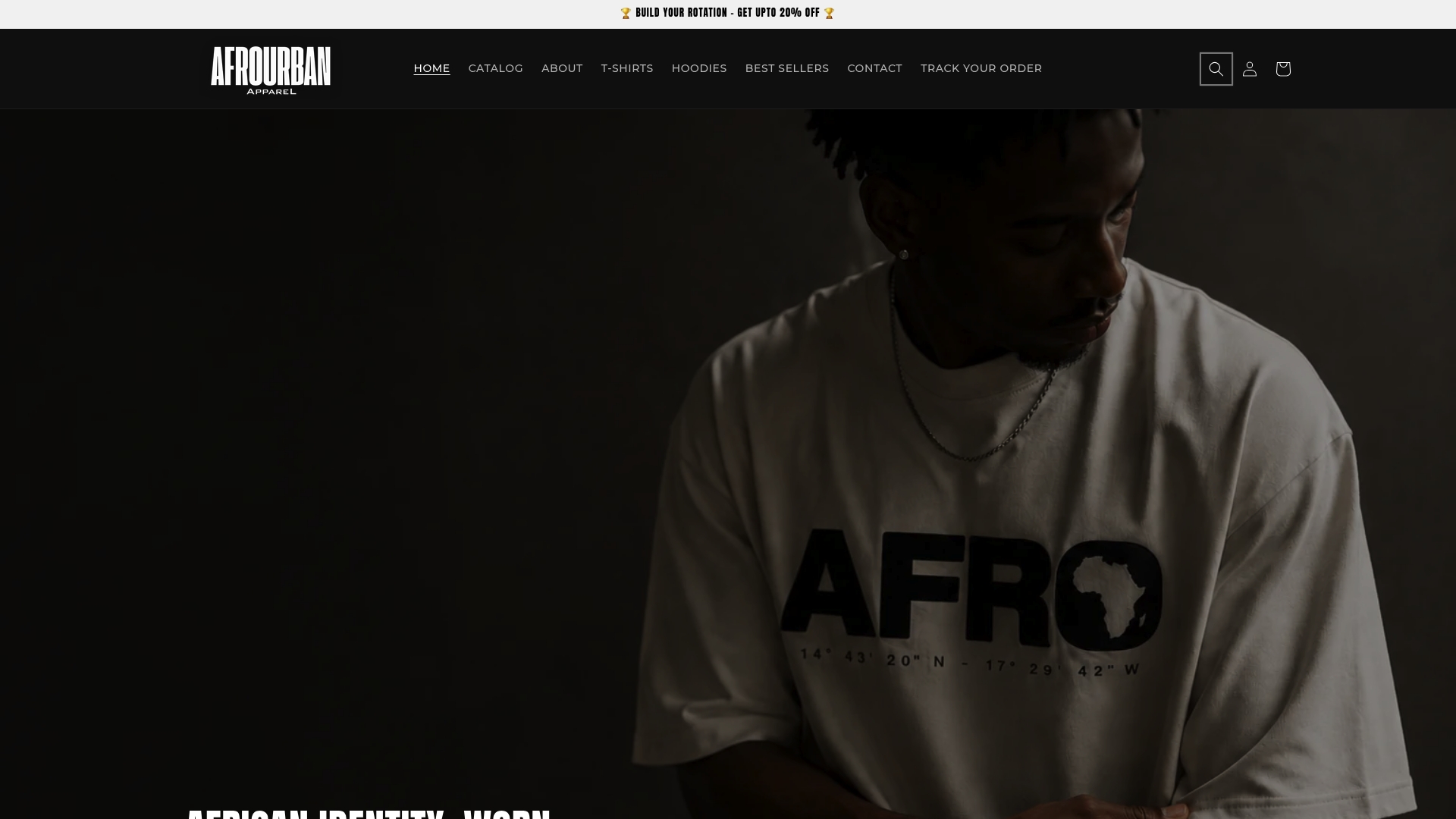
The African-inspired streetwear at Afrourbanapparel reflects slow fashion values in practice: culturally grounded design, quality materials, and production that respects the heritage it draws from. Whether you are looking for a statement graphic tee or a heavyweight hoodie that carries cultural meaning in every thread, the collection offers pieces worth owning for years. For the African diaspora and anyone who values fashion with real roots, Afrourbanapparel is a direct answer to the question of how to embrace slow fashion without sacrificing cultural pride.
FAQ
What is slow fashion cultural wear in simple terms?
Slow fashion cultural wear is clothing made with ethical labor, sustainable materials, and traditional cultural techniques that preserve heritage. It prioritizes quality and meaning over speed and low cost.
How does slow fashion cultural wear differ from fast fashion?
Fast fashion produces garments quickly and cheaply, often stripping cultural motifs from their context. Slow fashion cultural wear centers artisan skill, fair wages, and cultural authenticity in every piece.
Why does slow fashion cultural wear cost more?
Higher prices reflect fair wages for skilled artisans, quality natural materials, and small batch or made-to-order production. The true cost of labor and sustainability is built into the price, not hidden.
How do I avoid cultural appropriation when buying cultural wear?
Buy from brands that partner authentically with origin communities, name their artisans, and explain the cultural meaning behind their designs. Proper credit and compensation of indigenous creators is the ethical standard.
What are the environmental benefits of slow fashion cultural wear?
Slow fashion cultural wear reduces textile waste through small batch production, uses natural biodegradable materials, and extends garment lifespan through quality construction. These practices directly counter fast fashion’s outsized environmental damage.