

Ethical fabric sourcing is defined as the verified selection of textiles through transparent, multi-tier supply chains that protect labor rights and minimize environmental harm. The four supply chain tiers that require visibility are fiber farms, raw material processors, textile mills, and garment factories. Certifications like GOTS (Global Organic Textile Standard), GRS (Global Recycled Standard), and Fair Trade are the primary markers that verify these claims. The types of ethical fabric sourcing in fashion are not interchangeable. Each fabric serves a specific garment purpose, and choosing the wrong one undermines both sustainability goals and social impact. Over 350 million livelihoods depend on the cotton industry alone, which shows exactly how much is at stake when brands make uninformed sourcing decisions.
1. Organic cotton: the ethical baseline for everyday apparel
Organic cotton is the most widely recognized ethical fabric choice for skin-contact basics and everyday wear. It is grown without synthetic pesticides or fertilizers, which protects both farmworker health and surrounding ecosystems. When water management practices are sound, organic cotton uses significantly less water than conventional cotton farming.
GOTS certification is the gold standard for verifying organic cotton from fiber to finished garment. It covers not just agricultural inputs but also labor conditions at every processing stage. That dual focus on environment and people is what separates GOTS from weaker, single-issue certifications.
- Grown without harmful pesticides or synthetic fertilizers
- Traceable farming practices support fair labor verification
- GOTS certification covers the full supply chain
- Best suited for T-shirts, basics, and skin-contact garments
- Supports artisan communities when sourced from small-scale farms
Pro Tip: Ask brands for their GOTS transaction certificate number. Any certified brand can provide it. If they cannot, the certification claim is unverified.
2. Recycled polyester (rPET): circular sourcing for performance wear

Recycled polyester, known as rPET, is made from post-consumer plastic waste including bottles and ocean-recovered plastics. It reduces landfill volume and lowers dependence on virgin petroleum-based polyester. That makes it a strong choice for activewear and durable fashion where synthetic performance properties are needed.
The GRS (Global Recycled Standard) is the key certification to look for with rPET. It verifies recycled content claims and tracks material through the supply chain. Without GRS, a “recycled” label is marketing, not verification.
- Diverts plastic waste from landfills and oceans
- Reduces reliance on virgin petroleum-based fibers
- GRS certification verifies recycled content claims
- Best suited for sportswear, outerwear, and performance garments
- Microplastic shedding during washing remains an unresolved challenge
The microplastic issue is real and worth understanding. Every wash cycle releases synthetic microfibers into waterways. Washing bags like Guppyfriend can reduce shedding, but they do not eliminate it. Brands using rPET should acknowledge this trade-off rather than present the fabric as a complete solution.
3. TENCEL™ Lyocell and regenerated cellulose fibers
TENCEL™ Lyocell is a regenerated cellulose fiber made from sustainably managed wood pulp. Its defining feature is a closed-loop solvent recovery process that recaptures up to 99% of the chemical solvent used in production. That figure makes it one of the most chemically responsible fibers available at scale.
The fabric is biodegradable, soft against skin, and drapes well. Those properties make it ideal for shirts, dresses, and layering pieces where comfort and movement matter. Modal, another regenerated cellulose fiber, shares similar properties and is often blended with organic cotton for added softness.
- Derived from sustainably managed wood pulp or agricultural waste
- Closed-loop process recovers up to 99% of production solvents
- Biodegradable under the right composting conditions
- Certifications like FSC (Forest Stewardship Council) verify wood pulp sourcing
- Best suited for soft, drapey garments and skin-sensitive applications
Pro Tip: TENCEL™ is a branded fiber from Lenzing AG. “Lyocell” is the generic fiber category. Not all lyocell uses the same closed-loop process, so always check whether the brand specifies TENCEL™ or a verified equivalent.
4. Hemp and linen: low-impact natural fibers with deep roots
Hemp and linen are two of the oldest cultivated fibers in human history, and they remain among the most environmentally sound options available. Both require minimal pesticides and far less water than conventional cotton. Hemp in particular improves soil health through a process called phytoremediation, where the plant pulls toxins from the ground as it grows.
Linen comes from the flax plant and is fully biodegradable. It grows well in poor soil conditions without irrigation in many European climates. Both fibers produce durable, breathable textiles that age well, which supports a quality-over-quantity approach to clothing.
- Hemp requires minimal pesticides and improves soil health
- Linen is fully biodegradable and grows with minimal water input
- Both fibers produce durable, breathable textiles
- Certifications like OEKO-TEX Standard 100 verify chemical safety in processing
- Best suited for casual wear, workwear, and warm-weather garments
“Sourcing from artisan collectives supports cultural preservation, provides economic empowerment, and protects traditional skills that cannot be automated. Ethical storytelling and fair payment connect consumers to producers through genuine transparency.” Cultural significance of sustainable fashion
Hemp and linen sourced directly from artisan cooperatives carry an additional layer of ethical value. The transaction supports a living wage, preserves traditional weaving knowledge, and keeps regional textile economies alive.
5. Silk: animal welfare and artisan ethics
Silk is a protein fiber produced by silkworms, and its ethical status depends entirely on how it is sourced. Conventional silk production involves boiling silkworm cocoons while the pupae are still alive. Peace silk (also called Ahimsa silk) allows the moth to emerge before harvesting the cocoon, which addresses the core animal welfare concern.
Beyond animal welfare, silk production is deeply tied to artisan communities across South Asia and East Africa. Purchasing handmade from artisan communities sustains local economies and protects cultural heritage that mass production cannot replicate. Direct sourcing from these communities, with fair-trade contracts, is the most ethical path for brands working with silk.
Silk is best suited for premium garments, accessories, and pieces where the fiber’s natural sheen and temperature-regulating properties justify the cost. Brands that source silk ethically should be able to name their supplier community and describe the payment structure.
6. Deadstock and upcycled fabrics: sourcing what already exists
Deadstock fabric is surplus textile that was produced but never used. Sourcing deadstock prevents existing material from going to landfill and requires no new fiber production. That makes it one of the lowest-impact sourcing options available, though it comes with real constraints.
Deadstock is available in limited quantities, which makes it difficult to scale. Color and composition consistency can vary between rolls. For small-batch or limited-edition collections, these constraints are manageable. For high-volume production, deadstock alone cannot meet demand.
Upcycled fabric takes the concept further by transforming discarded garments or textile waste into new material. Both approaches reflect the principle that ethical and sustainable fashion must integrate environmental and social priorities rather than treating them as separate concerns.
7. Comparing ethical fabric types: a practical reference
No single fabric wins across every category. The right choice depends on garment type, production volume, and which ethical priorities matter most to the brand and its customers.
| Fabric | Best garment use | Key certification | Main trade-off |
|---|---|---|---|
| Organic cotton | Basics, T-shirts | GOTS | Higher cost than conventional cotton |
| Recycled polyester | Activewear, outerwear | GRS | Microplastic shedding |
| TENCEL™ Lyocell | Soft garments, dresses | FSC, OEKO-TEX | Requires careful washing |
| Hemp | Casual wear, workwear | OEKO-TEX Standard 100 | Limited color range |
| Linen | Warm-weather wear | OEKO-TEX Standard 100 | Wrinkles easily |
| Peace silk | Premium, accessories | Supplier transparency | Limited supply |
| Deadstock | Limited editions | None standard | Inconsistent availability |
The table above shows that certifications are not uniform across fabric types. Some fibers rely on process certifications (GOTS, GRS), while others depend on chemical safety standards (OEKO-TEX) or supplier-level transparency. Ongoing multi-tier verification matters more than any single certificate because certifications verify a moment in time, not continuous compliance.
Key takeaways
Ethical fabric sourcing requires matching the right certified material to the right garment use while maintaining verified, ongoing transparency across all supply chain tiers.
| Point | Details |
|---|---|
| Match fabric to garment purpose | Organic cotton suits basics; rPET suits activewear; TENCEL™ suits soft, drapey pieces. |
| Certifications verify, not guarantee | GOTS, GRS, and Fair Trade set baselines but require ongoing supplier audits to stay valid. |
| Multi-tier transparency is non-negotiable | Visibility must extend from fiber farms through factories to catch hidden labor and environmental risks. |
| Artisan sourcing preserves culture | Direct partnerships with artisan collectives protect traditional skills and support fair wages. |
| No fabric is perfect | Every ethical material involves trade-offs; informed choice beats uninformed idealism. |
Why certifications are only the starting point
I have spent years watching brands treat a GOTS certificate like a finish line. They get the paperwork, post it on their website, and consider the job done. That is not how ethical sourcing works.
True ethical sourcing is an active verification system. It requires supplier audits, upstream relationship building, and the willingness to ask uncomfortable questions about Tier 2 and Tier 3 partners. A factory can hold a Fair Trade certificate while sourcing yarn from a mill with no labor protections. The certificate does not catch that. Only ongoing engagement does.
What I find most undervalued in this conversation is the cultural dimension. Fabrics like silk, hand-loomed hemp, and traditional wax prints carry histories that belong to specific communities. Sourcing those materials without fair-trade contracts and genuine community collaboration is appropriation dressed up as sustainability. The brands getting this right are the ones building long-term relationships with artisan suppliers, not just buying from them once.
My honest position: buy less, buy better, and demand that brands name their suppliers. If a brand cannot tell you where their fiber was grown, the ethical claim is incomplete.
— Kebz
Afrourbanapparel: where ethical sourcing meets cultural identity
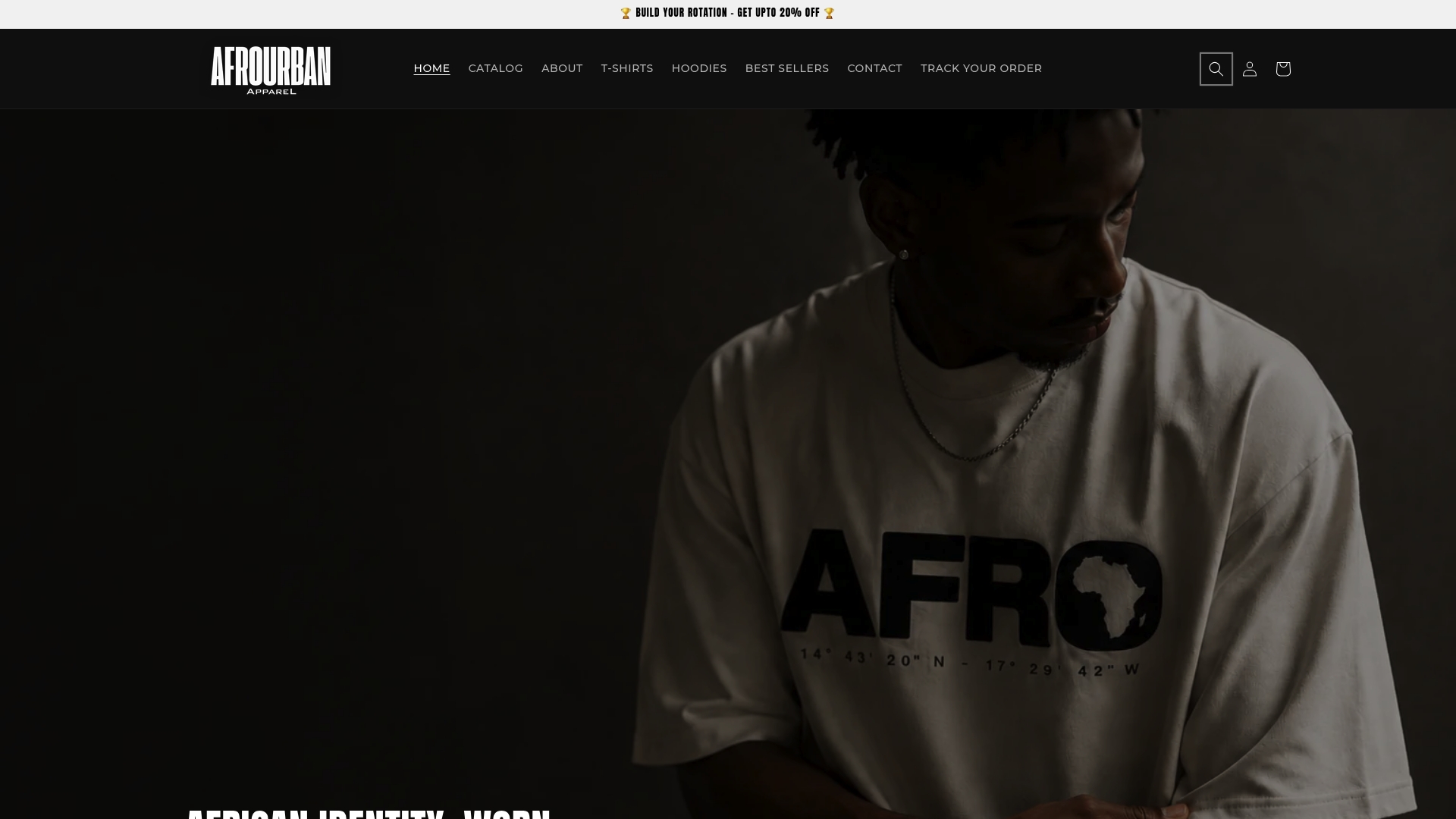
Afrourbanapparel builds every piece around two commitments: ethical fabric sourcing and genuine cultural representation. The brand works with suppliers who prioritize labor dignity and material transparency, so the clothing you wear carries a story you can stand behind. The heavyweight fabrics used across the collection are chosen for durability and comfort, not just aesthetics.
The African-inspired streetwear at Afrourbanapparel reflects the belief that identity belongs in everyday life, not just special occasions. From the Afro Renaissance Hoodie to the statement tee collection, each piece fuses traditional African design with modern apparel built to last. If you care about what your clothes are made from and what they stand for, this is where to start.
FAQ
What is ethical fabric sourcing in fashion?
Ethical fabric sourcing is the verified selection of textiles through transparent supply chains that protect labor rights and reduce environmental harm. It requires visibility across fiber farms, processors, mills, and factories.
Which certifications matter most for ethical fabrics?
GOTS verifies organic fiber and labor conditions, GRS verifies recycled content, and Fair Trade verifies fair wages. Each certification covers different aspects, so strong sourcing uses more than one.
Is recycled polyester truly sustainable?
Recycled polyester reduces landfill waste and lowers virgin petroleum use, but it sheds microplastics during washing. GRS-certified rPET is the most verified option, but the microplastic trade-off remains a real concern.
Why does ethical fashion support cultural preservation?
Sourcing from artisan collectives sustains traditional skills, supports fair wages, and keeps regional textile economies alive. Ethical storytelling connects consumers to producers through transparency rather than exploitation.
How is TENCEL™ Lyocell different from regular lyocell?
TENCEL™ is a branded lyocell fiber from Lenzing AG that uses a closed-loop solvent recovery process capturing up to 99% of production chemicals. Generic lyocell does not always use the same process, so the brand name matters when verifying environmental claims.