

If you need a t-shirt that lasts, choose a heavyweight tee with true reinforced seams — double or triple-needle stitching — and a fabric weight between 150–220 g/m², that combination helps ensure a shirt that holds up well under frequent washing instead of fraying quickly at the collar.
Before you buy, check three things on every product page:
- Seam type: Look for “double-needle,” “triple-needle,” or “cover stitch” — not just “reinforced look” or “decorative stitch.”
- Fabric weight: The listing should state g/m² (grams per square meter). Anything below 150 g/m² is too light for real durability.
- Thread and interior finish: Continuous-filament polyester thread and folded seam allowances on the inside are signs of structural construction, not decoration.
Afrourbanapparel’s reinforced heavyweight tee is the recommended option on this site. It combines heavyweight fabric, true double-needle construction at the shoulders and neckline, and culturally bold design — built for people who want streetwear that performs like workwear.
Pro Tip: When you open a product page, scroll past the front-facing photos and look for interior seam shots. If a brand is proud of its construction, interior seam photos are often provided.
Key Takeaways
A t-shirt with true reinforced seams — double or triple-needle stitching at the shoulders and neckline, 150–220 g/m² fabric, and continuous-filament polyester thread — outlasts standard construction in every high-use scenario from workwear to custom merch.
| Point | Details |
|---|---|
| Seam type is non-negotiable | Look for double or triple-needle stitching labeled explicitly — not “reinforced look” or decorative stitch. |
| Fabric weight drives durability | Choose 150–220 g/m² for workwear or print-heavy use; anything lighter won’t hold up. |
| Thread type matters | Continuous-filament polyester thread resists washing stress better than spun cotton thread. |
| Care habits extend seam life | Cold water, gentle cycles, and low-heat drying protect both the fabric and the stitching long-term. |
| Afrourbanapparel’s heavyweight tee | Reinforced seam construction and heavyweight cotton make it the recommended option for durable streetwear. |
Table of Contents
- What are reinforced seams on a t-shirt?
- Stitching techniques that actually add strength
- Fabric weight and composition for durable t-shirts
- Who actually needs a reinforced-seam t-shirt?
- How to evaluate a t-shirt before you buy
- How to wash reinforced-seam t-shirts so they last
- Printing compatibility with reinforced-seam tees
- What the evidence says about reinforced seams and garment life
- The case for buying construction, not just design
- Afrourbanapparel’s reinforced heavyweight tee
- Sources
What are reinforced seams on a t-shirt?
Reinforced seams in t-shirts use double or triple-needle stitching to add structural support and distribute tension away from the points most likely to fail — the neckline, shoulders, side seams, and hem. Each needle lays a parallel row of thread, so instead of one line of stitching absorbing all the stress, the load spreads across two or three tracks.
The high-stress zones where reinforced seams matter most:
- Shoulders: Every time you pull a shirt on or carry a bag, the shoulder seam takes the strain.
- Neckline: Repeated stretching during wear and washing causes collars to lose shape faster than any other part of the garment.
- Side seams: Lateral movement during physical activity concentrates stress here.
- Hem: Less critical than the above, but a reinforced hem resists curling and fraying after industrial washing.
On close-up product photos, you can spot genuine reinforced seams by two parallel stitch “tracks” running along the seam line, a folded seam allowance visible on the inside, and a clean interior finish rather than raw or overlocked edges alone.
Pro Tip: If a product page only shows exterior shots, message the seller and ask for a photo of the inside seam at the shoulder. A manufacturer confident in their construction will send it without hesitation.
Stitching techniques that actually add strength
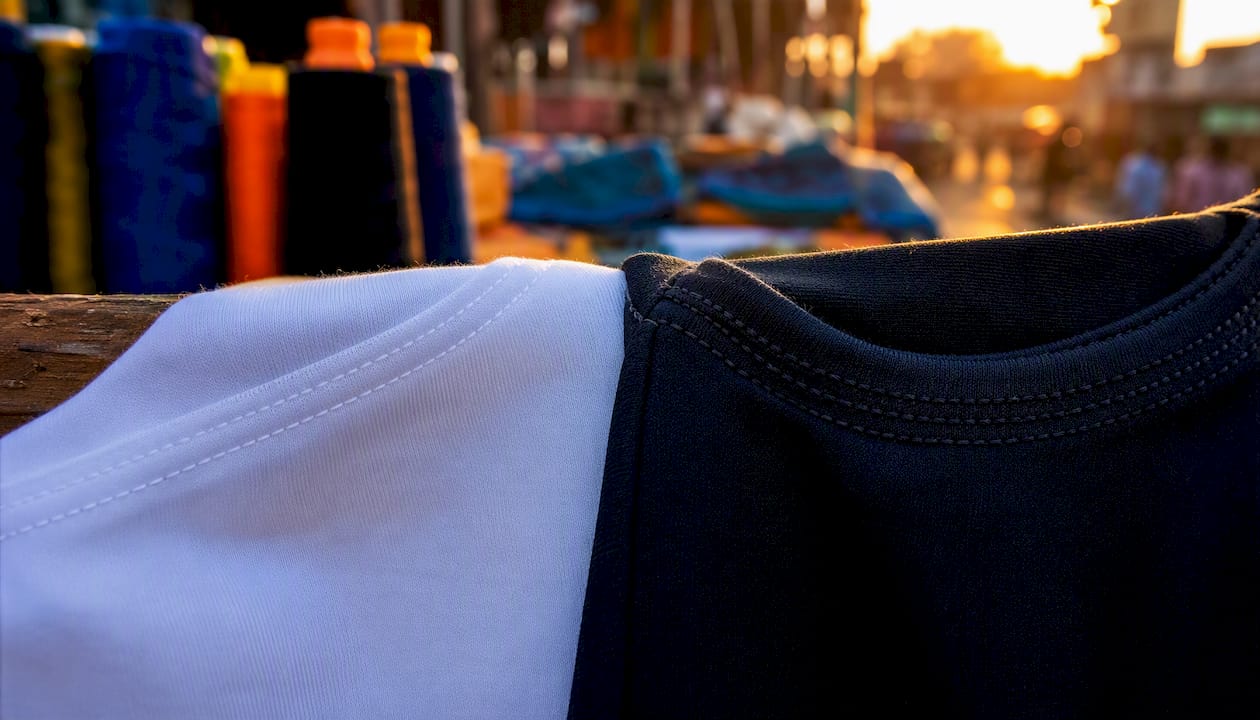
Not every double stitch is a reinforced seam. The difference between structural reinforcement and decorative imitation is something sewing tutorials make visually clear — and it is a distinction worth understanding before you spend money.
Double-needle vs. triple-needle stitching
A double-needle stitch uses two needles running parallel, creating two visible rows of thread on the outside and a zigzag on the inside. It is the standard for quality t-shirt hems and necklines. Triple-needle adds a third row, used in heavier workwear where the seam faces repeated mechanical stress. For most buyers, double-needle at the shoulders and collar is sufficient; triple-needle is the specification to look for in uniform or industrial-use garments.
Cover stitch vs. chain stitch
Cover stitching loops thread over the seam edge on both sides, creating a flat, strong finish that resists unraveling even if one thread breaks. Chain stitching is faster to produce but can unravel from a single broken link. For durability, cover stitch wins.
Thread type matters too. Continuous-filament polyester thread holds tension better than spun cotton thread and resists degradation from repeated washing. It is the industry standard for structural seams.
- True reinforced construction: Double or triple-needle stitching, cover stitch finish, folded seam allowances, polyester thread, visible parallel tracks inside and out.
- “False” reinforcement: A single decorative stitch that mimics the visual profile without the structural backing. Fast-fashion brands use this to signal quality without delivering it.
Pro Tip: When buying in volume for uniforms or custom merch, ask the supplier for stitch density (stitches per centimeter) and thread specification. A legitimate manufacturer will have this data. If they can’t provide it, that tells you something.
Fabric weight and composition for durable t-shirts
Seam construction and fabric weight work together. A reinforced seam on a flimsy fabric still fails — the fabric tears around the stitch before the seam itself gives way. The right combination is heavyweight fabric with structural seams.
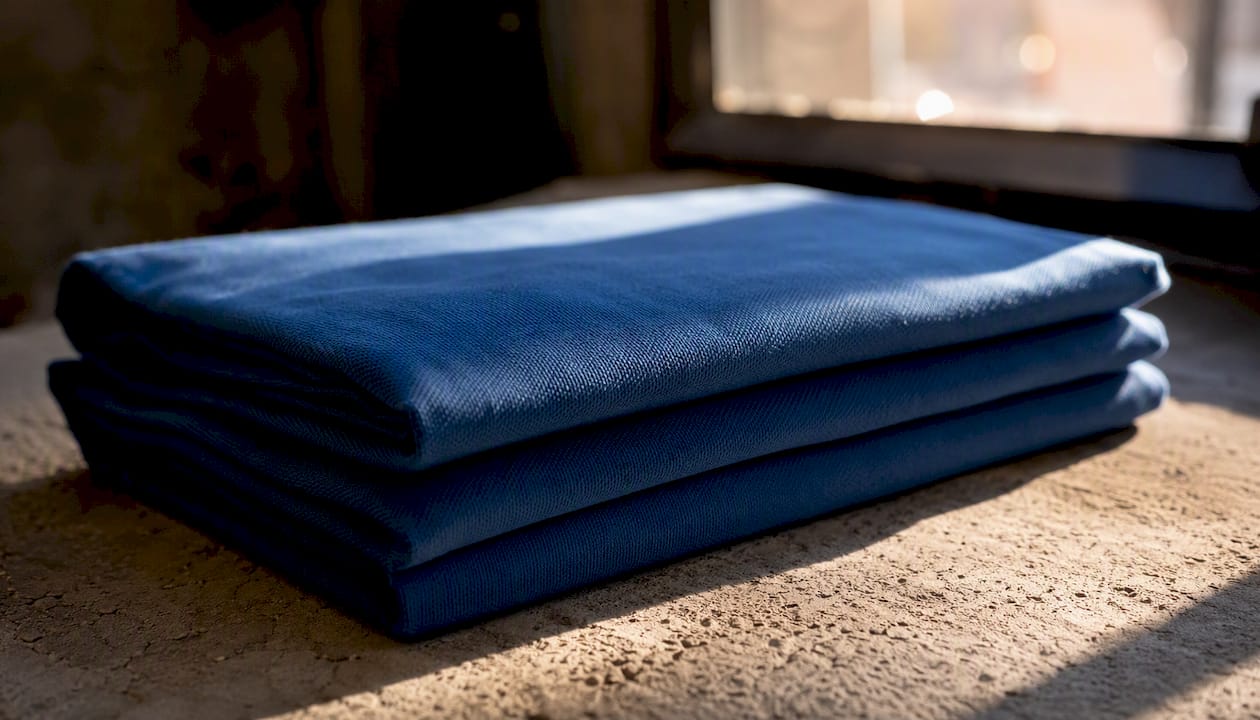
Commercial workwear specs commonly call for 100% cotton at around 150 g/m² with double reinforced seams at the shoulders, neck, and back — a proven baseline for tees that resist tearing under mechanical stress and repeated industrial washing.
For most buyers, the practical fiber choices are:
- 100% heavyweight cotton: Best breathability, holds print well, and the preferred choice for screen printing. Slightly less stretch recovery than blends.
- Cotton/polyester blends: Added polyester improves shape retention and drying speed, useful for activewear or frequent-wash environments.
- High-tenacity fiber blends: Used in technical workwear; overkill for everyday streetwear but worth knowing exists.
| Fabric weight | Typical use case |
|---|---|
| 150 g/m² | Standard workwear, corporate uniforms, basic heavyweight tees |
| 150–220 g/m² | Everyday streetwear, custom merch, moderate physical use |
| 180–220 g/m² | Heavy workwear, frequent industrial washing, premium streetwear |
The practical rule: if the product page doesn’t list g/m², treat that as a red flag. Brands that use quality fabric advertise it.
Who actually needs a reinforced-seam t-shirt?
Reinforced seams earn their price in specific situations. Knowing where they matter — and where they don’t — helps you decide whether the premium is worth it.
Use cases where reinforced seams make a real difference:
- Workwear and uniforms: Daily wear, physical activity, and industrial laundering destroy standard seams within months. Reinforced construction extends the usable life significantly.
- Custom-printed merch: Heat transfer and screen printing add weight and stiffness to the fabric. A reinforced tee holds its shape under that added stress; a lightweight one distorts.
- Activewear: Shoulder and side seams face repeated lateral stress during movement. Reinforced seams prevent the slow separation that standard stitching develops over time.
- Frequent-wash retail or hospitality uniforms: Industrial washing machines are harder on garments than home machines. Double-needle seams at the neckline and shoulders survive where single-stitch construction fails.
When reinforced seams are overkill:
If you wear a t-shirt twice a month, wash it gently, and never print on it, a standard 140–150 g/m² tee with basic stitching will serve you fine. The reinforced construction premium is for high-use, high-stress scenarios. Buying it for low-wear casual use is a reasonable choice for longevity, but not a necessity.
How to evaluate a t-shirt before you buy
Use this checklist directly on product pages. If a listing can’t answer most of these, move on.
- Seam type labeled? The listing should say “double-needle,” “triple-needle,” or “cover stitch” — not just “reinforced” without specification.
- Fabric weight listed in g/m²? Confirm it falls in the 150–220 g/m² range for durability.
- Thread type mentioned? Polyester thread is the durability standard; cotton thread is cheaper and weaker.
- Interior seam photos available? Folded seam allowances and clean interior finishing are visible proof of construction quality.
- Stitch density provided? Not always listed, but worth asking for in bulk orders.
- Price reflects construction? A tee with genuine triple-needle construction and 200 g/m² fabric costs more to produce. If the price seems too low for the claimed specs, the specs are probably wrong.
Marketing terms to be skeptical of:
- “Reinforced look” — decorative only, no structural value.
- “Decorative double stitch” — same issue; the word “decorative” is the tell.
- “Durable fabric” with no g/m² listed — a claim with nothing behind it.
How to wash reinforced-seam t-shirts so they last
The seams are built to last. Washing habits determine whether they actually do.
- Temperature: Cold or warm water (30°C maximum) preserves both the fabric and the thread. Hot water degrades polyester thread faster and causes cotton to shrink unevenly, which stresses seams.
- Cycle: Use a gentle or normal cycle. High-agitation cycles apply the same mechanical stress as physical wear — over time, they loosen even reinforced stitching.
- Detergent: Standard liquid detergent works fine. Avoid bleach unless the fabric is specifically rated for it; bleach degrades thread integrity faster than washing frequency does.
- Drying: Line dry inside out when possible. If you use a dryer, low heat only. High heat causes cotton to contract and pulls seams inward, which is where stress cracks in the stitching begin.
- Reshaping: Pull the tee into shape while damp and lay it flat or hang it. This prevents the collar from setting in a distorted position.
For home seam repair: a loose stitch at the shoulder or hem can be re-sewn with a basic needle and polyester thread. If the seam is separating at the fabric rather than the thread, contact the seller — that is a fabric defect, not a wear issue, and most quality brands will address it.
Pro Tip: For uniforms going through industrial laundry cycles, turn garments inside out and use mesh laundry bags. This reduces friction on the exterior surface and keeps the seam stress internal, where the reinforcement is designed to absorb it. More detail on streetwear fabric care is available on the Afrourbanapparel blog.
Printing compatibility with reinforced-seam tees
A reinforced heavyweight tee is the best base for custom printing. The fabric weight holds ink without bleeding, and the structural seams prevent the distortion that causes cracking in printed designs over time.
- Screen printing: The preferred method for heavyweight cotton. The fabric’s density holds the ink layer flat, and the reinforced seams keep the print area stable through repeated washing.
- Direct-to-garment (DTG): Works well on 100% cotton at 180 g/m² and above. Lower weights absorb ink inconsistently.
- Heat transfer and vinyl: Compatible with most heavyweight tees, but avoid placing transfers directly over seam lines or within 1 cm of the collar edge. Seam ridges prevent full adhesion and cause peeling at the edges.
For custom orders, request a digital mockup on your selected size before production. Confirm with the supplier which areas are printable and whether the seam placement on their specific tee affects the design zone. Wholesale workwear listings frequently pair 150 g/m² cotton with double seams and confirm compatibility with screen print, transfer, and vinyl — that combination is the market standard for branded uniforms.
What the evidence says about reinforced seams and garment life
The structural case for reinforced seams is straightforward. Double and triple-needle stitching distributes tension across multiple thread rows instead of concentrating it on one, which reduces the likelihood of seam failure at high-stress points. The reinforcement stitch technique — adding extra rows or folded reinforcements in areas of higher tension — directly increases load resistance and seam durability.
Industry sewing courses reference seam classification frameworks, including ISO 4916:1991, as the technical basis for durable construction standards. These standards distinguish between seam types by their load-bearing capacity, not their appearance — which is exactly the distinction buyers need to apply when reading product listings.
Product pages that publish gramaje, seam descriptions, and interior photos reduce buyer uncertainty and are a reliable signal of construction confidence. A brand that hides its specs is usually hiding something about them.
Pro Tip: When ordering 20 or more units for a uniform program, ask the supplier for a quality spec sheet or lab report. Legitimate manufacturers have them. The spec sheet should list stitch density (stitches per centimeter), thread type, and seam classification.
The case for buying construction, not just design
The conventional wisdom in streetwear shopping is to lead with aesthetics and treat construction as a secondary concern. That logic works until the third wash, when the collar stretches out and the shoulder seam starts pulling.
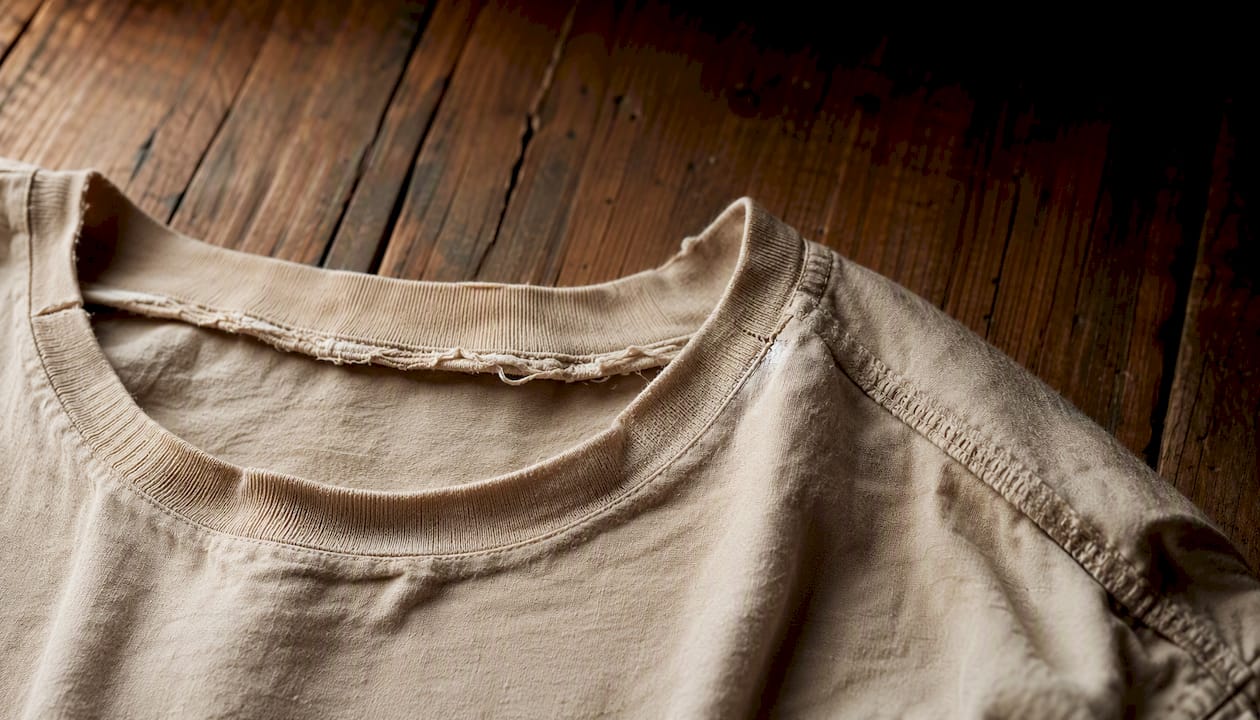
What most buyers underestimate is that a reinforced seam is not a premium feature — it is the baseline for a garment worth owning. The difference between a tee that costs slightly more and one that costs less is often not the design or the fabric alone. It is whether the brand invested in the construction details that are invisible at point of sale but obvious six months later.
Afrourbanapparel’s approach — heavyweight fabric, reinforced seam construction, and culturally grounded design — reflects a specific belief: that identity worn daily needs to hold up daily. A shirt that represents something should last long enough to keep representing it. That is not a marketing position. It is a construction requirement.
Afrourbanapparel’s reinforced heavyweight tee
The Shinski 254ORGNL washed heavy tee from Afrourbanapparel is built for buyers who want durability and cultural design in the same garment. It uses heavyweight cotton construction with reinforced seams at the shoulders and neckline — the two points most likely to fail on standard tees.
Key specs buyers care about: heavyweight fabric in the 180–220 g/m² range, double-needle seam construction at high-stress zones, 100% cotton base for screen printing compatibility, and a relaxed fit that holds its shape after repeated washing. The Renaissance series and 254 graphic tees extend the same construction standard across different designs.
For buyers planning custom prints or uniform orders, the heavyweight base and reinforced seams make these tees compatible with screen printing and heat transfer without distortion at the seam lines.
Orders ship from Colombia. Return and exchange policies are listed at checkout. Browse the full collection and place your order at Afrourbanapparel.
Sources
- Tipos de Costuras Para Ropa Interior
- Tutorial costura reforzada o costura denim | Costura creativa
- Camiseta manga corta cuello redondo laboral - product page (specs)
- Puntada de refuerzo — Hilary Coser sewing dictionary