

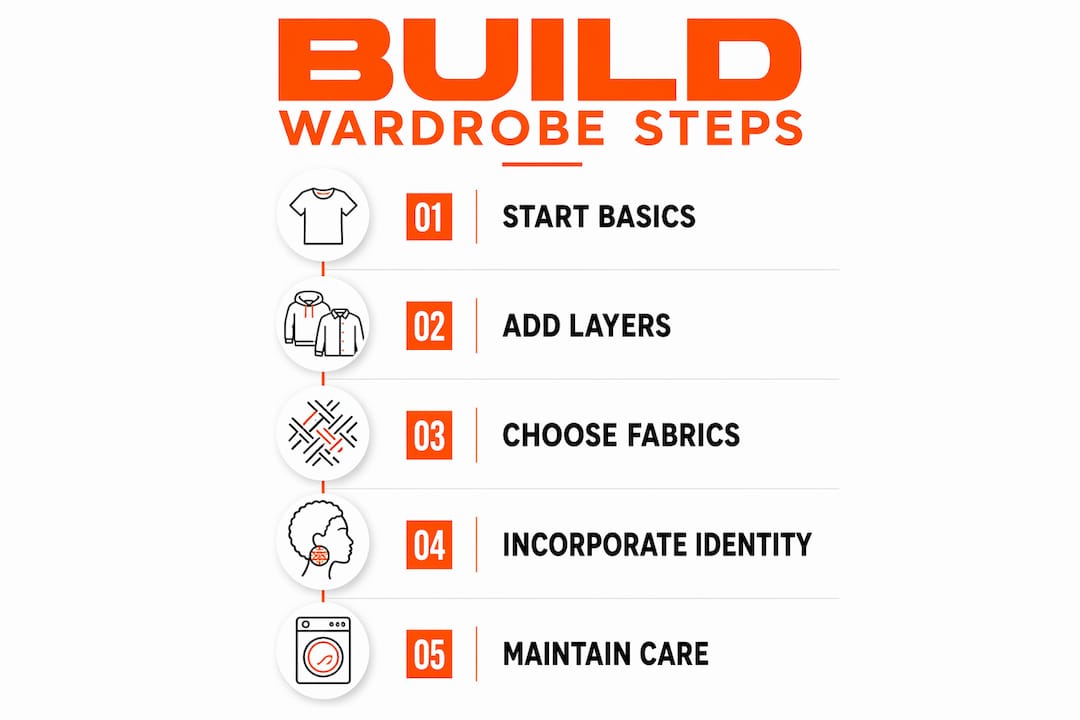
A quality-first streetwear wardrobe comes down to three non-negotiable priorities: durable heavyweight fabrics, intentional silhouettes, and pieces that carry real cultural meaning. Not hype. Not logos. The goal is a closet where every item earns its place through fit, construction, and identity.
Here is what that looks like in practice:
- Fabric weight first. Tees should hit 220–280 GSM in cotton weight; hoodies need 400 GSM fleece to hold structure through repeated washing.
- Fit over branding. Shoulder seams land at the natural shoulder edge. Ribbed crew necks recover their shape after washing. Hems stay clean.
- Wardrobe as a system. Balance foundational basics, statement staples, and a small rotation of trend pieces rather than buying whatever drops next.
- Cultural identity as a design principle. Signature pieces reflect heritage and meaning, not just aesthetics.
- Silhouette consistency. Every piece in your rotation should speak the same visual language, whether boxy, relaxed, or wide-leg.
Fashion stylists consistently point to silhouette harmony and layering logic as the two factors that separate a wardrobe that reads intentional from one that just looks expensive. Material integrity seals it.
Table of Contents
- How to build a quality-first streetwear wardrobe with the right structure
- How to choose materials and fit that actually hold up
- How to budget for a quality streetwear wardrobe without wasting money
- Ways to incorporate cultural identity authentically into your streetwear
- How to identify and verify authentic streetwear brands
- Maintenance and care techniques that extend the life of your streetwear
- Afrourbanapparel brings cultural identity and quality construction together
- Key Takeaways
How to build a quality-first streetwear wardrobe with the right structure
The most effective framework for a streetwear capsule wardrobe uses a layered ratio: a majority foundational basics, a moderate share statement staples, and a smaller portion trend-driven pieces. That balance keeps your closet flexible without making it fragile.
- Foundational basics (60%): Plain heavyweight tees, a reliable hoodie, a crewneck, straight-leg or relaxed pants, and simple outerwear. These are the pieces you reach for every day.
- Statement staples (25%): A standout jacket, signature sneakers, or a cargo pant with real character. These define your personal style without requiring a full outfit rebuild around them.
- Trend pieces (15%): Seasonal graphics, louder colorways, or a silhouette tied to a current moment. Keep this layer small so the wardrobe survives when the trend cools.
- Functional support: Socks, caps, and a compact bag complete looks without competing for attention.
The most common mistake is buying statement pieces before the foundation exists. A bold graphic hoodie has nowhere to land when the basics underneath it are weak.
How to choose materials and fit that actually hold up
Fabric weight is the clearest quality signal in streetwear. A 150 GSM tee loses its shape after a few washes. A tee in the 220–280 GSM range holds a structured drape all day and survives a year of hard wear. For hoodies, 400 GSM fleece is the threshold where the piece starts to feel like an investment rather than a placeholder.
- Preferred fabrics: Organic cotton for tees and sweatshirts; heavy cotton twill for pants and outerwear.
- Fit markers: Shoulder seams sit at the natural shoulder edge, not halfway down the bicep. Ribbed crew necks retain their shape after washing. Boxy and relaxed silhouettes work when they are sized with intention, not just oversized by default.
- Construction details: Tight, even stitching along every seam. Double-lined hoods that hold structure when pulled up. Ribbed cuffs and hems that snap back after stretching.
- Quality hoodies specifically: Deep kangaroo pockets, flat woven drawstrings, and an oversized cut where the shoulder seam still lands within two centimeters of your actual shoulder.
Pro Tip: Buy your heavyweight hoodie a few months before you need it. Dense fleece takes about three washes to fully soften, so purchasing in August means it is broken in and ready by November.
The principle behind timeless essentials clothing is simple: fewer pieces that perform better always outperform a closet full of items that look fine on day one and fall apart by month three.
How to budget for a quality streetwear wardrobe without wasting money
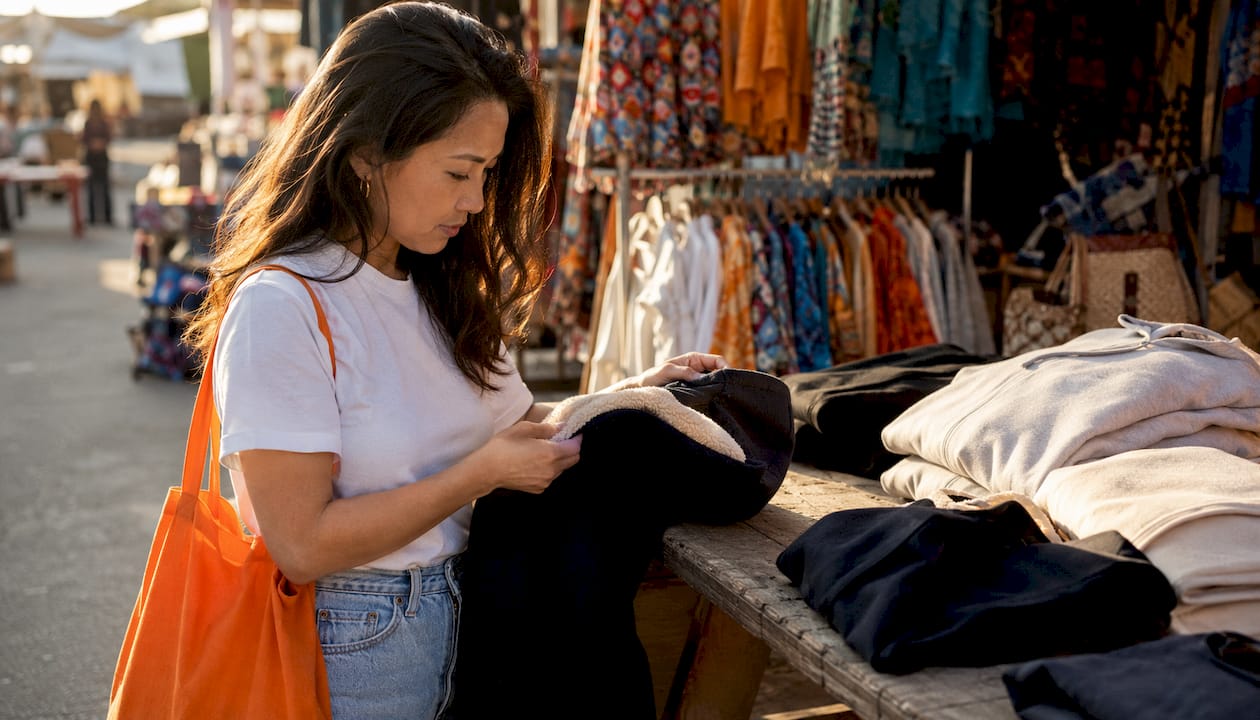
Prioritize spending on footwear and foundational basics first. Five excellent basics deliver more outfit flexibility than ten mediocre ones, and the cost-per-wear math always favors quality.
- Higher allocation: Outerwear, pants, and everyday sneakers. These anchor every outfit and take the most wear.
- Medium allocation: Hoodies, bags, and overshirts. These are visible enough to matter but durable enough to justify mid-tier spend.
- Lower allocation: Tees, caps, and seasonal graphics. Volume matters here, so accessible pricing makes sense.
- Footwear anchor: Clean white leather sneakers work harder across more outfit combinations than any other single purchase. Start there before adding a second pair.
Buy slow. Wear your first few pieces for two weeks before adding more. That gap reveals what is actually missing versus what just looks appealing in a feed. A wardrobe built through deliberate, spaced purchases almost always ends up more cohesive than one assembled in a single weekend order.
Ways to incorporate cultural identity authentically into your streetwear
Identity-based clothing works best when it is balanced with a neutral foundation. A culturally significant piece needs breathing room. When every item in an outfit competes for attention, none of them land.
- Lead with one statement piece per outfit. A heritage-inspired graphic tee or a culturally rooted hoodie reads clearly against plain pants and clean sneakers. Stack too many identity pieces and the narrative gets lost.
- Source limited editions with intention. Collaborations between independent brands and artists from specific cultural communities carry authenticity that mass-market drops rarely match. Buy them because the story resonates, not because the drop is rare.
- Customize to make pieces yours. Embroidery, patches, or hand-painted details on a quality base garment create something genuinely personal. The key is starting with a heavyweight, well-constructed piece that can support the addition without warping.
- Build toward a consistent visual language. If your identity pieces share a color palette or motif, they will work together across outfits rather than clashing.
Wearing your culture should feel like a daily practice, not a costume. The most powerful wardrobe is one where heritage shows up in the fabric, the motif, and the cut, not just in a graphic printed on a thin tee that fades after six washes. Identity woven into quality construction is what makes a piece last beyond any single trend cycle.
Afrourbanapparel builds from exactly this principle. Their pieces fuse African cultural motifs with heavyweight construction, so the identity is not decorative. It is structural. Explore how to build a wardrobe with African roots for a deeper look at how heritage and quality intersect in practice.
Pro Tip: Pair one culturally significant piece with two or three neutral basics per outfit. The statement lands harder when it has space around it.
How to identify and verify authentic streetwear brands
Authentic streetwear brands are transparent about what they make. The first test is simple: can you find the GSM weight, fabric composition, and construction details on the product page? If a brand will not tell you what is in the garment, that is a red flag before you even check the price.
Look at the brand’s origin story and whether it connects to a real community, aesthetic, or cultural moment. Brands built around a genuine point of view, whether that is a city, a subculture, or a heritage, tend to produce more consistent work than those chasing whatever aesthetic is trending. Check whether the brand releases consistent sizing across drops, maintains quality across price points, and has a track record of standing behind its products.
For creative professionals in streetwear, the standard is even higher: construction details, material sourcing, and design coherence matter more than any co-sign or limited-edition tag. A brand that earns repeat customers on fabric quality alone is worth trusting.
Maintenance and care techniques that extend the life of your streetwear
How you wash your clothes determines how long they last. Cold washing is the single most important habit. Hot water breaks down color and fabric structure faster than almost anything else.
Turn graphic tees inside out before every wash. The print lasts roughly three times longer this way. Skip fabric softener on hoodies and fleece entirely. It coats the brushed interior and ruins the texture over time. Air-dry whenever possible, pulling pieces out of the dryer while still slightly damp if you must use one. Heat slowly destroys the elastic fibers in cuffs and waistbands.
Fold tees and lighter pieces rather than hanging them. Hangers stretch the shoulders out of shape over months. Store everything in a drawer or on a shelf. Finally, rotate your wear. Fabric needs about 24 hours to recover its shape between wears, so giving each piece a rest day extends its life considerably.
Afrourbanapparel brings cultural identity and quality construction together
Most streetwear brands ask you to choose between quality and cultural meaning. Afrourbanapparel does not make you choose.
Built for the African diaspora and anyone who wants their daily wear to carry real identity, Afrourbanapparel combines heavyweight fabrics with culturally rooted design. The pieces are built to last, sized for intentional silhouettes, and designed so that heritage shows up in the construction, not just the print. If you have been building toward a wardrobe where every piece means something, this is where that wardrobe gets its foundation. Browse the full collection at Afrourbanapparel or start with the Legacy Hoodies to see what quality-first cultural streetwear actually feels like.
Key Takeaways
A quality-first streetwear wardrobe requires heavyweight fabrics, a deliberate layering ratio, and cultural identity built into the construction, not added as an afterthought.
| Point | Details |
|---|---|
| Fabric weight sets the standard | Tees need 220–280 GSM cotton; hoodies need 400 GSM fleece to hold shape through repeated wear. |
| Use a 60/25/15 wardrobe ratio | 60% foundational basics, 25% statement staples, and 15% trend pieces keeps the wardrobe flexible and durable. |
| Budget toward footwear and basics first | Five excellent basics outperform ten mediocre ones; clean white leather sneakers anchor more outfits than any other single purchase. |
| Cultural identity needs neutral space | One heritage-inspired statement piece per outfit lands harder when surrounded by clean, neutral basics. |
| Afrourbanapparel | Combines heavyweight construction with African cultural motifs, offering a foundation for identity-driven, quality-first streetwear. |