

Wash black hoodies inside out in cold water on a short, gentle cycle with liquid detergent. That single habit does more to preserve dark dye than any special product. For hand-washing, a cold soak with a measured squeeze of liquid detergent and no wringing gets the job done just as well.
Quick dos and don’ts:
- Do turn the hoodie inside out before every wash
- Do use cold water and a gentle or delicate cycle
- Do choose a liquid detergent made for dark fabrics
- Don’t use bleach, hot water, or heavy agitation
- Don’t wash black hoodies with light-colored clothes
Pro Tip: Washing less frequently is one of the most effective ways to keep black looking black. Spot-clean minor marks between washes and only run a full cycle when the hoodie genuinely needs it. According to El Nuevo Día, wearing items several times between washes and spot-cleaning extends both color life and fabric integrity.
Key Takeaways
Cold water, inside-out washing, and a liquid detergent made for dark fabrics are the three habits that do the most to keep black hoodies looking sharp over time.
| Point | Details |
|---|---|
| Cold water, every time | Hot water opens fibers and releases dye; cold water keeps color locked in. |
| Always wash inside out | Turning the hoodie inside out reduces direct friction on the visible dyed surface. |
| Liquid detergent for darks | Powder leaves residue on black fabric; liquid dissolves fully in cold water. |
| Air-dry in shade | Direct sunlight and dryer heat fade black dye faster than repeated washing. |
| Prewash new hoodies | A 30-minute vinegar or salt soak before the first wash reduces early dye bleeding. |
| Afrourbanapparel hoodies | Built with heavyweight fabric designed to hold color through years of proper care. |
Table of Contents
- How to wash black hoodies in the washing machine
- How to hand-wash a black hoodie safely
- Before the first wash: color-fixing recipes that actually work
- Which detergents actually protect dark fabric?
- How to treat stains on black hoodies without fading
- How to dry and store black hoodies so they last
- Reading care label symbols on your hoodie
- Caring for heavyweight hoodies the right way
- An honest take on black hoodie care
- When a new hoodie makes more sense than another wash cycle
- Sources
How to wash black hoodies in the washing machine
Getting the machine settings right matters more than most people realize. Friction and heat are the two main enemies of black dye, and both are easy to control.
Before loading the machine:
- Check all pockets and remove anything inside
- Close zippers and fasten buttons to prevent snagging
- Turn the hoodie completely inside out
- Sort by color: wash dark clothes separately from light ones, always
Load the drum to a moderate capacity that allows garments enough space to move without excessive rubbing. Overfilling forces garments to rub against each other more, which accelerates dye loss. Underfilling wastes water and can cause uneven agitation.
Recommended machine settings:
| Water temperature | Cycle type | Effect on black dye |
|---|---|---|
| Cold water | Gentle / Delicate | Minimal dye loss, best color retention |
| — | Normal | Moderate fading over repeated washes |
| — | Normal or Heavy | Significant fading, fiber damage risk |
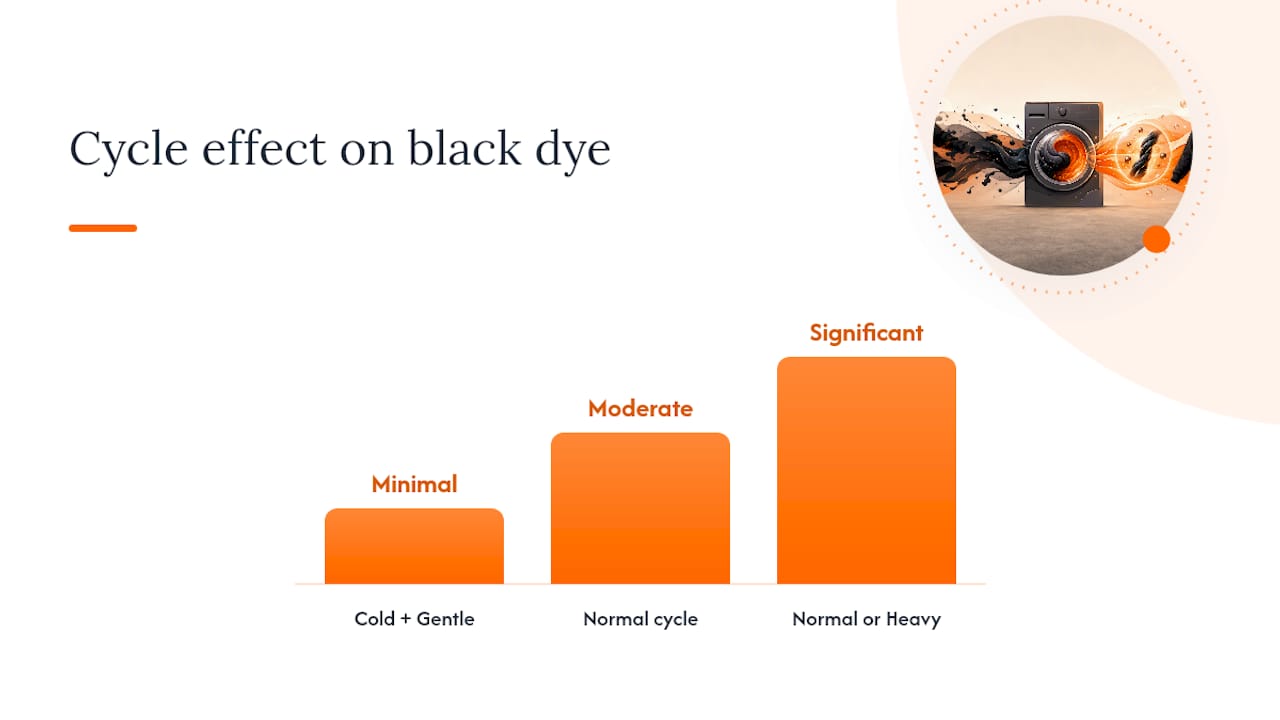
Cold water and a short, gentle cycle reduce friction, which is one of the main mechanical causes of pigment loss in dyed fibers, according to Tide’s washing guide. Keep spin speed at low to medium. High spin creates more mechanical stress on the fabric.
For detergent, measure carefully. Excess detergent leaves residue that dulls dark fabric over time. An engineer-chemist’s widely shared advice on preserving black clothing comes down to exactly this: cold water, liquid detergent, short cycles, and no excess product.
Pro Tip: Add half a cup of plain white vinegar to the rinse compartment. It removes leftover detergent residue that builds up on dark fabric and causes that dull, grayish cast. It also acts as a natural fabric softener without leaving a coating.
How to hand-wash a black hoodie safely
Hand-washing is the right call for hoodies with heavy embroidery, screen prints, appliqué, or any decorative detail that a machine cycle could damage. It takes ten more minutes and protects the garment far better.
- Fill a clean sink or basin with cold water. Add one teaspoon of liquid detergent and mix gently until dissolved.
- Turn the hoodie inside out and submerge it fully.
- Agitate by gently pressing and releasing the fabric with your hands. Do not scrub or twist.
- Let it soak for 10–30 minutes depending on how soiled it is. Lightly worn hoodies need closer to 10 minutes; visibly dirty ones can go up to 30.
- Drain the soapy water and refill with clean cold water.
- Rinse by pressing the hoodie against the basin walls repeatedly until the water runs completely clear. This usually takes two or three rinse cycles.
- To remove excess water, press the hoodie firmly against the side of the basin. Never wring or twist, especially around the hood and drawstring area, since that distorts the shape.
- Lay flat on a clean dry towel, reshape the hood and cuffs, and roll the towel up with the hoodie inside to absorb more moisture before drying.
Pro Tip: After rolling in the towel, unroll and lay the hoodie flat on a second dry surface rather than hanging it. Hanging a wet hoodie stretches the shoulders and neck, especially on heavier fabrics. Flat drying preserves the original shape.
Before the first wash: color-fixing recipes that actually work
New black hoodies often bleed dye in the first wash or two. A simple prewash soak can reduce that significantly and improve how well the color holds over time. Soaking new dark garments in cold water with white vinegar or salt before the first wash is a widely recommended step to reduce early fading.
Vinegar soak:
- Fill a basin with cold water
- Add 1 cup of plain white vinegar (distilled, not apple cider)
- Submerge the hoodie inside out and soak for 30 minutes
- Rinse with cold water and proceed to wash normally
Salt soak:
- Fill a basin with cold water
- Dissolve 2 tablespoons of table salt fully before adding the garment
- Submerge and soak for 30 minutes
- Rinse thoroughly with cold water
Before you try either method:
- Test on an inside seam first, especially if the hoodie has special finishes, metallic prints, or delicate trims
- Skip these soaks on garments labeled “dry clean only” or those with heat-sensitive embellishments
- Do not combine vinegar and salt in the same soak; use one or the other
Pro Tip: The vinegar soak works by slightly acidifying the water, which helps close the fiber structure around the dye. It is not a permanent fix, but it noticeably reduces bleeding in the first few washes, which is when most color loss happens.
Prewashing new dark garments with a vinegar or salt soak remains one of the most practical steps you can take to reduce early fading, and it costs almost nothing.
Which detergents actually protect dark fabric?
Liquid detergents dissolve fully in cold water, which is why they are the right choice for black hoodies. Powder detergents can leave undissolved particles on dark fabric, creating a white or gray residue that is hard to remove and makes the color look dull.
What to use:
- Liquid detergents labeled for darks, blacks, or color protection (Woolite Dark, Perwoll Black, or similar formulas)
- pH-neutral or low-foam formulas that rinse out cleanly
- White vinegar in the rinse cycle instead of fabric softener, which removes detergent buildup that dulls dark garments
What to avoid:
- Chlorine bleach: destroys black dye immediately and permanently
- Oxygen bleach on black fabric unless the care label explicitly permits it
- Heavy-perfume fabric softeners that coat fibers and trap residue
- Excess detergent of any kind: more soap does not mean cleaner clothes, it means more residue
Pro Tip: If your black hoodie looks gray after washing, the culprit is almost always detergent residue, not fading. Run it through a rinse-only cycle with half a cup of white vinegar and no detergent. That often restores the depth of color without any additional washing.
How to treat stains on black hoodies without fading
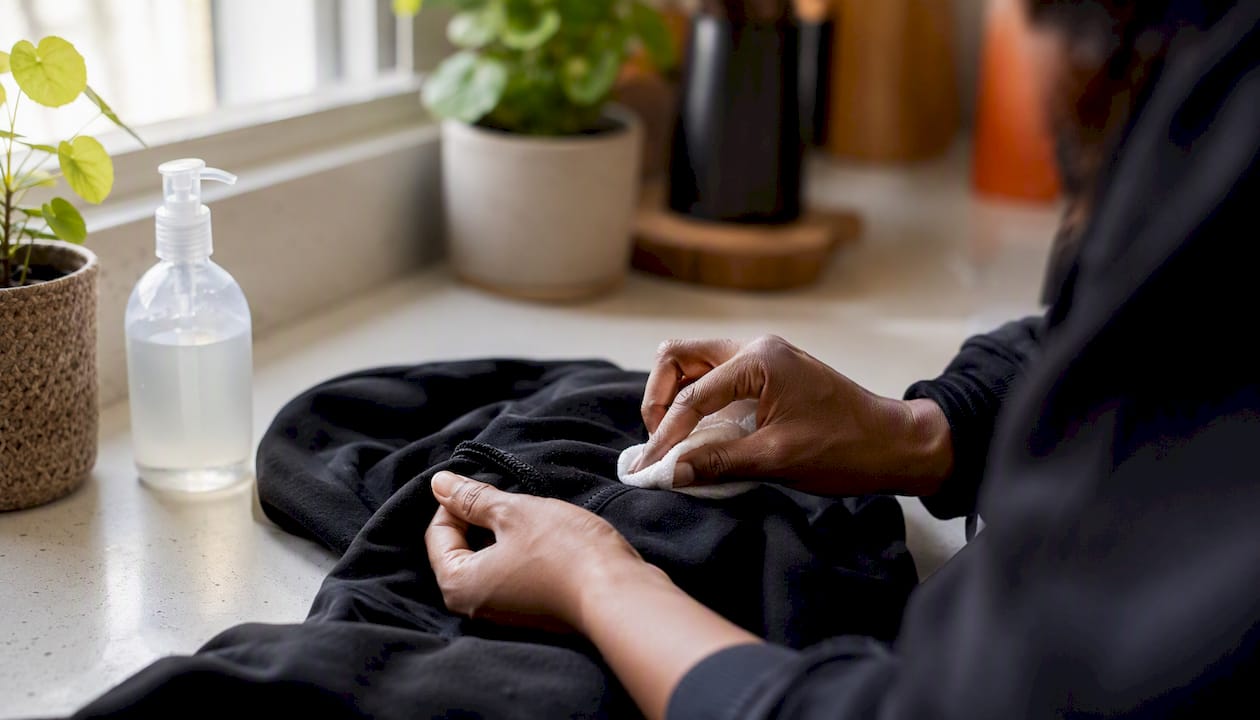
The rule with stains on dark fabric is simple: act fast, go gentle, and always spot-test first. Aggressive stain removers that work fine on white fabric can pull color out of black in seconds.
| Stain type | First-line treatment | Caution |
|---|---|---|
| Deodorant / antiperspirant | Dab with white vinegar, let sit 5 min, rinse cold | Avoid rubbing; it spreads the stain |
| Grease / oil | Apply a small drop of dish soap directly, let sit 10 min | Do not use hot water; it sets grease |
| Sweat / yellowing | Soak in cold water with liquid detergent for 20 min | Avoid peroxide; it lightens dark fabric |
| Ink | Dab with isopropyl alcohol on a clean cloth | Test on inside seam first; alcohol can lift dye |
Step-by-step stain treatment:
- Blot the stain immediately with a clean cloth. Do not rub.
- Apply your chosen treatment to a hidden inside seam and wait two minutes. Check for color change before touching the visible surface.
- Apply the treatment to the stain using a soft cloth or old toothbrush. Work from the outside edge inward.
- Let it sit for the recommended time, then rinse with cold water.
- If the stain remains, repeat once. If it persists after two attempts, take the garment to a professional cleaner rather than escalating to harsher chemicals.
Avoid bleach and aggressive stain-removal chemicals on black garments; spot-testing before treating the visible surface is the step most people skip and later regret. Hydrogen peroxide and chlorine bleach can lighten a black hoodie in under a minute.
Spot-testing on an inside seam avoids accidental lightening of the visible surface and preserves overall color, a step cleaning experts consistently flag as non-optional for dark fabrics.
How to dry and store black hoodies so they last
Heat is the fastest way to fade a black hoodie. A dryer set to high heat does in one cycle what ten cold washes would do gradually.
Drying guidelines:
- Air-dry inside out in a shaded spot, never in direct sunlight
- If using a dryer, tumble on the lowest heat setting and remove while still slightly damp
- Lay flat or use a wide-shouldered hanger for lighter hoodies; lay flat for heavyweight ones
- Reshape the hood, cuffs, and hem while the fabric is still damp
Things to avoid during drying and storage:
- Direct sunlight (UV light breaks down black dye faster than almost anything else)
- Hot radiators or heat vents
- Hanging heavyweight hoodies wet (shoulder distortion)
- Storing damp (causes mildew and odor)
Heavyweight hoodies made from cotton or cotton blends are especially sensitive to heat and can shrink; reshaping while damp is the most effective way to maintain their original form.
Pro Tip: Store clean black hoodies in breathable cotton garment bags or with a cedar block nearby. Cedar naturally repels moths and helps control moisture, both of which degrade fabric and dull color over time. Avoid plastic bags, which trap humidity.
Reading care label symbols on your hoodie
The care label is the manufacturer’s tested recommendation for that specific fabric and construction. Following it is the fastest way to avoid an irreversible mistake.
| Symbol | What it means | Note for black hoodies |
|---|---|---|
| Tub with number (e.g., 30) | Maximum wash temperature in °C | Stay at or below 30°C for black |
| Hand in tub | Hand wash only | Use cold water and gentle squeeze |
| Tub with X | Do not wash | Dry clean or spot-clean only |
| Triangle with X | Do not bleach | Standard for all black garments |
| Square with circle, low dot | Tumble dry on low heat | Safe if you remove while slightly damp |
| Circle with X | Do not dry clean | Follow wash instructions instead |
Red flags to watch for on labels:
- “Dry clean only” with no wash symbol: machine washing risks permanent damage
- A wash temperature of 60°C or higher: that setting will fade black significantly
- No label at all: treat the garment as delicate and hand-wash cold
When the label and your experience with the garment conflict, trust the label first. If a hoodie has survived dozens of cold gentle-cycle washes without issue, that is useful data, but it does not override a “hand wash only” instruction for a new piece.
Caring for heavyweight hoodies the right way
Heavyweight cotton and cotton-blend hoodies behave differently from standard fleece. They hold more water, take longer to dry, and are more sensitive to heat-related shrinkage. The fabric care best practices for streetwear that apply to lightweight pieces need adjustment for dense, premium constructions.
Key differences in care:
- Use a lower spin speed than you would for lighter garments; high spin stresses the dense weave
- Run shorter drying bursts if using a tumble dryer on low, checking between cycles
- Reshape shoulders, cuffs, and the hood immediately after washing while the fabric is still pliable
- Avoid over-drying: a stiff, board-like hoodie has lost moisture that the fibers need to stay soft
For heavyweight streetwear, hand-shaping while damp reduces shoulder sagging, which is especially useful for hoodies with heavy embroidery or appliqué. The weight of those details pulls on wet fabric, so reshaping before drying locks the form in place.
Heavyweight hoodies built from dense cotton or cotton-blend fleece carry more dye per fiber, which means they can look richer longer than lightweight alternatives — but only if heat is kept out of the equation from day one. Cold wash, low spin, air-dry in shade: that sequence protects both the color depth and the structural integrity of the fabric.
Pro Tip: Wash a new heavyweight hoodie separately for the first two or three cycles. Dense fabrics release more loose dye early on, and washing alone prevents that dye from transferring to other garments while also letting you monitor how the piece responds to your water and detergent.
An honest take on black hoodie care
The conventional wisdom on laundry tends to oversimplify: “just use cold water and you’re fine.” Cold water helps, but it is only one variable. The real damage to black hoodies usually comes from three overlooked habits: too much detergent, too much heat in the dryer, and washing far more often than necessary.
Most people wash hoodies after every wear out of habit, not necessity. A hoodie worn for a few hours in a clean environment does not need a full wash cycle. Spot-cleaning and airing out between wears preserves color and fabric integrity in a way that no detergent formula can replicate. The care guide for streetwear that lasts makes this point clearly: frequency is the variable most people underestimate.
Afrourbanapparel’s heavyweight hoodies are built with dense, durable fabric precisely because the brand understands that a piece meant to carry cultural identity needs to hold up over time. That construction gives you more margin for error than a thin, fast-fashion hoodie, but it does not make the garment immune to heat damage or detergent buildup. The steps in this guide apply to any quality black hoodie, and they apply especially to pieces worth keeping.
When a new hoodie makes more sense than another wash cycle
Care extends the life of a black hoodie significantly, but every garment has a point where the color is too far gone to recover and the fabric has thinned past comfortable wear. At that point, replacement is the practical choice, not a failure of maintenance.

Afrourbanapparel’s heavyweight hoodies are made for exactly the reader who takes care seriously: dense fabric, bold culturally inspired designs, and construction built to hold color through years of proper washing. If your current hoodie has reached the end of its run, or if you want a piece worth the care routine described here, browse the full collection at Afrourbanapparel and find a heavyweight hoodie built to last. Investing in a quality-first streetwear piece from the start means fewer replacements and more years of color that holds.
Sources
- Tu guía completa para saber cómo lavar la ropa - Tide
- ¿Cómo mantener en buen estado tu ropa oscura? - Tips - Norit
- Cómo lavar la ropa negra para que no pierda color: el TRUCO de un ingeniero químico que es furor
- Cómo lavar una sudadera sin estropearla — WASHROCKS
- ¿Cómo lavar la ropa negra? - Ecolaundry