

For premium, soft, low-pilling tees and sharp prints, combed cotton (algodón peinado) wins. For cost-sensitive, high-volume basics like event giveaways or uniforms, carded cotton (algodón cardado) gets the job done for less. The trade-off comes down to processing: combing removes short fibers and waste, which raises cost by roughly 15 to 25 percent, while carding skips that step and keeps yarn cheaper but rougher.
TL;DR:
- Combed cotton is 15 to 25 percent more expensive than carded cotton due to additional waste removal and processing time, but offers superior durability.
- Combed cotton produces a smoother, stronger fabric with less pilling and shrinkage, making it ideal for high-quality, detailed apparel and embroidery.
- Carded cotton, while cheaper and with more texture, tends to pill sooner and shrink more, making it better suited for budget products with lighter use.
- Proper washing and care extend the lifespan of combed cotton garments, with best results achieved through cold washes, air drying, and surface friction reduction.
- Buyers should request detailed fiber length and spinning process documentation from suppliers, as marketing claims often overstate the actual quality of “premium” cotton.
Table of Contents
- Algodón Peinado vs. Cardado: Softness, Pilling, Strength, and Cost Compared
- How Carding and Combing Actually Change the Yarn
- Choosing Between Peinado and Cardado by Use Case
- Washing and Wear: What Actually Extends Garment Life
- How Afrourbanapparel Chooses Fabric for Every Piece
- What Buyers Get Wrong About “Good Enough” Cotton
- Shop Combed Cotton Streetwear at Afrourbanapparel
- Sources
Algodón Peinado vs. Cardado: Softness, Pilling, Strength, and Cost Compared
The difference between these two cottons starts with what gets removed during processing, which explains many differences in hand feel, durability, and price.
Combing pulls out short fibers and neps before spinning, which leaves only long, parallel strands in the yarn. The result is a smoother surface with fewer loose fiber ends sticking out, and those loose ends are exactly what cause pilling and hairiness on a finished garment. Carded cotton skips that step entirely, so short fibers stay mixed in with the long ones. That’s not automatically a defect. It just means the yarn has more texture and more tendency to fuzz over time.
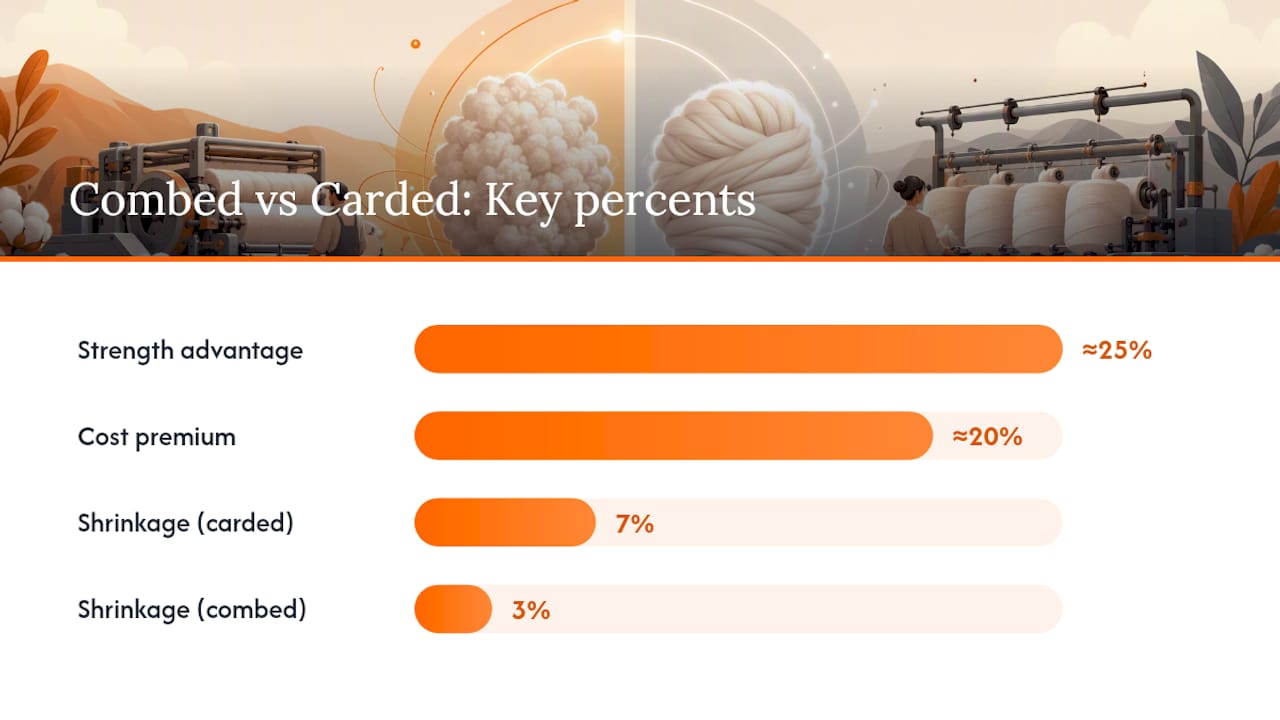
Strength tells a similar story. Ring spun yarns made from combed fiber run about 20 to 30 percent stronger than open end yarns typically spun from carded fiber, and that strength gap shows up directly in wash-after-wash durability. A shirt that survives 60 washes without stretching out at the collar isn’t luck. It’s fiber alignment.
Shrinkage and appearance follow the same pattern. Lab and supplier data commonly report shrinkage under 3% for combed fabric versus up to 7% for carded in comparable constructions, which matters a lot if you’re printing on a shirt today and shipping it in three weeks. A shrinking shirt shifts a print off-center or distorts embroidery placement.
Here’s the attribute breakdown that matters most when you’re placing an order:
- Softness: combed feels noticeably smoother against skin; carded feels textured and slightly coarser.
- Pilling resistance: combed resists pilling far longer; carded develops surface fuzz sooner, especially at friction points like underarms and waistbands.
- Tensile strength: combed/ring spun yarn holds up better to repeated stress and stretching.
- Shrinkage: combed fabric shrinks less and holds its shape through more wash cycles.
- Appearance: combed has a cleaner, more uniform surface; carded has a more rustic, slightly irregular look some brands intentionally use for a vintage feel.
- Cost: carded is cheaper to produce; combed carries a premium tied directly to processing waste.
That cost premium isn’t arbitrary. Combing discards a meaningful share of the raw fiber as waste, called noils, and that lost material plus the extra machine time is why combed cotton typically runs 15 to 25% more expensive than carded cotton of comparable weight. Industry pilling tests, often run against standards like ISO 12945-2, and shrinkage tests under ISO 5077, consistently score combed fabrics higher on durability metrics. If a supplier can’t produce numbers from tests like these, treat their “premium cotton” claim with some skepticism.
How Carding and Combing Actually Change the Yarn
Carding is the baseline step every cotton yarn goes through, combed or not. Raw cotton fibers get pulled through a series of rotating drums studded with fine wire teeth, which detangles clumps, removes larger debris like leaf fragments, and roughly aligns the fibers into a loose rope called sliver. That sliver still contains a mix of long and short fibers running in imperfect parallel.
Combing happens after carding, and it’s an optional extra pass through finer-toothed combs. Those combs comb out anything below a set fiber length, plus the tangled knots known as neps, leaving behind only long-staple fibers running in tight, clean alignment. That leftover waste is the noil mentioned above.
The production sequence looks like this in a typical mill:
- Raw cotton is cleaned and opened to remove seeds and trash.
- Carding aligns fibers into sliver, removing coarse debris.
- Combing (for peinado only) strips out short fibers and neps.
- The resulting sliver is drawn and twisted into yarn through ring spinning or open end spinning.
- Finished yarn gets tested for hairiness, tensile strength, and pilling grade.
Spinning method matters just as much as combing. Ring spun yarn twists fibers tightly around a continuous strand, producing a smooth, strong yarn well suited to combed fiber. Open end (rotor) spinning is faster and cheaper but produces a bulkier, less uniform yarn. Combine carded fiber with open end spinning and you get the roughest, most budget-friendly result. Combine combed fiber with ring spinning and you get the premium end of the spectrum, which is where most retail-grade branded tees live.
Choosing Between Peinado and Cardado by Use Case
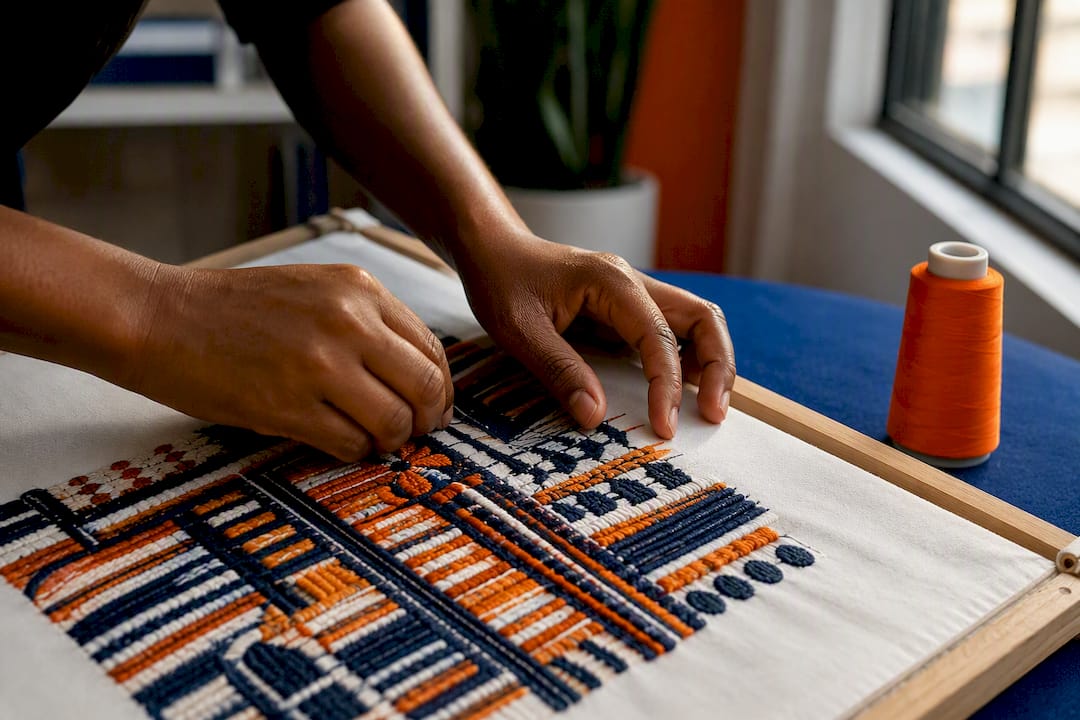
Match the fabric to the job, not the other way around. Premium retail tees, baby clothing, hotel linens, and anything with a dense embroidered logo benefit from combed, ring spun cotton because the smooth surface holds fine detail and resists early wear.
Cardado makes more sense for bulk event tees, corporate uniform orders, and budget sweatshirts where cost per unit drives the decision and the garment sees lighter, less frequent use.
Print method changes the calculus too. DTG (direct to garment) and DTF (direct to film) prints both rely on a smooth, tight-weave surface, so combed cotton produces sharper edges and better color saturation. Screen printing is more forgiving of surface texture and works reasonably well on carded fabric, though ink can sit less evenly around loose fiber ends. Dense embroidery designs also favor combed cotton because the tighter weave holds stitches without puckering.
Before placing a bulk order, ask any supplier these four questions:
- What is the average fiber length (staple length) of this cotton?
- Can you provide documentation backing your “peinado” or combed claim?
- Is this yarn ring spun or open end spun?
- What is the tested shrinkage percentage after three washes?
Pro Tip: Marketing terms like “super combed” vary wildly between suppliers with no universal definition, so request the actual mill spec sheet rather than trusting the label on its own. For deeper guidance on matching fabric weight to garment type, Afrourbanapparel’s gramaje guide breaks down GSM choices by use case.
Washing and Wear: What Actually Extends Garment Life
Care routines differ less than people expect, but the margin for error is tighter on carded cotton. Both fabrics do best in cold or warm water on a gentle cycle, with a mild detergent and no high-heat drying, since heat accelerates fiber breakdown and shrinkage on either type.
Lifespan expectations diverge more. Field testing from apparel brands shows combed cotton holding a clean appearance through 20 to 50 or more wash cycles before visible pilling sets in, while carded fabric often shows early pilling sooner, particularly at high-friction spots.
A few habits stretch either fabric’s life further:
- Turn garments inside out before washing to reduce surface friction.
- Air dry when possible instead of using a dryer’s high heat setting.
- Use a mesh wash bag for anything with embroidery or prints.
- Keep a fabric shaver on hand for early-stage pilling on carded items.
How Afrourbanapparel Chooses Fabric for Every Piece
Afrourbanapparel builds every t-shirt and hoodie around heavyweight, durable fabric that survives daily rotation, not just one wear. That priority is exactly why combed, ring spun cotton anchors the core lineup: it holds embroidered detail and bold, culturally rooted prints without the surface breaking down after a season of washes.
Print clarity matters just as much as feel here. Designs that carry real cultural weight need a fabric surface that renders fine linework cleanly, which is a big part of why carded shortcuts don’t fit the brand’s goals. For readers building their own fabric knowledge, Afrourbanapparel’s t-shirt fabric guide and care best practices go deeper into gramaje and washing specifics.
What Buyers Get Wrong About “Good Enough” Cotton
Most buying guides frame this as a simple upgrade decision: pay more, get softer cotton, done. That misses the actual math. The real comparison isn’t combed cotton’s price against carded cotton’s price. It’s combed cotton’s price against carded cotton’s price plus the cost of returns, early pilling complaints, and a print that looks blurry after ten washes.
Small brands get this backwards constantly. They chase the lowest yarn cost on a first order, then eat the reputational damage when a batch pills out in six weeks and customers post about it. A 15 to 25 percent premium on combed yarn is cheap insurance against that outcome, especially on anything carrying a logo, an embroidered design, or a print meant to represent something the wearer actually cares about.
The one thing worth prioritizing above all else: ask for the mill spec sheet before you ask for a price quote. Fiber length and spinning method predict performance far better than any marketing label does.
— Kebz
Shop Combed Cotton Streetwear at Afrourbanapparel
Afrourbanapparel builds its heavyweight tees and hoodies on combed, ring spun cotton specifically because it holds detailed African-inspired prints and embroidery through years of regular wear, not just a season.
Every core piece in the collection uses that combed base fabric, so you’re not choosing between style and durability. Orders ship directly through the brand’s own online store, with sizing and fabric details listed on each product page before checkout.
| Why buy from Afrourbanapparel | What it means for you |
|---|---|
| Combed, ring spun cotton | Fewer pills, smoother print surface |
| Heavyweight construction | Holds shape through frequent wear |
| Culturally rooted designs | Everyday wear that reflects heritage |
Browse the current lineup and check sizing on the Afrourbanapparel collection page to place an order today.
Sources
- Algodón peinado vs. algodón cardado: Entendiendo diferencias y aplicaciones
- Ring Spun Cotton vs Open End Cotton: A Procurement Guide to Yarn Quality