

For most everyday tees, aim for 150 to 180 g/m². Go lighter for hot climates or mass giveaways, and heavier for premium, structured streetwear. That middle range holds up to repeated washing, prints cleanly on the most common methods, and doesn’t overheat the wearer in warm weather, which is why it’s the default recommendation across the apparel industry before anyone even asks about fiber content.
Here’s the fast version broken down by weight class:
| Gramaje range | Best use | Feel |
|---|---|---|
| ~120–150 g/m² | Summer giveaways, mass event shirts, sport tees | Light, breathable, less structure |
| ~150–180 g/m² | Everyday wear, branded merchandise, most retail tees | Balanced weight, good drape, reliable printing |
| ~190–240 g/m² | Premium retail, oversized streetwear, structured drops | Substantial, boxy silhouette, higher perceived value |
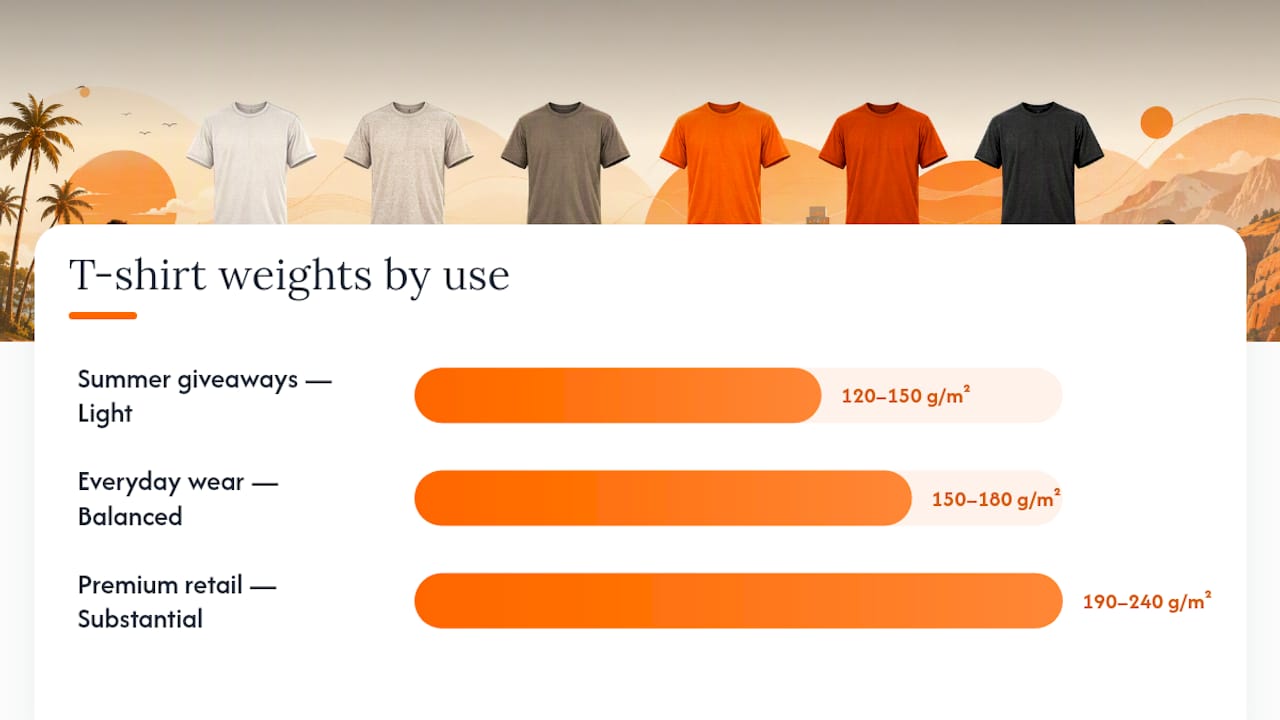
Before you place any order, do three things: ask the supplier for a physical fabric sample, confirm the fiber composition in writing, and check that the printing method they use actually works well at your chosen weight. If you’re ordering giveaways for a conference, a 130 g/m² tee is fine and keeps freight costs down. If you’re building a retail drop meant to feel premium in someone’s hands, you want 200 g/m² or heavier with a compact knit.
Key Takeaways
Choosing the right gramaje comes down to matching fabric weight to actual use, since comfort, print quality, and durability all shift together as grams per square meter change.
| Point | Details |
|---|---|
| Match weight to use case | Use 120 to 150 g/m² for giveaways, 150 to 180 g/m² for everyday wear, and 190 to 240 g/m² for premium or structured drops. |
| Gramaje isn’t the whole story | Yarn quality, knit density, and finishing change how two fabrics at the same weight actually feel and perform. |
| Test before you commit | Request a swatch for early comparisons and a full sewn sample before approving any bulk or retail order. |
| Match printing to weight | Midweight fabric around 160 to 180 g/m² gives the most reliable results across screen printing and DTG. |
| Afrourbanapparel favors heavyweight | The brand builds its core collections around heavier gramaje for structured, durable, premium-feeling streetwear. |
Table of Contents
- What Gramaje Camiseta Guía Actually Measures
- How Two 180-Gram Shirts Can Feel Completely Different
- Master Table of Gramaje Ranges by Garment Type
- 140 g vs 180 g vs 220 g: What Actually Changes
- How Gramaje Affects Printing and Personalization
- How to Choose the Right Gramaje for Your Exact Use
- Common Mistakes Buyers Make With Gramaje
- When Higher Gramaje Justifies a Higher Price
- Breathability and Comfort Across Different Climates
- Washing and Care by Gramaje
- Why We Build Around Heavier, Structured Fabric
- Get the Heavyweight Feel Without the Guesswork
- Where to Read More
- Frequently Asked Questions
- Sources
What Gramaje Camiseta Guía Actually Measures
Gramaje is the weight of fabric per square meter, expressed in grams per square meter, or g/m². It’s a direct physical measurement, not a marketing term, and it’s the single most-quoted spec in any t-shirt production conversation because it correlates loosely with thickness, opacity, and durability.
The math behind it is almost embarrassingly simple. A lab cuts a fabric sample of a known size, usually a circle or square of exact area, weighs it on a precision scale, and divides the weight by the area to get grams per square meter. That number gets printed on spec sheets and used to compare one fabric to another regardless of the mill, the country, or the knit structure. Gramaje is defined and explained this way by Printful’s guide to shirt weight, which frames it as the standard cross-industry unit for fabric comparison.
Two misconceptions trip up a lot of first-time buyers. First, gramaje is not the same as the finished garment’s total weight. A shirt’s weight also depends on size, sleeve length, and trim like ribbed collars or side seams, so a small in one style can weigh less than a medium in a lighter fabric. Second, gramaje is not a stand-alone quality signal. A heavy fabric made from low-grade fiber can feel worse and wear out faster than a lighter fabric made well. If you’ve ever seen a t-shirt spec sheet with a number in ounces per square yard instead of grams per square meter, that’s the imperial equivalent used mostly in North American sourcing documents. Both describe the same property; they just use different units.
How Two 180-Gram Shirts Can Feel Completely Different
Gramaje gets measured from a physical sample, not calculated from a formula on paper. A technician weighs a pre-cut swatch of the fabric, usually a standardized 10 centimeter by 10 centimeter square or a specific circular die, then divides that weight by the swatch’s area to report the result in grams per square meter. It’s a five-minute test, and any competent mill or print shop can run it on request.
What that number doesn’t capture is everything else that shapes how a shirt feels in your hand. Fiber type matters: combed cotton feels smoother than carded cotton at the same weight. Yarn twist changes durability and pilling resistance. Knit density, meaning how tightly the loops are constructed, affects both stretch and opacity independent of raw weight. And finishing processes like enzyme washing, compacting, or resin coatings can make a 180 g/m² fabric feel closer to 200 or drop its perceived hand-feel entirely. This is confirmed by production guidance comparing 180 GSM and 240 GSM fabrics, which notes that gramaje alone doesn’t guarantee better durability or hand-feel.
When you have two swatches in hand, run this quick comparison:
- Squeeze both fabrics and note which feels denser or softer against your palm.
- Hold each up to light and compare opacity. A tighter knit blocks more light at the same weight.
- Stretch each sample gently in both directions and see how much recovery it has.
- Drape a swatch over your fingers and watch how it falls. Stiffer fabric holds shape; softer fabric skims.
- Check the cut edge for fraying, which hints at yarn quality and finishing.
Pro Tip: Never approve a bulk order off a spec sheet number alone. Request an actual sewn sample, not just a swatch, especially for a paid retail drop or premium collection, since seams and trims change how the final gramaje reads on a body.
Master Table of Gramaje Ranges by Garment Type
Different garment categories call for different starting points, and the range that works for a giveaway tee will feel cheap on a retail shelf. This table gives you a baseline before you factor in composition and finishing.
A caveat worth repeating for every row: gramaje ranges are starting points, not guarantees. A sportswear tee at 140 g/m² still needs moisture-wicking fiber to perform, regardless of how light it is. And a 240 g/m² shirt made from rough, low-twist yarn will still feel worse than a well-finished 200 g/m² alternative. Practical gramaje ranges commonly cited in the industry sit close to what’s shown here, with lightweight tees around 120 to 150 g/m², midweight around 150 to 180 g/m², and heavier premium fabrics from roughly 190 to 240 g/m².
140 g vs 180 g vs 220 g: What Actually Changes
Moving from 140 to 180 to 220 grams per square meter changes four things you can feel immediately: drape, opacity, print stability, and how the shirt survives repeated washing. The jump from 140 to 180 is noticeable but forgiving. The jump from 180 to 220 changes the entire silhouette of the garment.
140 g/m² feels closest to a dress shirt in weight. It skims the body rather than holding shape, shows more skin tone or undergarments through the fabric, and works best for hot climates or single-wear events where cost matters more than longevity. Screen printing on 140 g/m² fabric risks slight show-through on the reverse side if the ink layer is heavy.
180 g/m² is the industry’s safe middle ground, and it’s the default recommendation for most everyday and branded merchandise. According to comparisons of 180 versus 240 GSM t-shirts, 180 GSM is widely treated as the balanced, reliable choice for everyday wear, while 240 GSM and heavier gets reserved for structured, premium pieces. At 180 g/m², drape sits between skimming and holding shape, opacity is solid enough to avoid see-through issues, and both screen printing and DTG produce clean, stable results.
220 g/m² holds real structure. The shoulders sit squarer, the hem doesn’t curl as easily, and the shirt reads as a heavier, more deliberate garment the moment someone picks it up. That structural weight is exactly why heavier fabrics dominate oversized streetwear drops, where the silhouette itself is part of the design.
A few practical distinctions worth keeping in mind as you compare:
- Lighter fabrics (140 g/m²) breathe better in heat but wrinkle and show wear faster.
- Midweight fabrics (180 g/m²) balance comfort, print reliability, and cost across almost every use case.
- Heavier fabrics (220 g/m² and up) hold ink better on bold graphics but trap more heat and cost more to produce and ship.
- Visualize it this way: a light tee moves with the body like a second skin, while a heavy tee moves as its own separate shape, almost like a light jacket.
How Gramaje Affects Printing and Personalization
Gramaje directly influences ink penetration, print opacity, and how stable the surface stays under heat, but it never works alone. Composition and finish shift the outcome just as much, so treat weight as one variable in a three-part equation, not the whole answer.
Different printing techniques have different sweet spots. Midweight fabrics around 160 to 180 g/m² generally give the most reliable results for screen printing and direct-to-garment printing, according to production guidance on fabric weight and printing, while very light fabrics risk ink bleed or ghosting on the reverse side, and very heavy fabrics sometimes need adjusted curing settings to set properly.
| Printing method | Recommended gramaje | Composition note |
|---|---|---|
| Screen printing | 160–220 g/m² | Works across most weights; heavier fabric holds bold graphics better |
| DTG (direct-to-garment) | 160–200 g/m² | Needs tighter knit for ink absorption; very light fabric risks bleed |
| Sublimation | 140–180 g/m² | Requires high polyester content; cotton blends resist dye transfer |
| Embroidery | 200 g/m² and up | Heavier fabric resists puckering under needle tension |
| DTF (direct-to-film) | 160–240 g/m² | Flexible across weights; adhesive layer needs consistent curing heat |
Before you approve a bulk print run, run through this short checklist:
- Ask for a test print on the exact fabric and gramaje you plan to order, not a similar substitute.
- Confirm the curing temperature the printer will use and whether your chosen fabric composition tolerates it.
- Check whether any pre-treatment or finish on the fabric affects ink adhesion, especially on synthetic blends.
How to Choose the Right Gramaje for Your Exact Use
Start with your primary use case, then let priority (comfort, cost, or durability) narrow the decision from there. A shirt that needs to survive two years of weekly wear has different requirements than a shirt that needs to survive one afternoon at a trade show.
| Use case | Recommended gramaje | Top priority |
|---|---|---|
| Event giveaways | 120–150 g/m² | Cost |
| Uniforms (office, hospitality) | 160–190 g/m² | Durability with comfort |
| Sport and activewear | 130–160 g/m² | Breathability |
| Everyday retail tee | 150–180 g/m² | Balanced comfort and cost |
| Premium or streetwear drop | 200–240 g/m² | Structure and perceived value |
Before placing any order, work through five questions:
- Who is actually wearing this, and how often will they wear it?
- What climate will it be worn in most of the time?
- How long does this garment need to last before it’s replaced?
- What printing or decoration method are you using, and does it match the fabric weight?
- What’s your per-unit budget, and does the gramaje you want fit inside it once minimums and dye lots factor in?
Cost and perceived value don’t scale evenly with weight. A 240 g/m² shirt costs more to produce, but if your customer is paying retail prices for a structured, premium-feeling garment, the added cost usually pays for itself in fewer complaints and better repeat purchases. If you’re producing for a giveaway where the shirt is a bonus, not the product, spending on heavyweight fabric is money that customer will never notice. As a rule, request a swatch for early-stage comparisons and a full sewn sample once you’re within one or two finalist options, since a swatch can’t show you how seams and hems behave.
Common Mistakes Buyers Make With Gramaje
The biggest mistake is treating higher gramaje as a proxy for higher quality across the board. It isn’t. A poorly finished 240 g/m² fabric can pill, shrink unevenly, or feel scratchy, while a well-made 180 g/m² fabric outperforms it in daily comfort. Judge the whole fabric, not just the number on the spec sheet.
- Chasing the highest GSM available. Heavier isn’t automatically better; match the weight to the actual use case instead of assuming more grams means more value.
- Ignoring fiber composition entirely. A 200 g/m² polyester blend behaves nothing like a 200 g/m² ringspun cotton; always confirm what the fabric is made from, not just how much it weighs.
- Skipping the sample stage to save time. Approving a bulk order from a spec sheet alone is how buyers end up with shirts that feel nothing like what they expected.
- Not testing the actual print method on the actual fabric. A design that looks perfect in a mockup can bleed, crack, or fade depending on how the ink interacts with that specific gramaje and finish.
- Assuming heavier automatically means warmer. Weight affects insulation, but weave structure and fiber type matter just as much, so a heavy, loosely knit fabric can breathe better than a lighter, tightly compacted one.
Climate and intended use should override every other consideration when the two conflict, since a beautifully structured 240 g/m² shirt is the wrong choice for a summer 5K giveaway no matter how premium it looks on the rack.
When Higher Gramaje Justifies a Higher Price
Heavier gramaje often commands a higher retail price because customers associate weight with durability and quality, but that price premium only holds up when the fabric is also better made. Weight without better yarn, finishing, and fit is just a heavier version of the same mediocre shirt, and customers notice the difference fast once they’ve owned a genuinely well-made heavyweight tee.
On the production side, heavier fabrics come with real cost implications beyond raw material price. Mills often require compaction treatments to control shrinkage on heavier knits, and production guidance on GSM differences notes that mills may also set larger dye-lot minimums for heavier fabrics, which can make 200-plus g/m² options harder to justify economically for very small orders.
For small brands deciding between midweight and heavyweight, the math usually comes down to order size and price target. If you’re placing a small first run and testing a design before committing to inventory, midweight fabric around 180 g/m² keeps costs predictable and printing reliable. Once you have proven demand and can commit to a size run that meets a mill’s dye-lot minimum, heavier fabric becomes both economically feasible and a stronger differentiator against lighter-weight competitors on the same shelf.
Breathability and Comfort Across Different Climates
Lighter gramaje fabrics move heat and moisture away from the body faster, which is why 120 to 160 g/m² tees dominate sport and summer categories. The looser the knit and the lighter the yarn, the more airflow passes through the fabric, and that airflow is what actually cools skin rather than the fabric’s raw weight alone.
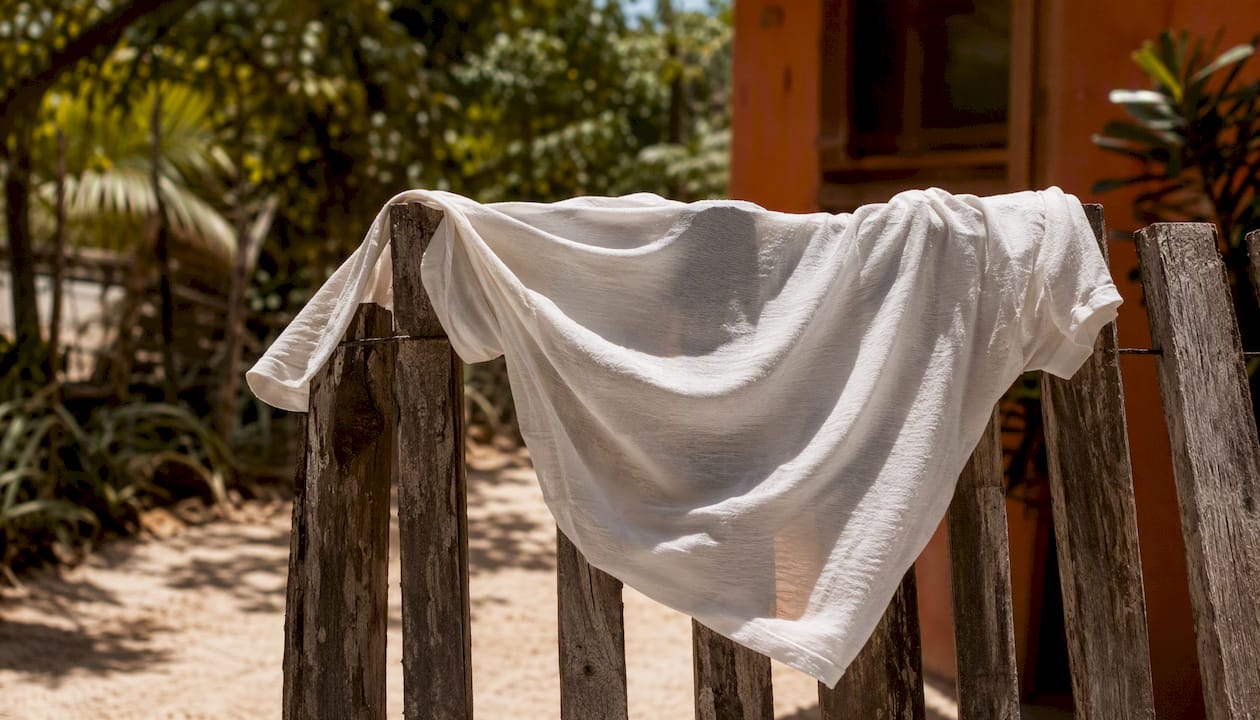
Heavier fabrics trap more air between the body and the outer surface, which reads as insulation in cold weather and as discomfort in heat. That’s not a strict rule, though. A heavy fabric with an open, loosely knit structure can still breathe reasonably well, while a lightweight but tightly woven synthetic can trap heat and feel clammy despite weighing less on paper. Fiber choice compounds this: natural fibers like cotton absorb moisture and release it gradually, while some synthetic blends wick moisture faster but retain body odor differently over a day of wear.
If you’re buying for a climate with real seasonal swings, consider stocking two weights rather than forcing one gramaje to do both jobs. A 150 g/m² tee for summer rotation and a 200 g/m² tee for cooler months will each perform better than a single 175 g/m² compromise trying to cover both extremes.
Washing and Care by Gramaje
Lighter fabrics need gentler handling because there’s simply less material to absorb wear from friction, heat, and agitation. Wash tees under 150 g/m² in cold water on a gentle cycle, and skip high-heat drying, since thin knits lose shape and pill faster under repeated high-temperature tumbling.
Midweight fabrics around 150 to 180 g/m² tolerate normal machine washing reasonably well, but turning the garment inside out before washing protects any printed graphic from surface abrasion against other items in the load. Heavier fabrics at 200 g/m² and above hold up to more aggressive washing, but they take longer to dry fully, and skipping full drying invites mildew odor in thicker cotton weaves. For any weight, air drying preserves color and print integrity longer than machine drying, since heat is the primary driver of fiber breakdown and print cracking over time. Reading a garment’s specific fabric care recommendations before the first wash prevents most of the shrinkage and fading complaints that show up after just a few cycles.
Why We Build Around Heavier, Structured Fabric
Afrourbanapparel leans toward heavier gramaje ranges for its core collections because structured streetwear needs fabric that holds its shape through repeated wear, not just through the first wash. Heritage-driven graphics and embroidered details deserve a canvas substantial enough to make the design feel permanent rather than printed on an afterthought.
That preference shows up directly in how the brand approaches fit and premium cultural streetwear, where weight and structure work together to create the boxy, confident silhouette the brand is known for. It also connects to broader choices around textile craftsmanship in cultural clothing, where finishing and construction get as much attention as the raw fabric spec.
If you want to feel the difference before committing to a purchase, reach out through the site for sample details or custom order questions. A swatch in hand settles more debates than any spec sheet ever will.
Get the Heavyweight Feel Without the Guesswork
Afrourbanapparel’s core tees run in the heavier gramaje range this guide points toward for premium, structured wear, built specifically for daily rotation without losing shape or print detail after repeated washing.
Every design pairs heavyweight fabric with embroidered detailing and bold graphics meant to hold up under real, everyday use rather than sit folded in a drawer for special occasions. Current collections are available now, and custom or bulk orders can be arranged directly through the brand for buyers who want a specific gramaje matched to a specific use case. Samples are available on request if you want to feel the fabric weight yourself before committing to a full order. Browse the current tee collection to see the heavyweight options in person and place an order.
Where to Read More
A few sources go deeper into the mechanics behind gramaje decisions if you want to research further before placing a large order.
- Regalo Publicidad’s gramaje guide breaks down practical weight ranges with clear use-case pairings.
- Sigmanova’s GSM guide compares 180 and 240 GSM fabrics in detail, including climate-specific recommendations.
- Fashion Apparel’s GSM comparison covers production-side realities like compaction and dye-lot minimums.
- MakeMyT-Shirt’s GSM comparison guide explains why identical GSM numbers can still feel different in hand.
- Logolider’s gramaje guide offers a practical checklist for buyers ordering custom apparel.
Before ordering from any supplier, ask to see their production notes and swatch library directly. That extra step catches more mismatches than any spec sheet comparison ever will.
Frequently Asked Questions
What gramaje is best for a standard cotton t-shirt? Most everyday cotton tees perform best between 150 and 180 g/m². That range balances comfort, print reliability, and durability without adding unnecessary weight or cost.
Is 180 GSM good quality for a t-shirt? Yes. 180 GSM sits at a widely recommended balance point for everyday wear, offering solid opacity and print stability while staying comfortable across most climates.
What’s the difference between 180 GSM and 240 GSM? The main differences are structure, drape, and use case. A 180 GSM shirt skims the body and works for daily wear, while a 240 GSM shirt holds a boxier shape and suits premium or oversized streetwear designs.
Does higher gramaje always mean better quality? No. Fiber composition, yarn quality, and finishing affect how a fabric performs just as much as its weight. A well-made 180 g/m² shirt can outperform a poorly finished 240 g/m² shirt.
What gramaje works best for hot climates or summer events? Lightweight fabrics between 120 and 160 g/m² breathe better and suit hot weather, sport activities, and mass giveaway events where cost and airflow matter more than structure.
How do I know if a fabric sample matches the gramaje listed on the spec sheet? Weigh a cut sample of known area on a precision scale and divide by the area to confirm the reported grams per square meter, or simply request a lab test result from the supplier before approving a bulk order.
What gramaje should I request for embroidered designs? Embroidery generally needs fabric at 200 g/m² or heavier to resist puckering under needle tension and hold the stitching’s shape over time.
Should I always request a sample before ordering a bulk order? Yes. A swatch or sewn sample reveals hand-feel, drape, and print behavior that a spec sheet number alone cannot show, and it’s the single best safeguard against a costly bulk-order mismatch.