

For a cotton tee that holds its shape wash after wash, look for a crew neck built with a real rib knit, not a self-fabric finish. A 1×1 rib works for standard basics, while 2×2 or spandex-enhanced rib gives streetwear and heavyweight tees better recovery. Pair that with mid-to-heavy GSM fabric and reinforced trims like back-neck tape, then check the product page for exactly those three specs: rib type, GSM, and any wash-test claim.
TL;DR:
- Using a ribbed crew neck with a 2×2 or spandex blend is essential for maintaining shape in tees worn weekly, especially in heavy or oversized fabrics.
- A fabric weight above 200 GSM requires reinforcement like reinforced trims and stronger rib construction to prevent sagging and stretch issues.
- Back neck tape made from polyester or poly-blend and double-needle stitching at the seams significantly extend collar lifespan through multiple wash cycles.
- Checking the rib type, GSM, and seam construction before purchase helps ensure the shirt withstands repeated wears and washes without losing shape.
- Proper care involves washing in cold or lukewarm water with minimal heat, folding instead of hanging, and rotating shirts to prolong collar integrity.
Table of Contents
- What Makes a Cuello Camiseta Duradero Actually Last?
- Which Rib Constructions Hold Their Shape?
- How Fabric Weight Changes Collar Stress
- What Construction Details Actually Extend Collar Life?
- How Do You Evaluate a Tee Before Buying?
- How Should You Wash and Store Tees to Protect the Collar?
- What Do Construction Standards Actually Look Like in Practice?
- What Should You Actually Prioritize First?
- How Afro Urban Apparel Builds Collars That Actually Hold Up
- Sources
- FAQ
What Makes a Cuello Camiseta Duradero Actually Last?
The collar is the first place a cotton tee shows its age, and it’s not random bad luck. Every time you pull a shirt over your head, the neckline stretches beyond its resting shape. Do that a few hundred times, add the weight of a heavier fabric tugging downward, then run it through a washer and dryer weekly, and you’ve got a stress test most necklines were never built to survive.
Not every neckline handles that load the same way. A self-fabric neck, cut straight from the same jersey as the body and hemmed, looks clean on day one but has the least built-in recovery. A V-neck distributes stress differently but still depends heavily on the trim quality at the point of the V. A scoop neck faces similar issues, since a wider opening means more fabric under tension. A crew neck finished with rib knit performs best across the board because rib fabric is engineered to stretch and snap back, which ribbed crew necks offer better than most self-fabric alternatives.
- Self-fabric necks: lowest cost, weakest recovery, best suited to lightweight, low-stretch tees.
- V-neck and scoop finishes: fine for fashion pieces worn occasionally, risky for daily rotation.
- Ribbed crew neck: the standard for tees meant to survive years, not months.
The takeaway is simple: self-fabric can work on a light, infrequently worn shirt, but anything you plan to wear weekly needs rib.
Which Rib Constructions Hold Their Shape?
Not all rib is equal, and the difference shows up after the tenth wash, not the first. 1×1 rib (one knit stitch, one purl stitch, repeating) is the industry default. It’s balanced and cost-effective, and it works well for everyday tees that see moderate wear.
2×2 rib has a deeper texture and noticeably stronger recovery, which is why it shows up more often on heavier garments. Spandex-enhanced rib blends a small percentage of elastane into the knit, and that addition meaningfully improves how well the collar snaps back into shape after stretching. Double-layer rib adds bulk and structure, common on premium basics and oversized streetwear cuts where the fabric itself carries more weight.
- 1×1 rib: everyday tees, budget-conscious basics.
- 2×2 rib: heavier fabric, frequent wear, oversized fits.
- Spandex-enhanced rib: best recovery, ideal for tees worn multiple times a week.
- Double-layer rib: premium streetwear, maximum structure.
Pro Tip: When you’re comparing product pages or asking a seller for specs, request the elastane percentage in the rib and the yarn count. A seller who can answer both questions immediately usually has a tighter quality control process than one who can’t.
How Fabric Weight Changes Collar Stress
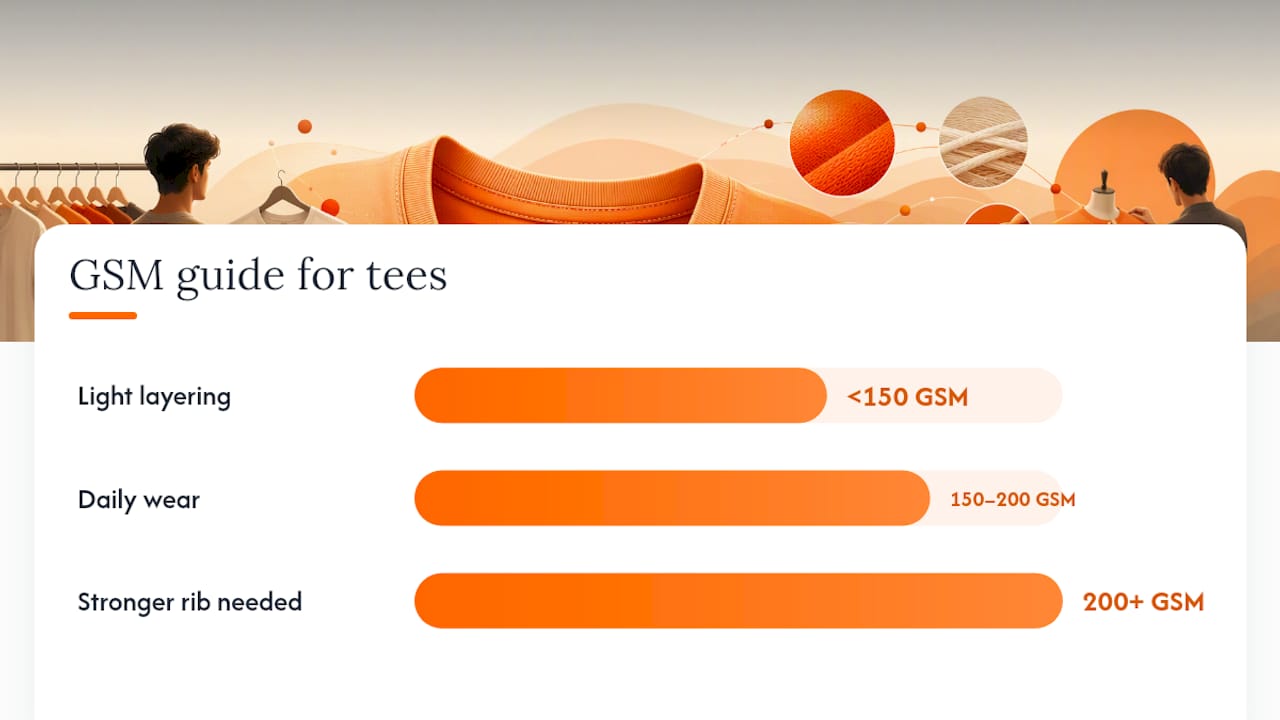
Heavier fabric pulls harder on the neckline every time you put the shirt on, which means fabric weight directly affects how much load the collar has to absorb. Tees under 150 grams per square meter (GSM) are light and breathable but put less strain on a rib collar simply because there’s less fabric weight to manage. The 150 to 200 GSM range is the sweet spot for most everyday cotton tees, offering enough structure without overwhelming a standard rib. Above 200 GSM, you’re in heavyweight streetwear territory, where the fabric itself is doing more work and the neckline needs a stronger rib to match.
- Under 150 GSM: lightweight, less collar stress, but thinner fabric shows wear faster overall.
- 150 to 200 GSM: balanced weight for daily wear tees.
- 200 GSM and above: heavyweight feel, requires 2×2 or spandex-enhanced rib to avoid sagging.
Cotton-poly blends and pre-shrunk combed cotton also matter here. A blend or a pre-shrunk fabric resists shrinkage during washing, and that stability protects the collar from the uneven pulling that happens when body fabric shrinks faster than the neck trim. This guide to fabric weight for tees breaks down which GSM range fits different use cases if you want to go deeper before buying.
What Construction Details Actually Extend Collar Life?
Back neck tape is the detail most shoppers overlook and the one that matters most. This narrow strip of fabric, usually polyester or a poly-blend, sits inside the shoulder seam and stabilizes the neckline against stretching while covering the raw seam edge so it doesn’t chafe. Woven polyester tape tends to outperform cotton tape for dimensional stability because it resists stretching under tension better than a cotton strip.
Stitch type matters just as much. Coverstitch and double-needle construction at the shoulder-to-neck junction keep the seam from unraveling under repeated stress, and a stabilized shoulder seam prevents the whole neckline from sagging as the shirt ages.
- Look for a back-neck tape, ideally polyester or poly-blend, not just an unfinished seam.
- Coverstitch or double-needle stitching at the shoulder seam signals better factory standards.
- Ask for pre-shrink treatment on the fabric before cutting, which reduces post-wash distortion.
Manufacturers serious about durability test wash recovery by running samples through repeated home-laundry cycles, typically somewhere between 5 and 20 washes, and measuring how much the neckline stretches and whether it recovers. If a seller can’t tell you anything about wash testing, that’s worth noting before you buy in bulk. Tees built with reinforced seam construction throughout, not just at the collar, tend to hold their overall fit longer too.
How Do You Evaluate a Tee Before Buying?
Run through this checklist before you commit to a purchase or a bulk order:
- Check the rib spec. Ask whether it’s 1×1, 2×2, or spandex-enhanced, and match it to how often you’ll wear the shirt.
- Confirm the GSM. Anything under 150 GSM works for light layering; 150 to 200 GSM suits daily wear; 200 GSM and up needs a stronger rib to match.
- Look for back-neck tape and seam type. A taped, coverstitched neck seam is a strong signal of factory quality control.
- Ask about wash-testing. A seller with actual recovery data after multiple wash cycles has done real quality checks.
- Review the return and sample policy. A brand confident in its construction usually offers samples or an easy return window.
At home, you can run a rough version of this test yourself: gently stretch the collar of a shirt you already own and watch how quickly it returns to shape. Slow recovery or visible looping means the rib has lost its elasticity.
Pro Tip: Measure the neck opening flat before the first wash, then again after five washes. Anything more than a small amount of permanent stretch tells you the rib or the tape wasn’t up to the job.
How Should You Wash and Store Tees to Protect the Collar?
Cold water and a gentle cycle do more for collar longevity than any fabric softener ever will. High heat, both in washing and especially in the dryer, is the fastest way to break down elastane fibers in spandex-enhanced ribs and to set shrinkage unevenly across cotton fabric.
- Wash in cold or lukewarm water on a gentle cycle.
- Skip the dryer when possible, or use low heat and pull the shirt out while still slightly damp.
- Fold tees rather than hanging them by the collar, since hangers put constant downward pressure on the neckline.
- Rotate your shirts instead of wearing the same one every other day, which spreads out wear evenly.
A shirt that’s starting to lose its shape can sometimes be saved with a light steam and a gentle reshaping while damp, but once the rib has visibly stretched out permanently, no amount of ironing brings it back. These fabric care habits apply across most heavyweight cotton pieces, not just tees.
What Do Construction Standards Actually Look Like in Practice?
Kebz has spent years unpacking how apparel claims hold up against actual construction choices, and the gap between marketing copy and factory specs is often wide. A brand that lists its rib percentage, GSM, and tape material on a product page is telling you something concrete. One that just says “premium quality” is telling you nothing.
Some apparel brands build their tees around heavyweight fabric, reinforced seams, and rib constructions chosen for the way each piece is meant to be worn, whether that’s an everyday basic or an oversized streetwear cut. The brand verifies construction on a sample basis before pieces go into production, checking stitching and neckline recovery rather than relying on fabric mill claims alone. That kind of sample-level scrutiny is exactly what this guide recommends any shopper ask about before buying, from any seller.
What Should You Actually Prioritize First?
Most buying guides treat neckline durability as an afterthought, something you check after color and print. That ordering is backward. A shirt with a bold design and a collar that sags after eight washes gets worn less and thrown out sooner, no matter how good the print looked on day one.
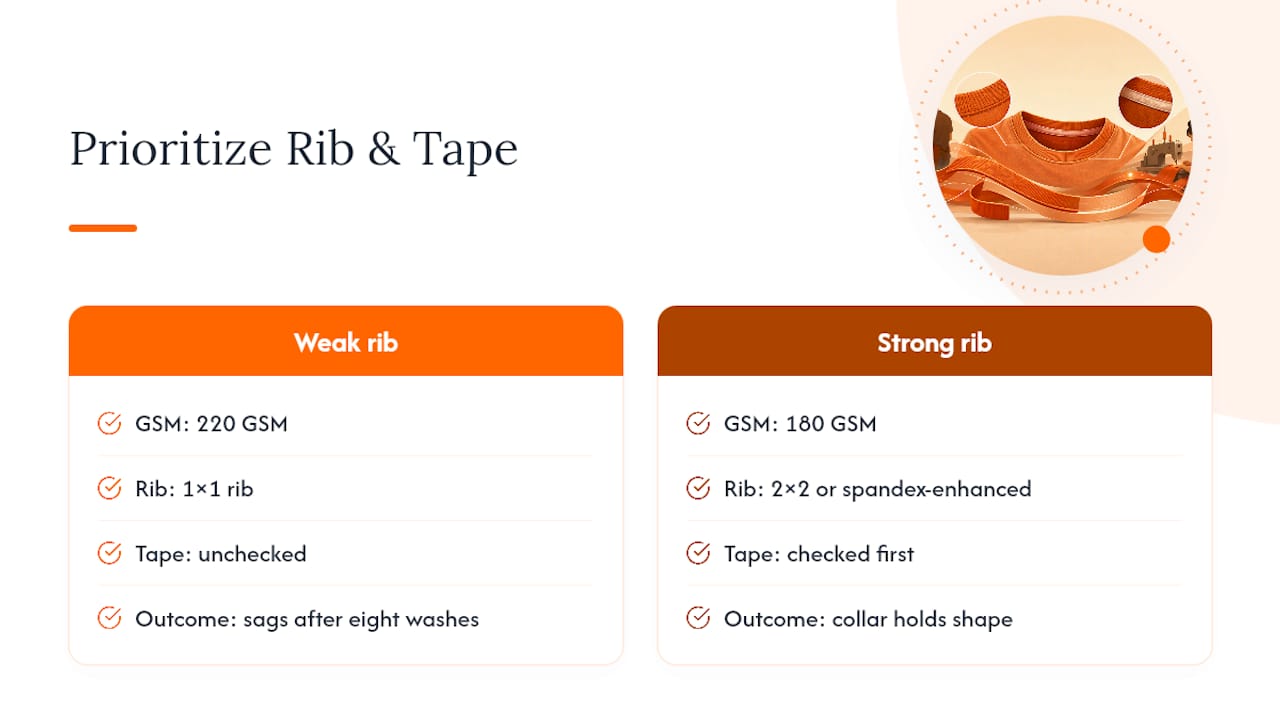
The conventional advice to “buy heavyweight cotton” isn’t wrong, but it’s incomplete. Heavyweight fabric without a matching rib structure just means more weight pulling on a collar that can’t handle it. The GSM and the rib have to be evaluated together, not separately, because a 220 GSM tee with 1×1 rib will sag faster than a 180 GSM tee with a 2×2 or spandex-enhanced rib.
If you take one thing from this guide, make it this: check the rib spec and the tape material before you check the print. Everything else, the fit, the softness, the color retention, matters less if the collar gives out first. That’s the detail that separates a tee you wear for one season from one you wear for five.
— Kebz
How Afro Urban Apparel Builds Collars That Actually Hold Up
Some apparel brands offer tees built with heavyweight fabric, reinforced seams, and durable rib construction designed to handle the pull and wash cycles that daily wear puts on a collar, not just the pull of a bold print.
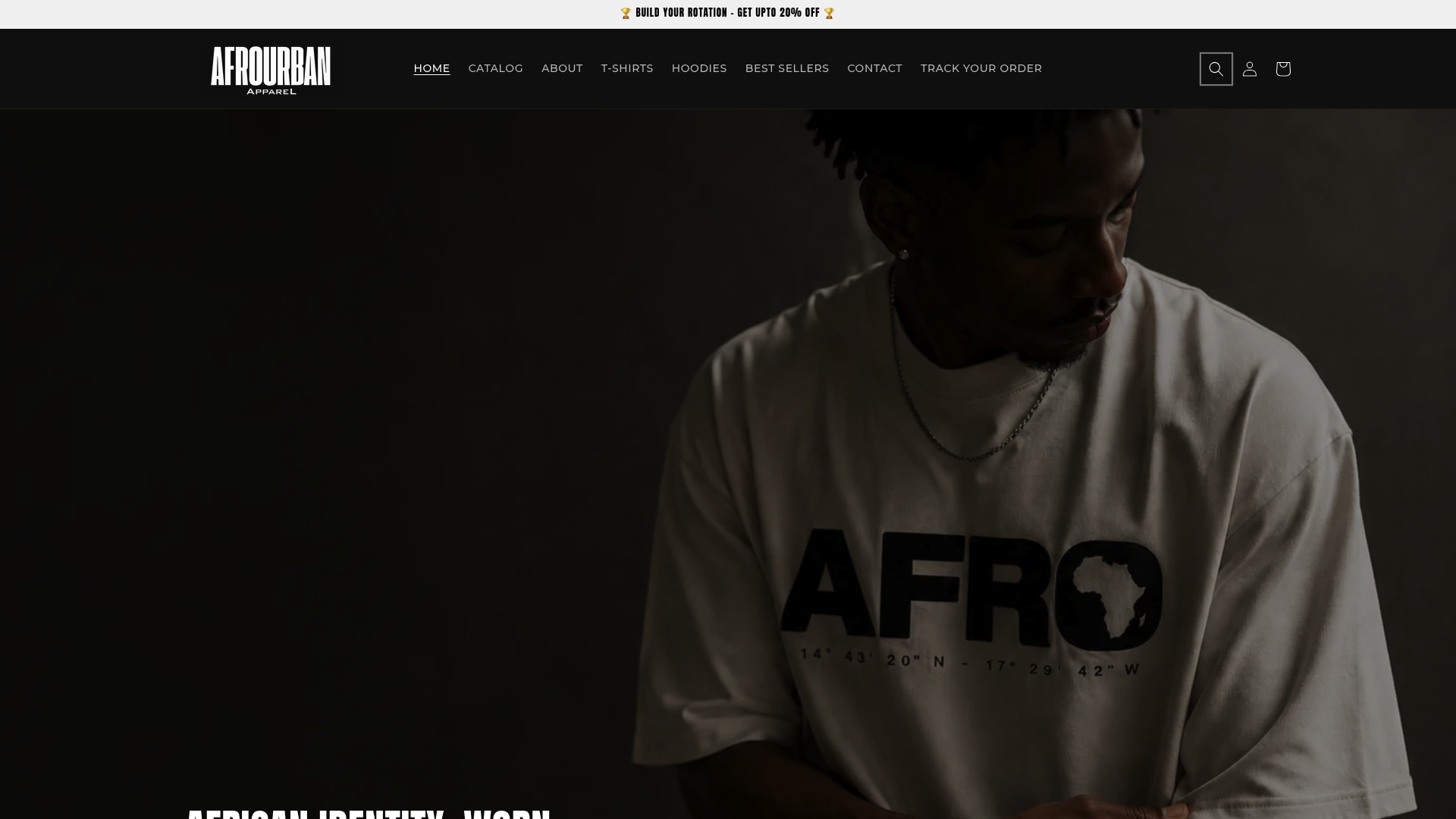
If you’re shopping the full collection, look for the construction notes on each product page, including fabric weight and seam details, before you pick a size or print. Pieces built with a 1×1 rib neckline are noted as such, so you know exactly what you’re getting before checkout. If you’re unsure about fit or fabric feel, check with the seller about sample availability and return options before committing to a full order. Start by browsing the current collection and checking the construction details listed on each piece.
Sources
- T-Shirt Necklines: A Buyer’s Guide to Styles, Fabrics, and Custom Manufacturing - Fexwear
- Neck Ribbing Options for Heavyweight T-Shirts | OEM Cut & Sew Guide - Newasia Garment
- Back Neck Tape for T-Shirts: Complete Manufacturing & Application Guide - ECIGROUP
FAQ
What Is the Most Durable T-Shirt Neckline?
A crew neck finished with a quality rib knit, either 1×1 for everyday wear or 2×2 and spandex-enhanced for heavier tees, holds its shape better than self-fabric or unreinforced finishes.
Does GSM Affect How Long a Collar Lasts?
Yes. Heavier fabric above 200 GSM puts more downward pull on the neckline, so it needs a stronger rib structure to avoid sagging over time.
What Is Back Neck Tape and Why Does It Matter?
Back neck tape is a strip of fabric, usually polyester or poly-blend, sewn inside the shoulder seam to stabilize the neckline and prevent stretching and chafing.
How Many Washes Should a Good Collar Survive Without Stretching?
Manufacturers often test recovery across multiple home-laundry cycles, and a collar that shows minimal permanent stretch after repeated washing reflects solid rib and tape construction.