

1x1 rib is a knit construction built from alternating single columns of knit and purl stitches. The result is a fine, symmetrical, highly stretchable trim that looks identical on both sides and springs back to shape after every stretch. For collars, cuffs, and waistbands on streetwear, it is the industry-standard choice precisely because those openings are frequently pulled over the head or pushed up the arm.
The single most important thing to know before buying: a 1x1 rib without elastane will bag out. A well-specified trim with even a small spandex addition holds its shape through repeated wash cycles. Afrourbanapparel builds this spec into every neckband and cuff on its garments, and the difference is visible the moment you compare it to a collar that has gone slack.
Table of Contents
- What does 1x1 rib actually look like on a garment?
- How does 1x1 rib perform at collars, cuffs, and waistbands?
- Which fiber blends work best for 1x1 rib trims?
- 1x1 vs 2x2 rib: which one should you choose?
- What quality markers should you check before buying?
- How should you care for garments with 1x1 rib trims?
- How Afrourbanapparel uses 1x1 rib in its garments
- Key Takeaways
- Why trims are the detail that defines a garment
- Afrourbanapparel’s Legacy Hoodies put the spec into practice
- Useful sources
What does 1x1 rib actually look like on a garment?
The stitch geometry is straightforward. Each needle alternates between a knit loop and a purl loop, column by column. Because the knit and purl columns are equal in width, the fabric folds along those columns and presents the same fine vertical wales on both the face and the back. There is no “right side” to worry about during cut-and-sew.

Visually, 1x1 rib sits flat and close. The wales are narrow and evenly spaced, giving the trim a crisp, settled appearance rather than the chunkier texture you see on heavier ribs. Against a jersey body fabric, a well-knitted 1x1 collar reads as clean and intentional. Against a heavyweight fleece, it needs to be properly weighted to avoid looking thin.
Machine gauge determines how fine those wales are. Higher-gauge machines (28–32 gauge) produce a tighter, finer surface with more stitches per inch. Lower-gauge machines yield a slightly more open texture. On a product photo, you can often judge gauge by how clearly defined the individual wales are at the collar edge.
Pro Tip: When reviewing product photos, zoom into the collar or cuff edge. A quality 1x1 rib shows tight, parallel vertical lines with no visible gaps between wales. Puckering or wavy edges in the photo usually mean uneven knitting tension in production.
How does 1x1 rib perform at collars, cuffs, and waistbands?
Horizontal stretch on rib knit typically ranges from about 40% to 75% depending on tension and finishing, with elastic recovery often above 90% when elastane is present. Those numbers matter because a collar that stretches at least 40% can accommodate a wide range of head sizes without distorting, and a recovery rate above 90% means it snaps back to its original width after every wear.
For everyday streetwear, the practical outcomes look like this:
- No bacon neck: tight, uniform knitting tension prevents the collar from flaring outward after repeated stretching.
- Snug cuffs: high recovery keeps sleeve openings close to the wrist rather than sliding up the arm.
- Stable waistbands: consistent elasticity means the hem sits flat rather than rolling or twisting after washing.
- Shape retention over time: elastane content is the deciding factor; without it, fit drift begins within a few wash cycles.
The Martindale abrasion test is the standard reference for comparing knit durability. Rib knits with higher stitch density and tighter gauge consistently outperform looser constructions in abrasion cycles, which is why collar edges on quality garments stay crisp rather than fuzzing at the fold.
Pro Tip: When reading a product spec sheet, look for two numbers: horizontal stretch percentage and elastic recovery percentage. If neither is listed, ask the supplier directly. A recovery figure below 85% is a red flag for any trim that will be stretched daily.

Which fiber blends work best for 1x1 rib trims?
Cotton-rich blends with a small elastane addition are the practical standard for streetwear trims. The most common specs are cotton/elastane blends with small elastane content, which do most of the recovery work. Pure cotton rib stretches but does not recover well; polyester-heavy blends recover but can feel stiff and pill faster.
| Blend | Hand Feel | Recovery | Wash Behavior | Best For |
|---|---|---|---|---|
| 95/5 cotton/elastane | Soft, natural | Excellent | Minimal shrinkage with cold wash | Collars, cuffs, neckbands |
| 95/5 cotton/elastane | Very soft | Good | Slight shrinkage possible | Lightweight tee collars |
| cotton/poly | Firm, smooth | Moderate | Colorfast, low shrink | Waistbands, hem bands |
| pure cotton | Soft | Poor | Shrinks; bags over time | Not recommended for trims |
GSM matters too. A rib trim that is too light against a heavyweight body fabric creates a flimsy neckline that undermines the overall garment quality. Match the rib weight to the body: a heavyweight fleece hoodie needs a rib trim that feels proportional in weight. A lightweight jersey tee can use a finer, lighter rib.
When ordering custom trims, request these specs in writing:
- Fiber content by percentage (e.g., 95% cotton / 5% elastane)
- Knitting gauge (needles per inch)
- Finished width after relaxation (measured after 24 hours off the roll)
- GSM / weight per square meter
- Shrinkage tolerance (typically ±3–5%)
- Heat-setting and compaction confirmation
Pro Tip: Ask for a relaxed finished-width measurement, not the on-roll width. Rib knit can shrink 5–10% in width after it relaxes off the machine. A supplier who only quotes on-roll width is giving you a number that will not match your finished garment.
For buyers interested in natural fiber sourcing and its tradeoffs for streetwear trims, organic cotton options are available from certified mills, though MOQs for custom-dyed organic rib tend to run higher.
1x1 vs 2x2 rib: which one should you choose?
The wale width is the key difference. 1x1 alternates single knit and purl columns; 2x2 alternates pairs. The result is a chunkier, fuller surface on 2x2 that adds visual weight and a more pronounced texture.
| Feature | 1x1 Rib | 2x2 Rib |
|---|---|---|
| Wale appearance | Fine, narrow, settled | Chunky, wider, textural |
| Surface profile | Flat, close to skin | Fuller, raised |
| Stretch | High | Moderate to high |
| Best use | Collars, neckbands, cuffs | Waistbands, hem bands, cuffs on heavier garments |
| Visual weight | Light, crisp | Bold, structured |
Designers reach for 1x1 when they want the trim to disappear into the garment’s silhouette. 2x2 is a deliberate texture choice, often used when the trim is meant to be a visual feature rather than a clean finish.
- Choose 1x1 for T-shirt collars, fitted neckbands, and any trim where a low-profile finish matters.
- Choose 2x2 for bomber jacket cuffs, waistbands on heavier fleece, or when the design calls for a more textured edge.
- For product photography, shoot the collar or cuff at a slight angle to the light source. This catches the wale shadows and makes the rib structure clearly visible.
Pro Tip: If you are comparing two garments online and cannot tell which rib they use, look at the collar edge in the product photo. A 1x1 collar will look almost smooth from a distance; a 2x2 collar will show a clearly ribbed, corrugated edge.
What quality markers should you check before buying?
Visual and technical checks to run on any garment or trim sample:
- Wale alignment: wales should run perfectly vertical with no drift or twist along the collar or cuff edge.
- Stitch density: hold the trim up to light. A quality 1x1 rib should show a tight, even grid with no visible gaps.
- Edge finish: the cut edge should be clean with no loose loops or fraying at the seam attachment point.
- Absence of puckering: lay the collar flat. Any rippling or puckering means the knitting tension was inconsistent.
- Purl wales on the face: if you can see the purl columns on the outside of the collar, the rib was applied inside-out or the knitting tension was too loose.
For sample testing, run these three checks before approving production:
- Relaxed width test: lay the trim flat for 24 hours after receiving the sample. Measure the finished width. Compare to the spec.
- Stretch and recovery test: stretch the collar to its maximum width, hold for 10 seconds, release. It should return to within 5% of its original width within 30 seconds.
- Wash test: machine wash cold, tumble dry low, repeat three times. Check for width loss, color change, and any bagging at the collar fold.
Pro Tip: Early fuzzing at the collar fold after just a few washes is a sign of low-quality yarn, not just poor care. Ask your supplier for the yarn count and twist level. Higher-twist yarns pill and fuzz significantly less.
How should you care for garments with 1x1 rib trims?
Proper care keeps a well-specified rib trim performing for years. The wrong routine degrades even a good elastane blend faster than the knitting itself would suggest.
- Cotton/elastane blends: machine wash cold, gentle cycle. Tumble dry low or lay flat to dry. High heat breaks down elastane fibers and accelerates fit drift.
- Cotton/poly blends: machine wash warm is acceptable. Avoid high-heat drying, which can cause the polyester to set in a stretched position.
- All blends: turn garments inside out before washing to protect the collar and cuff edges from abrasion against other items.
- Avoid fabric softener on rib trims: softener coats elastane fibers and reduces their snap-back over time.
Heat-setting during manufacturing is what gives a rib trim its initial dimensional stability. A trim that was properly heat-set and compacted at the factory will hold its finished width through many wash cycles. One that was not will begin to grow in width after the first few washes, which is the earliest sign of a poorly finished trim.
After repeated wash cycles, a quality 95/5 cotton/elastane 1x1 rib should show minimal width change. Recovery above 90% at the point of purchase is the benchmark to hold suppliers to. Horizontal stretch typically ranges from about 40% to 75% when properly specified.
Pro Tip: For long-term care of streetwear with rib trims, cold water and low heat are the two rules that matter most. Everything else is secondary.
How Afrourbanapparel uses 1x1 rib in its garments
Afrourbanapparel specifies cotton-rich blends with elastane for the neckbands and cuffs on its Legacy Hoodies and heavyweight tees. The trim weight is matched to the body fabric so the collar sits flush rather than folding or flaring. The brand’s design philosophy treats trim as a structural decision, not an afterthought.
On the product page, buyers can check:
- Fiber content listed in the product description (look for the elastane percentage alongside the cotton content).
- Close-up swatch photos showing the wale structure at the collar edge.
- Finished measurements for collar width and cuff opening, which reflect the relaxed, heat-set dimensions.
Pro Tip: When shopping online, use the zoom function on collar and cuff photos. A brand confident in its trim quality will show close-up swatch images. If the only photos are styled shots from a distance, that is worth noting before you buy.
Key Takeaways
1x1 rib with elastane is the correct trim choice for streetwear collars and cuffs because it delivers horizontal stretch typically from about 40% up to 75%, recovery above 90%, and dimensional stability through repeated wash cycles.
| Point | Details |
|---|---|
| Elastane is non-optional | Even a 95/5 cotton/elastane blend keeps recovery above 90%; pure cotton rib bags out quickly. |
| Stretch and recovery targets | Look for horizontal stretch typically from about 40% up to 75% and elastic recovery above 90% when evaluating trim specs. |
| 1x1 vs 2x2 choice | Use 1x1 for collars and neckbands where a flat, settled finish matters; use 2x2 for heavier waistbands and textured cuffs. |
| Heat-setting matters | Confirm heat-setting and compaction with your supplier; untreated trims grow in width after the first few washes. |
| Afrourbanapparel | Specifies cotton/elastane 1x1 rib matched to body fabric weight on Legacy Hoodies and heavyweight tees. |
Why trims are the detail that defines a garment
The conventional wisdom in streetwear production is that fabric weight and print quality are what buyers notice. Trims are treated as a finishing detail, something to sort out at the end of the tech pack. That framing gets the order of importance exactly backwards.
A collar that bags after three washes does not just look bad. It changes how the whole garment fits and how the buyer feels about the brand. The trim is the first tactile contact point every single time someone puts on a hoodie or a tee. It is also the part most likely to fail first if the spec was weak.
The brands that get this right treat rib trim as an engineering decision made early in development, not a commodity sourced at the lowest MOQ. Fiber content, elastane percentage, gauge, GSM, and heat-setting protocol all need to be locked before sampling. Changing the trim spec after the first sample is expensive and often means re-cutting the neckline.
For buyers, the practical takeaway is simple: a brand that publishes its trim specs and shows close-up collar photos is a brand that has thought carefully about this. One that does not is worth asking directly before you order.
Afrourbanapparel’s Legacy Hoodies put the spec into practice
The trim specifications described throughout this article are not theoretical. Afrourbanapparel’s Legacy Hoodies are built with cotton/elastane 1x1 rib at the collar and cuffs, matched in weight to the heavyweight body fabric so nothing looks or feels out of proportion.
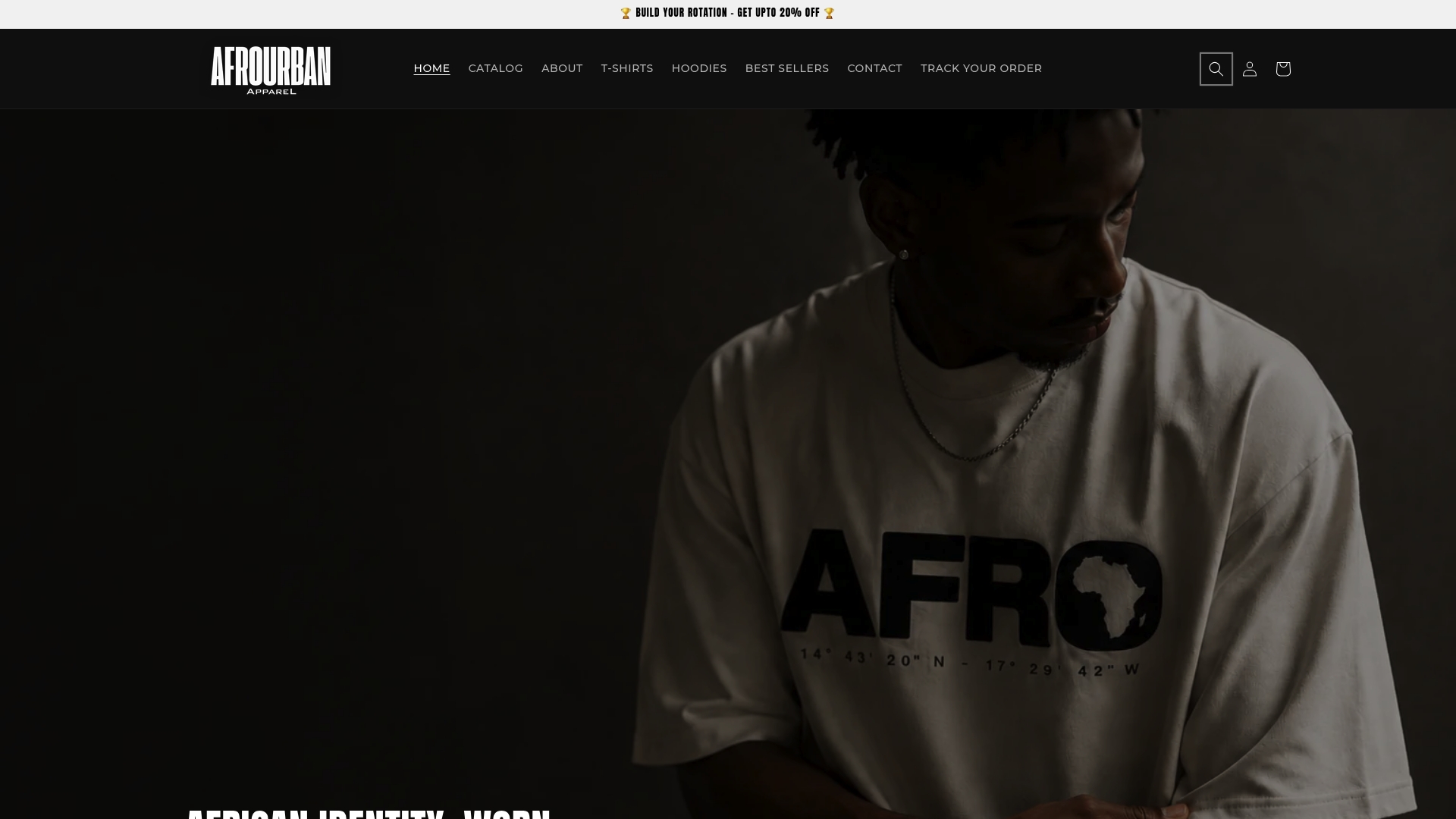
Check the product page for fiber content, finished measurements, and close-up swatch photos before ordering. If you are between sizes, the rib trim’s recovery means the collar and cuffs will conform to your fit rather than gaping or pulling. For heavyweight garments, that elasticity is what separates a collar that stays crisp from one that stretches out by the end of the first week.
Browse the collection, check the specs, and see what a properly engineered trim feels like on a garment built to last.
Useful sources
The following references support the technical claims made throughout this article. Each covers a distinct aspect of 1x1 rib construction, performance, and sourcing.
- Geometrical Models for Balanced Rib Knitted Fabrics — Textile Research Journal: peer-reviewed dimensional modeling of 1x1 rib fabric; supports technical claims on stitch geometry and dimensional properties.