

A dropped-shoulder T-shirt has its shoulder seam set below your natural shoulder point instead of right on it, which is what gives the sleeve that relaxed, slouchy fall. When you shop for one, prioritize your chest measurement over anything else on the size chart. If the chest fits, the drop lands where it should; if it doesn’t, no amount of length adjustment fixes a shoulder seam sitting in the wrong place. Look for mid-to-heavy fabric weight, since lighter knits tend to sag rather than hold the structured drop you’re paying for.
TL;DR:
- Prioritize chest measurement over other size chart data, as it determines how well the shoulder drop will align below your natural shoulder point.
- Heavier fabric weight, especially in mid-to-heavy knits, is essential to maintain the structured shoulder drop after multiple washes.
- Layer outerwear with relaxed shoulders to avoid flattening the drop, and avoid tight blazers that can distort the silhouette.
- The shoulder seam drop typically ranges from a few centimeters below the natural shoulder, and selecting the right size depends on chest fit rather than length alone.
- The dropped shoulder design originates from military and workwear origins, combining functional ease with streetwear influence for versatile, enduring styles.
Table of Contents
- Styling Ideas for Your Dropped-Shoulder Camiseta
- How to Measure Yourself for the Right Fit
- Fabric and Construction Signals That Determine Drape
- Washing and Storing Without Losing the Drop
- Where the Dropped-Shoulder Silhouette Actually Comes From
- Which Body Types Wear a Dropped Shoulder Best
- How the Drop Changes the Way Your Proportions Read
- Mistakes That Ruin the Dropped-Shoulder Look
- Afro Urban Apparel’s Approach to Dropped-Shoulder Streetwear
- Shop the Afro Urban Apparel Dropped-Shoulder Collection
- Sources
- FAQ
Styling Ideas for Your Dropped-Shoulder Camiseta
The dropped-shoulder cut is one of the few silhouettes that works equally well-dressed down for the street or softened for a casual weekend look. The trick is understanding how the extra shoulder volume changes what pairs well underneath it.
For an urban streetwear look, an oversized dropped-shoulder tee tucked loosely into slim jeans or tapered joggers creates the contrast that makes the style pop. A full tuck kills the silhouette by cutting off the drape right where it matters. If you tuck at all, do a “French tuck,” just the front hem pushed in, so the volume up top still reads.
If you want something softer, a lighter knit dropped-shoulder tee works well over a midi skirt or high-waisted shorts. This pairing shows up a lot in boho-casual outfits because the loose shoulder balances against a fitted or A-line bottom instead of fighting it.
Layering is where a lot of people get it wrong. A structured jacket or overshirt worn over a dropped-shoulder tee can flatten the drop if the jacket’s own shoulder seam sits too close to your natural shoulder. The fix is simple:
- Choose outerwear with a slightly relaxed shoulder itself, so the two layers don’t compete.
- Push jacket sleeves up slightly to expose a bit of the tee’s sleeve, which keeps the drop visible.
- Avoid tight-fitted blazers over an oversized dropped-shoulder tee; the shapes cancel each other out.
- Save long-sleeve layering under short-sleeve drop tees for cooler weather, and let the sleeve length peek past the tee’s hem.
Color and proportion matter more with this cut than with a standard-fit tee, because the extra shoulder fabric already adds visual weight up top.
Pro Tip: If you’re wearing a dropped-shoulder tee in a bold pattern or bright color, balance it with a plain, darker bottom. Two loud pieces fighting for attention above and below the waist reads as sloppy, not intentional.
How to Measure Yourself for the Right Fit
Getting the size right on a dropped-shoulder tee comes down to three numbers: chest, shoulder drop, and length. Skip any one of them and you’re guessing.
- Chest circumference. Wrap a tape measure around the fullest part of your chest, under your arms, keeping the tape level and snug but not tight. This is the number that should decide your size.
- Shoulder seam drop. Lay a T-shirt you already own and like flat, then measure from your natural shoulder point down to where you’d want the seam to sit. Most dropped-shoulder designs place that seam visibly below the natural shoulder, with the exact distance varying based on the intended style of the garment.
- Desired length. Measure from the high shoulder point down to where you want the hem, whether that’s cropped, hip-length, or longer. Measurement guides recommend checking width from armpit to armpit alongside this length figure, since both numbers together tell you how a garment will actually drape rather than just how long it is.
When you’re stuck between two sizes, go with whatever fits your chest, even if it means the length runs slightly longer than you expected. A too-narrow chest pulls the shoulder seam upward toward your natural shoulder line, which erases the dropped effect entirely, while a longer hem is easy to live with or even hem yourself.
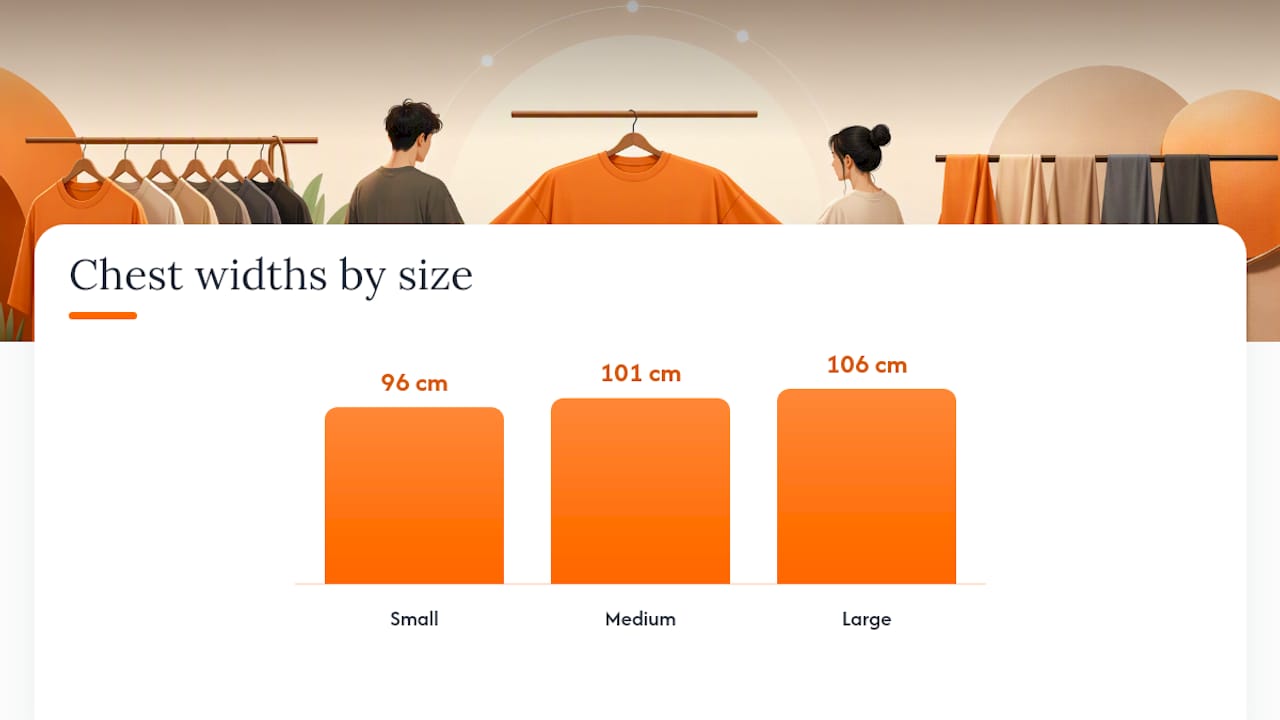
Size chart snapshot: Standard charts often list something like 96 centimeters of chest width for a small, 101 for a medium, and 106 for a large, and brands generally recommend measuring a T-shirt you already own to cross-check against those numbers before ordering. Boxy, unisex-cut dropped-shoulder tees run roomier through the body than feminine-cut versions, so sizing down one step is common if you want a closer fit on the torso while keeping the shoulder drop intact. Check product pages for both a chest measurement and a shoulder-to-hem length. If a listing only gives one, treat it as a gap.
Fabric and Construction Signals That Determine Drape
Not every dropped-shoulder tee holds its shape the same way, and the difference almost always comes down to fabric weight, not the cut itself.
Gramaje, or fabric grammage, measures grams per square meter of knit, and it’s the single best predictor of whether a shoulder drop holds up after a few washes. Heavier knits keep their structure and preserve the intended shoulder fall better than lightweight jersey, which tends to go limp, especially around the sleeve seam where the drop is most visible. Our guide to gramaje by use case breaks down which weight range fits which occasion if you want more detail.
Common fabric builds worth checking on a product page:
- Combed cotton feels smoother and resists pilling better than standard cotton.
- Ring-spun cotton produces a tighter, more durable yarn that holds shape through repeated wear.
- Cotton-poly blends add stretch recovery but can sacrifice some of the structured drape a pure heavyweight cotton gives.
Seam reinforcement is the other detail most shoppers skip. Double-stitching at the sleeve and hem noticeably extends the life of a heavier tee and keeps the silhouette from distorting after repeated washing, and you can usually spot it in close-up product photos even before checking the description. Our breakdown of reinforced-seam construction covers what to look for if a listing photo doesn’t show it clearly. A red flag worth noting: listings that mention fabric composition but skip grammage entirely usually mean the brand doesn’t want you comparing it to heavier alternatives.
Washing and Storing Without Losing the Drop
A dropped-shoulder tee lives or dies by how you treat it after the first few wears, since the shoulder seam is exactly the kind of structural detail that stretches out under rough handling.
- Wash on a gentle cycle in cold or lukewarm water; hot water accelerates fiber breakdown in heavier cotton knits.
- Skip the dryer’s high-heat setting, or better yet, lay the tee flat to dry so gravity doesn’t pull the shoulder seam downward while it’s wet and more elastic.
- Fold heavier dropped-shoulder tees for storage rather than hanging them for long stretches; hangers put continuous strain right on the shoulder seam, which is the one spot you don’t want stretched further.
- Turn the garment inside out before washing to protect any printed or embroidered details from friction.
Our fabric care guide goes deeper on wash temperatures by fabric type if you’re building a rotation of heavier pieces.
Pro Tip: Don’t panic over small measurement differences between two shirts in the same size. Ready-to-wear production commonly allows about 1 to 3 centimeters of natural variation across garments, especially with organic cotton, so a slightly different drop from one tee to the next is normal, not a defect.
Where the Dropped-Shoulder Silhouette Actually Comes From
The dropped shoulder isn’t a recent streetwear invention. It traces back through military and workwear design, where looser armholes and lowered shoulder seams gave laborers and soldiers a wider range of motion without the garment restricting the arm. That practical origin is worth remembering, because it explains why the cut still reads as functional rather than purely decorative even today.
The look resurfaced in a big way through 1980s and 1990s hip-hop fashion, where oversized fits communicated status and comfort at once, borrowing volume from workwear and sportswear alike. Japanese streetwear designers picked up the thread in the 2000s, refining the drop into something more deliberate. Instead of just sizing up a regular tee, they engineered the shoulder seam placement specifically, treating the drop as a design feature rather than an accident of a too-big shirt.
What’s landed in mainstream fashion now is a hybrid of both histories: the functional ease of workwear and the intentional volume of streetwear design language. That’s part of why the dropped shoulder shows up across such different style categories, from boho-casual to hard streetwear to minimalist basics. It’s a structural choice, not a trend tied to one aesthetic, which is also why it hasn’t faded the way a lot of silhouette trends do after a season or two.
Which Body Types Wear a Dropped Shoulder Best
Almost anyone can wear a dropped-shoulder tee well, but the effect changes depending on your frame, and knowing that ahead of time saves you from buying the wrong volume.
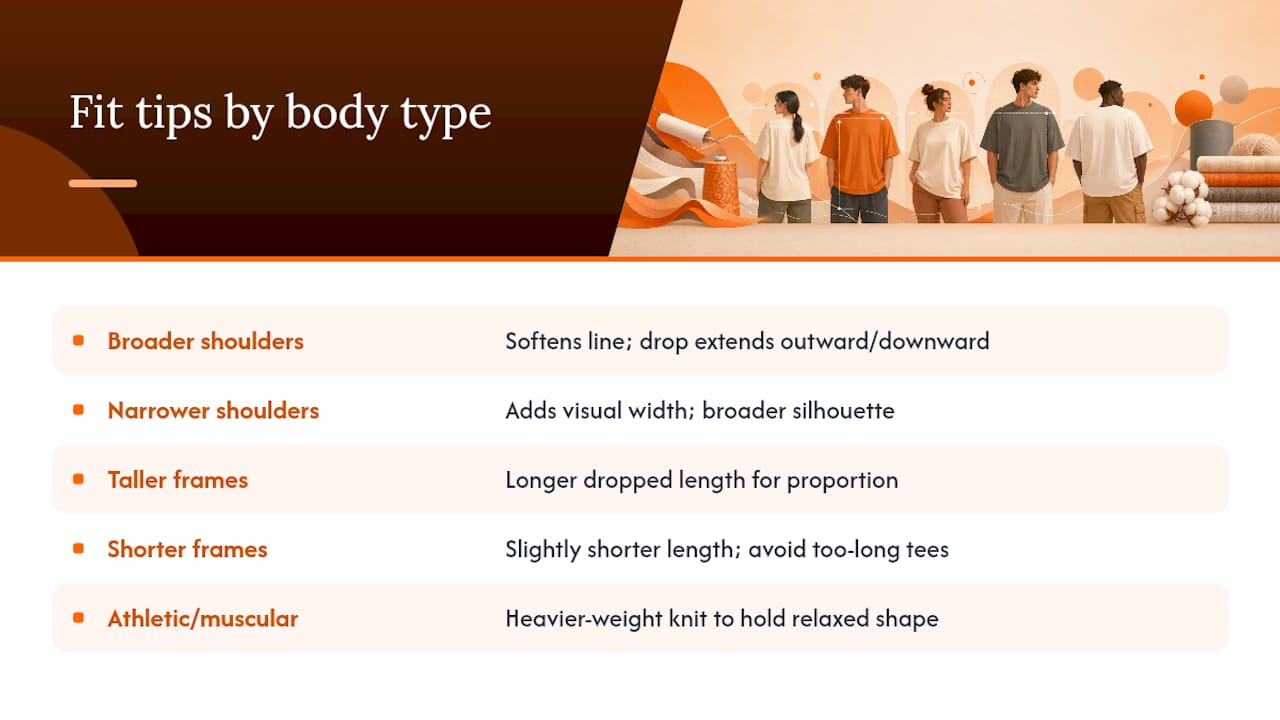
On broader shoulders, a dropped-shoulder cut softens the shoulder line by extending it outward and slightly downward, which can reduce the visual sharpness of a wide upper frame. On narrower or smaller shoulders, the same drop adds visual width up top, creating a broader silhouette than a fitted tee would give. Neither result is a downside. It’s just a different tool depending on what you’re going for.
For taller frames, a longer dropped-shoulder tee tends to look proportionate because there’s more torso length to balance against the extra shoulder volume. Shorter frames generally do better with a slightly shorter length in the same cut, since an oversized tee that runs too long on a shorter person can start to look like borrowed clothing rather than an intentional fit.
Athletic or muscular builds often gravitate toward heavier-weight dropped-shoulder tees specifically because a lighter fabric clings and reveals shape in a way that undercuts the relaxed look the cut is supposed to deliver. A heavier knit holds its own structure regardless of what’s underneath it, which is part of why gramaje matters so much for this particular silhouette.
The honest takeaway: the dropped shoulder isn’t about hiding or emphasizing a specific body type. It’s about picking a drop depth and fabric weight that matches how much volume you actually want to add.
How the Drop Changes the Way Your Proportions Read
A dropped shoulder shifts the visual line of your upper body outward and down, which changes how your torso reads compared to a standard-fit tee, even before you factor in color or pattern.
Because the shoulder seam sits lower than your natural shoulder, the eye registers a wider top half than your actual frame. Paired with slimmer bottoms, that contrast is exactly what creates the silhouette streetwear fans chase, a strong top-to-bottom taper that makes the waist look narrower by comparison. Paired with equally loose bottoms, that same drop can read as shapeless volume instead, since there’s no contrast point for the eye to anchor on.
Length plays into this just as much as width. A cropped dropped-shoulder tee shortens the visual torso and can make legs look longer, while a hip-length or longer version elongates the torso itself. Neither is better. It depends on whether you want to draw the eye toward your waistline or extend the overall vertical line of your outfit.
One detail people miss: sleeve length interacts with the shoulder drop to change how the whole arm reads. A dropped-shoulder tee with a slightly longer sleeve tends to look more intentional and less like an oversized mistake, because the sleeve length matches the extra shoulder volume instead of leaving too much bare arm below a low seam.
Mistakes That Ruin the Dropped-Shoulder Look
The single biggest mistake is buying based on length alone and ignoring chest fit, which is the opposite of the sizing rule and the fastest way to end up with a shirt that doesn’t drape correctly no matter how good it looks on a hanger.
A second common error is treating “dropped shoulder” and “oversized” as the same thing. A dropped-shoulder tee can be fitted through the body with only the shoulder seam altered, or it can be fully oversized. Buying the biggest size available assuming that’s what the style calls for often ends up looking sloppy rather than intentional, especially in lighter fabrics that have nothing to hold the extra volume in place.
People also underestimate how much fabric weight matters relative to cut. A dropped-shoulder tee in a thin, cheap knit will lose its shape within a handful of washes, and by then the shoulder drop that made the shirt appealing in the first place has collapsed into a stretched-out mess. That’s a fabric problem, not a design flaw in the silhouette itself.
Finally, a lot of shoppers layer a fitted jacket over an oversized dropped-shoulder tee expecting the two to blend, when in reality the tighter shoulder seam of the jacket just flattens the drop underneath it. If you’re layering, match relaxed with relaxed. Our boxy fit buying guide covers how cut choices interact with layering pieces if you want to go deeper on this.
Afro Urban Apparel’s Approach to Dropped-Shoulder Streetwear
Afro Urban Apparel builds its dropped-shoulder tees around heavyweight fabric, culturally rooted prints, and construction meant to survive daily wear, not just a photo. That fabric-first philosophy shapes every cut in the collection, because a heavier knit is what keeps a shoulder drop looking intentional wash after wash instead of collapsing into a stretched-out mess.
The brand treats identity as something worn daily, not saved for special occasions, and that same everyday-durability standard applies to the sizing and seam choices behind each dropped-shoulder design. Customers looking for a shirt that holds its shape past the first month tend to gravitate toward that construction-first mindset over trend-driven, lightweight alternatives.
— Kebz
Shop the Afro Urban Apparel Dropped-Shoulder Collection
Dropped-shoulder tees are often built in heavyweight fabric with culturally inspired prints and embroidered details, designed for people who want their heritage visible in daily wear, not just special occasions.
Before you buy, run through the same checklist covered above: confirm your chest measurement against the size chart, check the gramaje listed on the product page, and read any customer-fit notes for how the cut runs true to size or oversized; for example, see the T-Shirt Printing Galway for Group Cycling Events for guidance on checking product details and fit. Heavier fabric tends to hold the shoulder drop through repeated washes far better than a thin knit.
If you’re ready to find your size and see the current prints, browse the full collection and check the size chart against your own chest measurement before ordering. For hoodies and other core pieces built with the same heavyweight approach, the Legacy Hoodies collection is worth a look too.
Sources
- ¿Qué talla de camiseta debo usar? Guía completa | Quiksilver
- Cómo medir camisetas? (guide)
- How to measure the t-shirt size: comprehensive guide (includes fabric discussion)
FAQ
What Does It Mean to Have Dropped Shoulders?
In fashion, a dropped shoulder means the garment’s shoulder seam sits below your natural shoulder point rather than right on top of it, creating the loose, slouchy fall associated with the style. Note this is a design term for clothing construction, separate from the postural condition of naturally sloping shoulders.
How Do I Fix a Dropped-Shoulder Tee That Doesn’t Fit Right?
If the shoulder seam sits too high or the fit looks off, the usual cause is a chest size mismatch rather than the garment itself, so re-measure your chest and size up if needed since a too-tight chest pulls the seam upward and erases the intended drop. Minor length differences can usually be hemmed by a tailor without affecting the shoulder drop.
What Causes a Dropped Shoulder in Clothing Design?
A dropped shoulder is a deliberate pattern choice: the shoulder seam is drafted lower and often paired with a wider armhole, tracing back to military and workwear patterns built for freer arm movement. It is not a manufacturing flaw when it appears consistently across a size run.
How Should a Dropped-Shoulder Tee Fit Across the Shoulders?
The shoulder seam should sit visibly below your natural shoulder, typically a few centimeters, while the sleeve still covers the upper arm rather than sagging into a shapeless fold. Heavier fabric, like the mid-to-heavyweight cotton Afro Urban Apparel uses in its tees, helps that seam hold its position instead of drooping further after washing.