

Kente (nwentom) is a handwoven band cloth from the Akan peoples of Ghana, historically reserved for royalty and sacred ceremony. It has since become one of the most recognized textiles in the world. Understanding kente historia means tracing a line from a spider’s web in a Bonwire legend to the runways and streetwear racks of 2026, with symbolism, craftsmanship, and ceremony holding the whole story together.
TL;DR:
- Authentic kente is distinguishable by visible strip seams, irregular thread tension, and heavier fabric compared to mass-produced printed versions.
- The most meaningful patterns and colors in kente encode proverbs, historical events, and moral lessons, making the textile a language of wisdom.
- Kente weaving involves a strip loom and a sewing process that creates unique mosaic-like cloths, with specific patterns historically reserved for royalty and ceremonies.
- Contemporary streetwear uses kente-inspired motifs, but buyers should favor high-quality, weighty fabrics and respect cultural significance to avoid appropriation.
- Learning about kente’s history and symbolism, including pattern names and their meanings, is essential for respectful appreciation and responsible fashion choices.
Table of Contents
- Kente Historia: Origins, Legends, and Early Development
- What Kente Patterns and Colors Actually Communicate
- How Kente Is Made: Band Looms and the Craft of Assembly
- Traditional Ceremony: Who Wore Kente and When
- Kente in Streetwear and Modern Fashion
- Afro Urban Apparel’s Approach to Wearing Kente-Inspired Design
- Where to Learn More About Kente’s History
- Why Cultural Symbolism Should Come Before Style Trends
- Sources
Kente Historia: Origins, Legends, and Early Development
The most cited origin story comes from Bonwire, a town in Ghana’s Ashanti region, where two brothers named Kwaku Ameyaw and Ota Karaban reportedly watched a spider named Ananse spin an elaborate web. They copied the technique on a wooden frame, and the craft of strip weaving was born. That legend is not just folklore. It is embedded in how Akan communities still talk about the origin of their most important textile.
Scholarly sources place kente’s major development between the 12th and 17th centuries, with some traditions pointing to even earlier roots in West African weaving practices that predate the cloth’s current form, according to a Baylor University overview. The LibreTexts entry on kente describes how the craft spread beyond the Ashanti court and took root among the Ewe people, who developed their own regional variations in pattern and color use.
A few historical facts anchor the timeline:
- The Ananse/Bonwire legend explains the spider web origin of the strip-weaving technique.
- Ashanti royal courts adopted kente first, tying the cloth to political and spiritual authority.
- The Ewe people, located in Ghana’s Volta region and parts of Togo, developed parallel traditions with distinct motifs.
- Recent recognition confirms the craft’s living status, as Ghana’s kente tradition was named a UNESCO intangible cultural heritage practice, according to Africanews.
What Kente Patterns and Colors Actually Communicate
Every serious weaver will tell you the same thing: kente is not decoration, it is language. Named patterns and full cloths often reference specific proverbs, historical events, or moral lessons, a practice the LibreTexts analysis describes as central to how Akan societies encode wisdom into textiles.
Pro Tip: If you want to understand a piece of kente, ask about the pattern’s name first. The name usually unlocks the proverb or story the weaver intended, which matters more than the color scheme alone.
Color carries its own vocabulary:
- Gold signals wealth, royalty, and high social status.
- Green represents growth, fertility, and renewal.
- Red connects to political passion, sacrifice, and spiritual strength.
- Black symbolizes maturity and spiritual energy tied to ancestry.
- Blue conveys peace, harmony, and love.
Named patterns extend that vocabulary further. “Fathia Fata Nkrumah” commemorates Kwame Nkrumah’s marriage and became a symbol of national pride. “Obaakofoo Mmu Man” translates loosely to “one person does not rule a nation,” a direct political statement woven into cloth. “Sika Fre Mogya,” meaning “money attracts blood relations,” warns against the corrosive pull of wealth on family bonds. UNESCO’s heritage listing notes that this naming practice is actively taught within communities, not just archived in museums.
How Kente Is Made: Band Looms and the Craft of Assembly
Kente construction starts with a horizontal band loom, a technique that produces narrow strips rather than one continuous fabric. Here is the basic process:
- Thread is prepared, historically cotton and, for royal commissions, imported silk unraveled from European trade cloth.
- Weavers work the loom to produce strips roughly 10 to 15 centimeters wide, each carrying its own pattern sequence.
- Multiple strips are cut to matching length and sewn edge to edge by hand.
- The finished cloth is assembled from multiple strips sewn edge to edge, then checked for pattern alignment before it is worn.
This strip-and-sew method is why authentic kente feels almost mosaic-like. No two cloths repeat exactly, according to field documentation from Bonwire’s weaving community. Historically, production divided along gender lines: men built looms and did the weaving, while women prepared and spun thread, and a chief weaver oversaw pattern design and training within the community. Bonwire remains the best known weaving center in Ghana, and its workshops still train apprentices using the same band-loom fundamentals passed down for generations.
Traditional Ceremony: Who Wore Kente and When
Kente’s earliest role was not fashion. It marked power. Ashanti kings wore full-body cloths at coronations, and specific patterns were reserved for royal or chiefly use only, with unauthorized wear treated as a serious social violation.
Ceremonial context still shapes how kente is worn:
- Coronations, funerals, and major festivals remain the primary settings for full ceremonial dress.
- Men traditionally wear kente draped toga-style over one shoulder, leaving the other bare.
- Women typically wear it as a two-piece wrap, one section for the body and one as a shawl or head covering.
- Full cloths can measure several meters and require significant weaving labor to complete.
As Ghana’s economy and social structures changed, access to kente broadened well beyond royal courts. Cutting and tailoring practices adapted too, though the ceremonial core, reserving certain patterns for solemn or high status occasions, has held on stubbornly even as everyday access expanded.
Kente in Streetwear and Modern Fashion
The gap between handwoven kente and printed “kente-style” fabric is not subtle once you know what to look for. True handwoven cloth shows visible strip seams, irregular thread tension, and a heavier hand feel. Machine printed versions are flat, uniform, and mass produced, and they carry none of the labor or pattern-naming tradition behind the real thing.
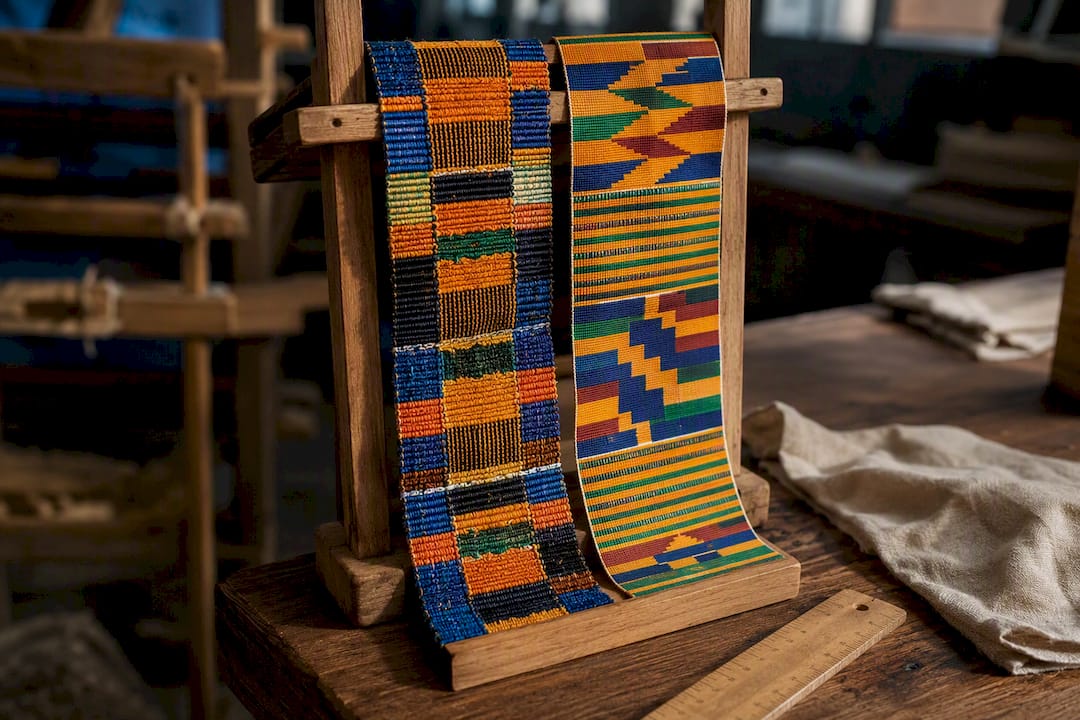
Streetwear has pulled kente motifs into hoodies, heavyweight shirts, and accessories worn far from Ghana, largely as a way for diaspora communities to carry heritage into daily life rather than saving it for rare occasions. Brands working in this space, including partners like CZT, have shown how culturally inspired panels and patches can be worked into contemporary silhouettes without flattening their meaning.
That said, appropriation concerns are real when kente motifs get stripped of context or attached to products with no connection to the culture that produced them. A few grounding rules help:
- Favor pieces that credit the weaving tradition or specific artisans by name.
- Treat royal or ceremony-specific patterns with more caution than general geometric motifs.
- Choose heavier, better constructed fabric over thin novelty prints, since quality signals respect for the source material.
Afro Urban Apparel’s Approach to Wearing Kente-Inspired Design
Some streetwear brands build heavyweight apparel around the idea that heritage belongs in daily life, not just on special occasions. That mission lines up closely with how kente itself evolved, from a cloth reserved for royal ceremony to one worn more broadly as pride in identity spread.
If you are shopping for kente-inspired pieces, look for heavier fabric construction, credited design inspiration, and details that reference patterns without copying ceremonial cloths meant for coronations or funerals. Afro Urban Apparel’s own modern African fashion guide walks through how heritage textiles translate into everyday pieces, and its heavyweight hoodie collection applies that same durable, respectful approach to garments built for daily wear rather than a single event.
Where to Learn More About Kente’s History
For readers who want primary sources rather than secondhand summaries, start with UNESCO’s intangible heritage listing, LibreTexts’ detailed cultural analysis, Africanews’ coverage of Ghana’s heritage recognition, Baylor University’s kente history page, and TouringGhana’s reporting from Bonwire. Anyone serious about preservation should also look to regional craft centers directly rather than relying on secondary retellings.
Why Cultural Symbolism Should Come Before Style Trends
Most coverage of kente treats it as a pattern to borrow rather than a system of meaning to respect, and that ordering is backwards. The craft technique, the band loom, the strip seams, the naming conventions, is not a footnote to the aesthetic. It is the reason the aesthetic exists at all.

Conventional fashion writing tends to stop at “colors mean things” and skip the harder part: patterns are governed, some are restricted, and the weaving itself carries labor history that a printed shirt simply cannot replicate. If you take one thing from kente historia, prioritize understanding over acquisition. Learn which patterns carry ceremonial weight before buying anything modeled on them. Ask where a garment’s inspiration came from. Favor construction quality that at least gestures toward the labor intensity of the original craft.
That approach will not make a streetwear piece equivalent to a hand-loomed royal cloth from Bonwire. Nothing mass produced will. But it closes the gap between wearing a symbol and understanding one, which is the difference most buyers never bother to learn.
— Kebz
Sources
- Artesanía de tejido tradicional Kente - UNESCO Patrimonio cultural inmaterial
- Ghana’s kente cloth recognized as UNESCO cultural heritage - Africanews
- Paño Kente - LibreTexts Español
- Kente History
- Bonwire Kente weaving village - TouringGhana