

Textile craftsmanship is the set of hands-on techniques — weaving, resist-dyeing, reverse appliqué, embroidery, and thread-pulling — that transform raw fiber into portable cultural texts. UNESCO recognizes these skills as intangible cultural heritage, meaning the knowledge lives in human hands and memory, not in a factory blueprint. Brands like Afrourbanapparel draw directly on this tradition, fusing ancestral motifs with contemporary streetwear so that cultural identity becomes part of daily life rather than a costume reserved for ceremony.
- Cultural meaning: A garment’s pattern can signal origin, social rank, life transition, or ritual role to anyone fluent in the local visual code.
- Practical consequence: Craft production drives livelihoods for artisan communities, and understanding it helps consumers make ethical fashion choices.
Table of Contents
- What counts as textile craftsmanship — core techniques you should know
- How textiles carry culture — identity, status, storytelling, and ritual
- The economic stakes of textile production and the threats it faces
- How modern fashion can integrate traditional techniques ethically
- How Afrourbanapparel translates traditional elements into everyday wear
- How you can support textile craftsmanship when you shop
- Where to learn more or get involved in the U.S.
- What traditional and modern materials mean for sustainability
- How globalization and technology are reshaping traditional textile crafts
- Key Takeaways
- Why cultural sustainability is the only honest frame for this conversation
- Afrourbanapparel brings cultural craft into everyday streetwear
- Useful sources and further reading
What counts as textile craftsmanship — core techniques you should know
Traditional textile skills cover a wider range than most people realize. The six categories below appear most often in cultural clothing discussions.
Strip-weaving (Kente): Narrow strips woven on a horizontal loom, then sewn edge-to-edge into a larger cloth. The color sequences and geometric patterns in Kente encode proverbs and social status within Ghanaian and broader West African communities.

Resist-dyeing (Ikat and Adire): In Ikat, threads are bound and dyed before weaving, so the pattern emerges as the cloth takes shape. The bound sections resist the dye, producing the technique’s signature soft-edged motifs. Adire, practiced in Yoruba communities, applies a similar resist principle using cassava paste or tied raffia on finished cloth.
Reverse appliqué (Mola): Guna women of Panama layer multiple fabric panels, then cut through upper layers to reveal colors beneath. A single mola panel) can take anywhere from two weeks to six months to complete, depending on layer count and stitch density. The finest examples use stitches so small they are nearly invisible.
Discontinuous weft (Jamdani): Weavers insert supplementary weft threads by hand to build floral or geometric motifs directly on the loom, without a pre-programmed pattern. Jamdani is woven near Dhaka and is UNESCO-recognized; the resulting fabric is sheer, breathable, and labor-intensive.

Thread-pulling/openwork (Pelete bite): Kalabari artisans cut and pull threads from imported Indian madras to create openwork motifs — wineglass shapes, fish-gill patterns — that are entirely local in meaning despite the imported base cloth.
Ribbon work: Prairie and Great Lakes Indigenous peoples layer and cut silk ribbons — originally acquired through trade — into positive/negative space designs. Passed matrilineally, these appear on ceremonial regalia including ribbon skirts.
Backstrap loom weaving (Huipil): In southern Mexico and Guatemala, weavers tie one end of the loom to a fixed point and the other around their waist. The huipil functions as a cosmological diagram; regional dye choices (cochineal, indigo) reflect local ecology and trade history.
Pro Tip: When shopping, look for the visual cue specific to each technique: soft-edged patterns signal Ikat; layered color revealed at cut edges signals Mola; geometric openwork in a madras base signals Pelete bite.
How textiles carry culture — identity, status, storytelling, and ritual
Cloth reads like a language. That is not a metaphor — it is how these systems actually function.
African textile traditions — Kente, Bogolan, Adire, Kuba — operate as complex visual grammars. Motifs encode proverbs, dynastic histories, and ritual meanings legible to community members. Bogolan (mud cloth) from Mali uses fermented mud applied to hand-spun cotton; the resulting patterns mark hunters’ status and women’s transitions. Kuba cloth from the Democratic Republic of Congo uses geometric interlace that signals royal lineage.
In Island Southeast Asia, textiles consecrate every life transition — birth, marriage, death, changes in social rank. Among the Iban of Borneo, sacred pua cloths are considered spiritually potent; only experienced weavers with the right ritual knowledge may create them safely.
The Li ethnic group of Hainan Province, China, records history, legends, and cosmology in textile patterns precisely because they had no written language. The cloth was the archive.
The economic stakes of textile production and the threats it faces
Textile craft is a livelihood engine, but it is a fragile one. Master craftspeople are aging, and younger generations often choose less labor-intensive work. When UNESCO first inscribed Li textile techniques on its Urgent Safeguarding list in 2009, only 1,000 practitioners remained, mostly older people. Sustained intervention — cooperatives, formal education, training workshops — grew that number to nearly 20,000 bearers over the following years. That recovery is the exception, not the rule.
Statistic: When Li textile techniques were first inscribed on UNESCO’s Urgent Safeguarding list in 2009, only 1,000 practitioners remained. Targeted apprenticeships and formal education programs helped grow that figure to nearly 20,000 bearers.
| Technique | Typical production time | Labor intensity |
|---|---|---|
| Mola (reverse appliqué) | 2 weeks–6 months per panel | Very high |
| Jamdani (discontinuous weft) | Days to weeks per sari | High |
| Kente (strip-weaving) | Days to weeks per cloth | Moderate–high |
| Pelete bite (thread-pulling) | Days to weeks per panel | High |
| Ribbon work (appliqué) | Hours to days per garment | Moderate |
Understanding cultural fashion economics helps explain why handcrafted pieces command higher prices. A mola that took three months of skilled labor cannot be priced like a mass-produced print.
Pro Tip: Ask sellers directly: “Who made this, and how long did it take?” A brand that cannot answer that question probably does not have a genuine artisan partnership.
How modern fashion can integrate traditional techniques ethically
Ethical integration treats artisans as creative partners, not as a source of cheap exotic motifs. The difference between the two approaches is visible in the contract, not just the marketing copy.
Design-driven partnerships re-engineer craft processes so local economies benefit while ancestral technique integrity is preserved. That means artisans retain authorship credit, receive fair compensation, and have input on how their visual codes are used. Superficial appropriation, by contrast, lifts a motif, prints it on fast-fashion polyester, and pays nothing back to the originating community.
Dos for designers and brands:
- Credit the specific community or artisan by name on the product
- Pay wages that reflect actual production time, not commodity-fabric rates
- Share design decisions with artisan partners before production
- Use the technique itself, not just a digital reproduction of its aesthetic
Don’ts:
- Do not strip a motif from its cultural context and apply it as decoration
- Do not use “handmade-inspired” as a substitute for actual handcraft
- Do not set prices that make the artisan’s labor invisible
Pro Tip: Transparent revenue-sharing — where the artisan receives a stated percentage of the retail price — is the clearest signal that a brand’s partnership claim is real. Ask for it in writing.
How Afrourbanapparel translates traditional elements into everyday wear
Afrourbanapparel approaches modern African fashion by treating cultural motifs as living design vocabulary rather than historical costume. The brand’s heavyweight streetwear fuses traditional African visual codes with contemporary silhouettes, so diaspora wearers can carry their heritage into daily life without waiting for a special occasion.
The brand’s core audience — diaspora individuals seeking authentic representation — consistently points to quality and cultural specificity as the standout features. That combination is harder to achieve than it sounds; most fast-fashion brands that borrow African aesthetics sacrifice one for the other.
- Document the artisan origin of every design element
- Pay living wages and include maker stories on product pages
- Use heavyweight, durable fabric that signals slow-fashion values
- Make cultural identity wearable on a Tuesday, not just at a festival
Pro Tip: Small brands following this model should photograph and credit the artisan or community behind each design at launch — not as a marketing add-on, but as a sourcing record that builds long-term trust.
How you can support textile craftsmanship when you shop
Three immediate actions make a real difference:
- Buy direct or from verified artisan partners. Farmer’s markets, artisan cooperatives, and brands with named maker programs put money closer to the source.
- Ask about production time and revenue share. A garment that took weeks to make should cost more than one that took minutes. If a brand cannot explain the gap, that is your answer.
- Favor slow-fashion cultural wear models with transparent pricing that reflects actual labor.
Before buying, run through these questions:
- Where was this made, and by whom?
- What is the production time for this technique?
- Does the artisan receive a percentage of the sale?
- Are care instructions included to extend the garment’s life?
- Does the brand publish its sourcing practices?
A yes to most of those questions is a strong signal. A brand that deflects them probably has something to hide.
Where to learn more or get involved in the U.S.
Community apprenticeships, university courses, museum-led workshops, and artisan cooperatives are the four most reliable learning paths for traditional textile skills in the United States.
- Museum programs: The Metropolitan Museum of Art, the Smithsonian’s National Museum of the American Indian, and the Textile Museum in Washington, D.C. offer workshops, lectures, and study collections.
- University courses: Programs in fiber arts, material culture, and fashion history at schools like the Rhode Island School of Design (RISD) and Parsons School of Design include hands-on technique instruction.
- Community textile centers: Weaving guilds and community studios in most major U.S. cities offer beginner-to-advanced instruction in backstrap loom weaving, natural dyeing, and appliqué.
- Artisan cooperatives: Organizations that connect U.S.-based buyers directly with overseas artisan cooperatives often run educational programming alongside their retail operations.
- UNESCO guidance on safeguarding intangible heritage provides a framework for evaluating any program: look for artisan leadership, hands-on practice hours, and a clear pathway to compensated work.
When evaluating a program, prioritize those where the instructor is a practicing artisan from the tradition being taught, not just an academic observer.
What traditional and modern materials mean for sustainability
Traditional textile craftsmanship relies on natural fibers — cotton, hemp, silk, wool — and plant-based or mineral dyes like cochineal, indigo, and mud. These inputs are biodegradable and often locally sourced, which keeps the carbon footprint of production low. The Li community of Hainan, for example, continues to grow and harvest the natural raw materials for their dyes and threads, linking cultural practice directly to environmental stewardship.
Modern materials — synthetic dyes, polyester blends, nylon threads — reduce production costs and increase durability, but they introduce microplastic shedding and chemical runoff. The tension is real: a synthetic dye can replicate a traditional color at a fraction of the cost, but it severs the ecological knowledge embedded in the original process.
Ethical fabric sourcing in cultural fashion means choosing materials that honor both the technique and the environment. That often means accepting higher prices and longer production timelines — which loops directly back to why handcrafted cultural clothing costs what it does.
How globalization and technology are reshaping traditional textile crafts
Global markets have been a double-edged force. On the positive side, e-commerce gives artisan cooperatives in West Africa, Central America, and Southeast Asia direct access to U.S. buyers without a middleman. Digital platforms let weavers document and share techniques, creating archives that survive even when a master craftsperson does not.
The risks run in the opposite direction. Mass production of “ethnic-inspired” prints undercuts artisan pricing, making it harder for hand-producers to compete on cost. Fast fashion’s speed cycle — new collections every few weeks — is structurally incompatible with a technique that takes months per piece. And digital reproduction makes it trivially easy to copy a motif without compensating or crediting its source community.
Technology also offers preservation tools: 3D loom modeling, digital pattern archives, and video apprenticeship programs can extend a master weaver’s reach beyond their immediate geography. The question is whether those tools are controlled by the communities themselves or by outside institutions extracting knowledge without reciprocity.
Key Takeaways
Traditional textile craftsmanship is a living archive of cultural identity, and its survival depends on treating artisans as creative partners, paying wages that reflect real labor, and choosing slow-fashion brands with transparent sourcing.
| Point | Details |
|---|---|
| Craft encodes culture | Techniques like Kente, Mola, and Jamdani carry identity, status, and ritual meaning in every pattern. |
| Practitioner decline is documented | Li textile techniques had only 1,000 practitioners in 2009; targeted programs grew that to nearly 20,000. |
| Production time justifies price | A single Mola panel takes 2 weeks to 6 months; pricing must reflect that labor. |
| Ethical integration requires partnership | Artisans need authorship credit, fair pay, and design input — not just a motif license. |
| Afrourbanapparel models this approach | The brand fuses African visual codes with heavyweight streetwear, making cultural identity wearable daily. |
Why cultural sustainability is the only honest frame for this conversation
The conventional wisdom treats traditional textiles as heritage objects — beautiful, fragile, museum-worthy. That framing is exactly wrong. A textile tradition that lives only in a glass case is already dead. The ones that survive are the ones that stay in use, that adapt to new materials and new contexts while keeping their expressive logic intact. Pelete bite evolved from imported Indian madras. North American ribbon work evolved from traded silk. Kente patterns now appear on graduation stoles at American universities. None of that is corruption — it is how living systems behave.
What actually threatens these traditions is not change. It is the economic squeeze that makes mastery unaffordable: when a master weaver cannot earn a living wage, the knowledge walks out the door with them. That is why the most important thing a fashion brand can do is not celebrate a tradition — it is pay for it, properly, and say so publicly.
Afrourbanapparel’s approach — heavyweight fabric, culturally grounded design, diaspora-first audience — is a practical model for how fashion promotes cultural representation without reducing it to decoration. The brand does not treat African identity as a seasonal trend. That consistency is rarer than it should be.
Afrourbanapparel brings cultural craft into everyday streetwear
For diaspora readers who want to wear their heritage without waiting for a special occasion, Afrourbanapparel offers a direct answer: heavyweight streetwear built around African visual codes, designed for daily use, and sourced with the kind of cultural intentionality this article has been describing.
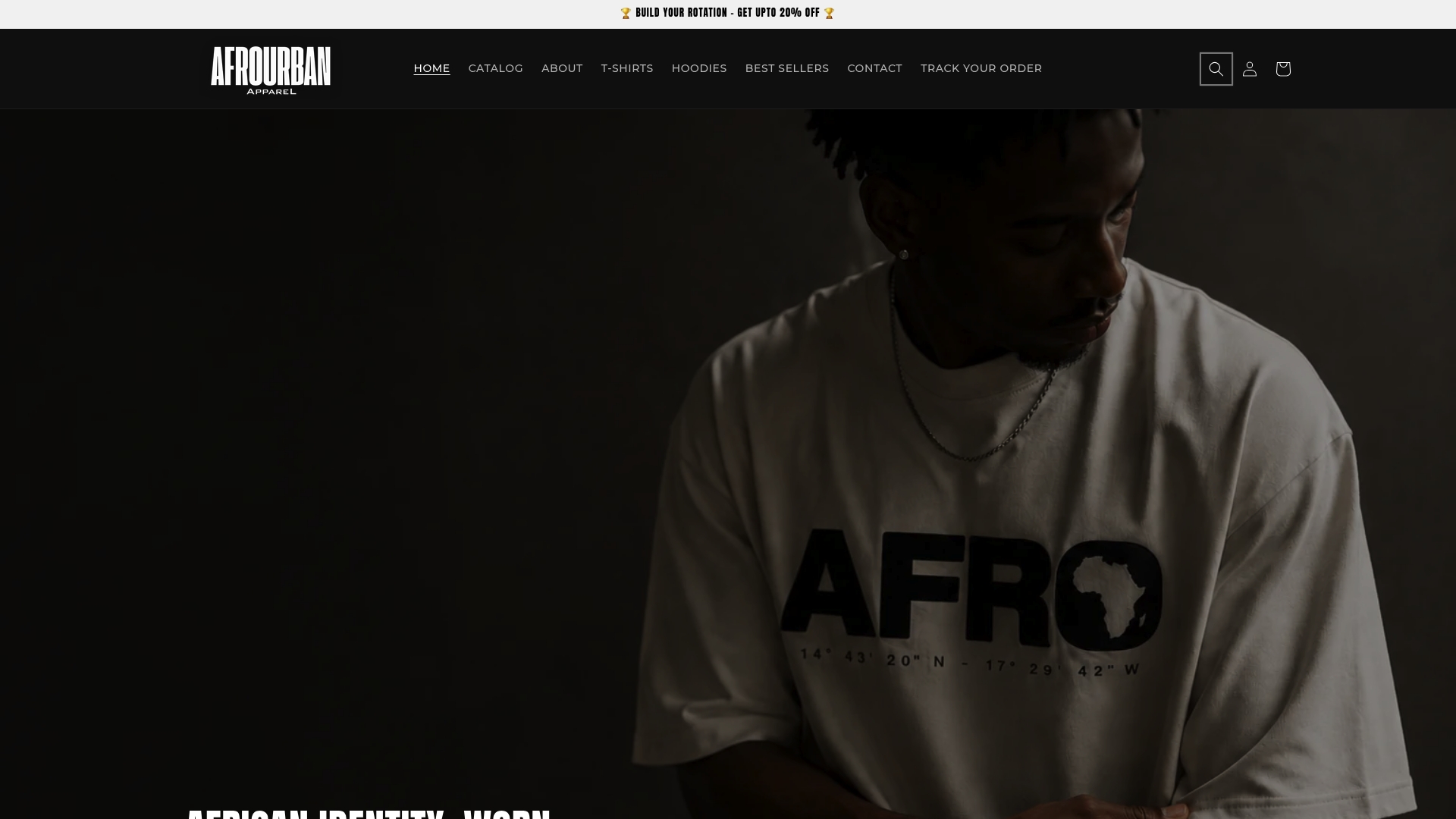
The brand’s pieces reflect the same principles covered here — slow production, meaningful design, and a commitment to keeping African identity visible in casual settings. Before you buy, check the product sourcing details and maker information on each listing. That transparency is the signal worth looking for.
Browse the full collection at Afrourbanapparel and see how traditional African textile principles translate into pieces you can actually wear on a Tuesday.
Useful sources and further reading
The claims in this article draw on the following primary sources and research:
- Traditional art of Jamdani weaving — UNESCO Intangible Cultural Heritage: UNESCO’s official entry on Jamdani, covering technique, community, and cultural significance.
- Traditional Li textile techniques — UNESCO Intangible Cultural Heritage: Documents the recovery of Li textile traditions from 1,000 to nearly 20,000 practitioners.
- Moroccan Caftan: art, traditions and skills — UNESCO: Covers apprenticeship and formal education models for craft transmission.
- Textiles in Island Southeast Asia — The Metropolitan Museum of Art: Authoritative essay on Ikat, sacred cloth, and the cosmological roles of weaving.
- Pelete bite — Fashion History Timeline, FIT: Detailed account of thread-pulling technique and its cultural significance in Kalabari society.
- Mola (art form) — Wikipedia): Production time ranges, layer counts, and technique overview for Guna reverse appliqué.
- Ribbonwork — Wikipedia: Origin, technique, and ceremonial significance of ribbon work among Prairie and Great Lakes Indigenous peoples.
- Huipiles of Mexico and Guatemala — The Textile Anthropologist: Backstrap loom weaving, ecological dyes, and identity function of the huipil.
- Kente, Bogolan, Adire and Kuba — Africa Rebirth: Regional overview of African textile visual grammars and encoded meanings.
- Design-driven integration of craft into modern fashion — Taylor & Francis: Academic research on artisan partnership models and ethical design integration.
- UNESCO Intangible Cultural Heritage safeguarding guidance: Institutional framework for apprenticeship, education, and economic recognition programs.