

Adinkra símbolos are visual proverbs. Each one is a compact ideogram, born among the Akan peoples of West Africa, that packs an entire moral idea, historical memory, or philosophical stance into a single carved mark. Originally stamped onto ceremonial cloth for funerals and royal occasions, they now show up on hoodies, jewelry, and tattoos worldwide. This guide covers what the symbols mean, how they were made, and how to use them without flattening the culture behind them.
TL;DR:
- Many Adinkra symbols can have different meanings depending on their context, color, and pairing, so understanding their specific proverb is essential.
- Authentic Adinkra cloth dates back to at least 1817 and was traditionally created using carved calabash stamps and natural dyes from bark, emphasizing craftsmanship.
- Modern usage often strips symbols of their meanings; respecting their cultural significance requires learning the actual proverb and purchasing from knowledgeable artisans.
- Variations across Akan subgroups and dialects mean symbols may have different names and slight stylistic differences, reflecting regional interpretations.
- Properly understanding and using Adinkra symbols helps preserve their moral and historical significance, especially as they are reclaimed in diaspora streetwear and art.
Table of Contents
- The Origin and History of Adinkra Symbols
- How Adinkra Symbols Work as a Visual Language
- 12 Common Adinkra Symbols and What They Mean
- How Traditional Adinkra Cloth Was Made
- Adinkra Symbols in Modern Fashion and Diaspora Identity
- How to Use Adinkra Symbols Respectfully
- Why Adinkra Interpretation Gets Contested
- Regional Variations Across Akan Subgroups
- Preserving Adinkra Knowledge for the Next Generation
- Why Getting This Right Matters to Me
- Wear the Culture, Not Just the Print
- Sources
The Origin and History of Adinkra Symbols
Adinkra did not start with the Ashanti, though most people assume it did. The symbols originated among the Bono people of Gyaman, a kingdom in what is now Ivory Coast and Ghana, before the Akan, including the Ashanti, adopted and expanded the tradition, according to research from the Espaço do Conhecimento at UFMG. From there, the practice traveled with trade routes and royal courts, embedding itself deep in Akan ceremonial life.
For generations, Adinkra cloth belonged to specific moments: funerals, enstoolment ceremonies for chiefs, and royal regalia. The patterns were not decoration for its own sake. They were a language worn on the body during the moments that mattered most.
Physical proof of how far back this goes sits in London. The oldest surviving adinkra cloth is dated to 1817 and was donated to the British Museum the following year, a two-century-old record of a craft that predates most Western fashion houses by a wide margin.
Knowledge of the symbols and their proverbs passed down through oral tradition and artisan guilds, not written manuals. Master stampers taught apprentices the carving technique and the meaning behind each mark simultaneously; you couldn’t learn one without the other. Colonial-era disruption and diaspora migration scattered that knowledge globally, which is part of why so many symbols now circulate stripped of their original context.
How Adinkra Symbols Work as a Visual Language
Adinkra is not an alphabet. You cannot sound out a symbol or spell a word with it. Each mark is an ideogram tied to a specific proverb, historical event, or philosophical concept, according to Wikipedia’s overview of the tradition — and separating the image from its proverb strips away most of what it’s actually saying.
Take the symbol for a comb. On its own, it’s just a household object rendered in geometric lines. Paired with its proverb about feminine beauty and self-care, it becomes a statement about how a person is expected to carry herself. The image is the shorthand; the proverb is the message.
Scholars and practitioners generally group the symbols into a handful of recognizable categories:
- Natural elements: stars, moons, ferns, and plants that reference growth, protection, or resilience.
- Animals: birds, spiders, and rams that carry specific behavioral or moral associations.
- Human-made objects: combs, chains, and horns tied to daily practices or communal duties.
- Abstract geometric forms: knots and interlocking shapes representing wisdom, unity, or complexity.
Context changes everything. The same base shape can shift meaning depending on how it’s paired with other symbols, the color of the cloth it appears on, and the occasion for which the cloth was made. Documented lists commonly cite more than 80 distinct symbols, with some historical accounts referencing variations that stretch into the hundreds across regional and generational use. That range is exactly why designers and wearers need to check a symbol’s actual proverb before printing it on a shirt. A star that signals guardianship in one grouping can read entirely differently next to a symbol tied to conflict or mourning.
12 Common Adinkra Symbols and What They Mean
Not every symbol you’ll see on a T-shirt or in a tattoo shop portfolio carries the same weight, but these twelve show up constantly across scholarly records and museum collections, and knowing their actual meaning changes how you look at them.
- Gye Nyame: Translates roughly to “Except God.” It represents the supremacy and omnipotence of a higher power and is arguably the most widely reproduced Adinkra símbolo in the world, according to the Dicionário de Símbolos.
- Sankofa: “Return and fetch it.” Rendered either as a bird twisting its head backward or a stylized heart, it’s a call to draw wisdom from the past before moving forward.
- Akoma: The heart. It stands for patience, tolerance, and the emotional endurance that holds relationships together.
- Aya: The fern. A plant that grows in difficult terrain, symbolizing defiance and endurance against hardship.
- Duafe: A wooden comb, tied to feminine qualities, cleanliness, and self-care.
- Nyansapo: The “wisdom knot.” A complex, interlocking design representing intelligence, ingenuity, and the idea that a truly wise person can untangle any problem.
- Wawa Aba: The seed of the wawa tree. Despite its size, the seed is famously tough to crack, symbolizing toughness and perseverance.
- Nsoromma: “Child of the heavens,” or star. It signifies guardianship and the idea that a person watches over their dependents the way the sky watches the earth.
- Akoben: A war horn, once used to sound alarms. It represents vigilance and a readiness to act.
- Ananse Ntontan: The spider’s web, tied to the trickster folk figure Ananse. It signals creativity, wisdom, and the complexities of life.
- Nkonsonkonson: A chain link, standing for unity and the interdependence that holds a community together.
- Bese Saka: A cluster of kola nuts, symbolizing abundance, cooperation, and shared wealth.
Sankofa is the clearest example of how stylization affects reading. The bird version emphasizes an active motion (turning back to retrieve something), while the heart version reads more as a static emotional or philosophical stance. Both share the same proverb, but the visual choice subtly shifts the emphasis.
How Traditional Adinkra Cloth Was Made
The word “Adinkra” originally referred to the cloth itself, or the printing tradition, as much as to the symbols stamped onto it. That distinction matters for anyone designing with these motifs today, since crediting the craft, not just the imagery, is part of respecting where it came from.
Artisans carved stamps from dried calabash gourd fragments, cutting each symbol by hand into a small, flat piece that could be dipped and pressed repeatedly. The dye came from boiled bark, most notably from the badie tree, reduced into a thick, dark pigment. That process is still referenced by researchers studying traditional Adinkra printing techniques.

Color carried its own symbolic weight. Dark reds and browns dominated funeral cloths, while brighter tones and specific symbol combinations marked royal or celebratory contexts. Hand stamping never produces a perfectly uniform image. Each press leaves slightly different pressure, ink saturation, and line weight, and that imperfection is part of what makes an original piece feel different from a machine-printed reproduction. Museums preserve original cloths precisely because that tactile, handmade quality can’t be recreated by a printer.
Adinkra Symbols in Modern Fashion and Diaspora Identity
Adinkra símbolos moved from funeral-only cloth to everyday wardrobe over the course of a few generations. That shift is well documented as part of a broader diasporic reclamation of African visual heritage, per UFMG’s cultural research. What was once reserved for the most solemn or ceremonial moments now shows up on streetwear, in jewelry cases, and under tattoo needles across the diaspora.
That shift isn’t trivial. For many members of the African diaspora, wearing a Sankofa pendant or a Gye Nyame print is an act of reconnecting with a heritage that colonization and forced migration worked hard to sever. A few patterns of use stand out:
- Apparel and streetwear: symbols printed on shirts, hoodies, and jackets as a daily, visible marker of heritage, discussed in Afro Urban Apparel’s look at luxury streetwear and culture.
- Jewelry: pendants and rings that carry a single symbol as a personal statement or reminder.
- Tattoos: permanent placements, often chosen for symbols tied to personal resilience or family history.
- Public art and branding: murals, logos, and institutional design that reference Adinkra to signal African identity or values.
The line between reclamation and commodification is thinner than people assume. A brand that prints Gye Nyame on a shirt with zero explanation of what it means is doing something different from one that pairs the symbol with its proverb and origin. Scholars have flagged this gap directly, noting that superficial use without context or proverb knowledge undercuts the communicative purpose these marks were built for, according to Portuguese-language research on the tradition.
How to Use Adinkra Symbols Respectfully
Using an Adinkra símbolo well starts with knowing its actual name and proverb, not just liking how it looks. Adinkra function as idiograms carrying a specific message, and treating one as a random decorative motif erases that function entirely, according to DançAdinkra’s cultural writeup.
A few practical guidelines make a real difference:
- Learn the proverb behind a symbol before using it, not just its visual translation.
- Buy from artisans or brands that credit the tradition and explain the meaning, rather than treating the design as generic pattern filler.
- Skip pairing symbols in ways that clash with their original context, like combining a funeral-specific mark with a celebratory theme.
- When you’re unsure whether a symbol was historically restricted to rank or ceremony, choose a widely worn, well-documented one like Sankofa or Nyansapo instead.
Historically, not every symbol was available to everyone. Checking the signs of authentic craftsmanship in a garment is one practical way to judge whether a seller is treating the culture seriously or just chasing a trend.
Pro Tip: Before you buy or design with any Adinkra símbolo, look up its proverb in a reputable source and ask yourself if you’d be comfortable explaining that proverb to someone who asked. If you can’t, that’s a sign to learn more first.
Why Adinkra Interpretation Gets Contested
Not every claim about Adinkra meanings holds up equally well. Because the tradition was passed down orally through artisan guilds rather than a single written codex, different regions and even different families of stampers sometimes attach slightly different emphasis to the same symbol.
Commercial sources compound the problem. Plenty of jewelry sites and print-on-demand shops list Adinkra meanings that have been simplified, rounded off, or quietly invented to sound catchier, with no connection to a documented proverb. A symbol that scholarly sources tie to a specific historical figure or event sometimes gets reduced online to a vague one-word buzzword like “strength” or “love,” losing the nuance entirely.
There’s also a real tension between preservation and evolution. Some cultural custodians argue that meanings should stay fixed to their original proverbs. Others point out that oral traditions have always shifted slightly across generations and geography, and that some flexibility is part of how the practice has survived at all. Neither position is unreasonable, but it means a single “official” meaning for every symbol doesn’t really exist.
The safest approach for anyone writing about, designing with, or wearing these symbols is to favor sources that cite the actual proverb and cultural context, not just a translated word, and to hold interpretations loosely rather than treating any single list as final.
Regional Variations Across Akan Subgroups
Akan culture is not one monolithic tradition. It spans multiple subgroups, including the Ashanti, Fante, Akuapem, and Akyem, spread across present-day Ghana and parts of Ivory Coast, and each has developed its own emphasis on which symbols get used and how.
The Ashanti, as the historically dominant political power among the Akan, produced much of the royal and funerary Adinkra cloth that ended up preserved in museum collections and scholarly records, which is part of why Ashanti naming conventions dominate most English-language references today. Other subgroups maintained parallel stamping traditions with their own regional stylizations of shared symbols, sometimes carving a slightly different silhouette for the same underlying proverb.
Language plays a role too. Akan encompasses several dialects, including Twi and Fante, and symbol names can shift slightly in pronunciation or spelling depending on the dialect a particular community speaks. A symbol referred to one way in an Ashanti context might carry a marginally different name or emphasis among Fante speakers, even when the underlying proverb is nearly identical.
This regional patchwork is worth keeping in mind whenever a source presents Adinkra as a single, uniform system. It’s closer to a family of related visual dialects, unified by shared philosophy and craft technique, than a single fixed catalog handed down unchanged.
Preserving Adinkra Knowledge for the Next Generation
Museum collections do more than store old cloth. Institutions holding artifacts like the 1817 piece in the British Museum give researchers, artisans, and diaspora communities a verifiable anchor point for what authentic historical Adinkra actually looked like, which matters enormously when so much modern reproduction drifts from the source.

Contemporary cultural education efforts increasingly pair symbol imagery with the proverb and historical context, rather than presenting a bare visual glossary. Academic centers, cultural blogs, and community-run educational projects have taken on the work of documenting symbol meanings in detail, partly to counter the flattened, buzzword versions that circulate on general merchandise sites.
Artisan guilds in Ghana continue to train new generations of stampers using calabash carving and bark dye techniques passed down largely unchanged, keeping the physical craft alive alongside the symbolic knowledge. That combination, technique plus meaning taught together, is exactly how the tradition survived centuries of oral transmission, and it’s the same principle worth applying today: don’t separate the image from its story.

Why Getting This Right Matters to Me
I think the biggest mistake people make with Adinkra símbolos is treating them like clip art with a cool backstory. They’re not. They’re a working philosophical vocabulary that Akan communities built over centuries to carry moral weight on cloth, and every time someone prints Gye Nyame without knowing what it means, a little bit of that vocabulary gets erased.
What frustrates me more is the flip side: people who assume the only respectful option is to never touch the symbols at all unless you’re Akan. That’s not what preservation actually requires. Diaspora communities reclaiming these marks on heritage-inspired streetwear are doing something the tradition was always built for: carrying identity forward, visibly, in daily life. The difference between reclamation and erasure isn’t who wears the symbol. It’s whether they bothered to learn the proverb first.
That’s the standard I think apparel brands should be held to, and it’s the one worth holding yourself to as a buyer too. Learn the story. Then wear it.
— Kebz
Wear the Culture, Not Just the Print
Afro Urban Apparel exists because most streetwear treats African symbols as pattern filler, printed without context, on fabric that doesn’t last past a few washes. We build differently: heavyweight cotton that holds up to daily wear, and designs developed with the actual proverb and history behind each symbol in mind, not just its silhouette.
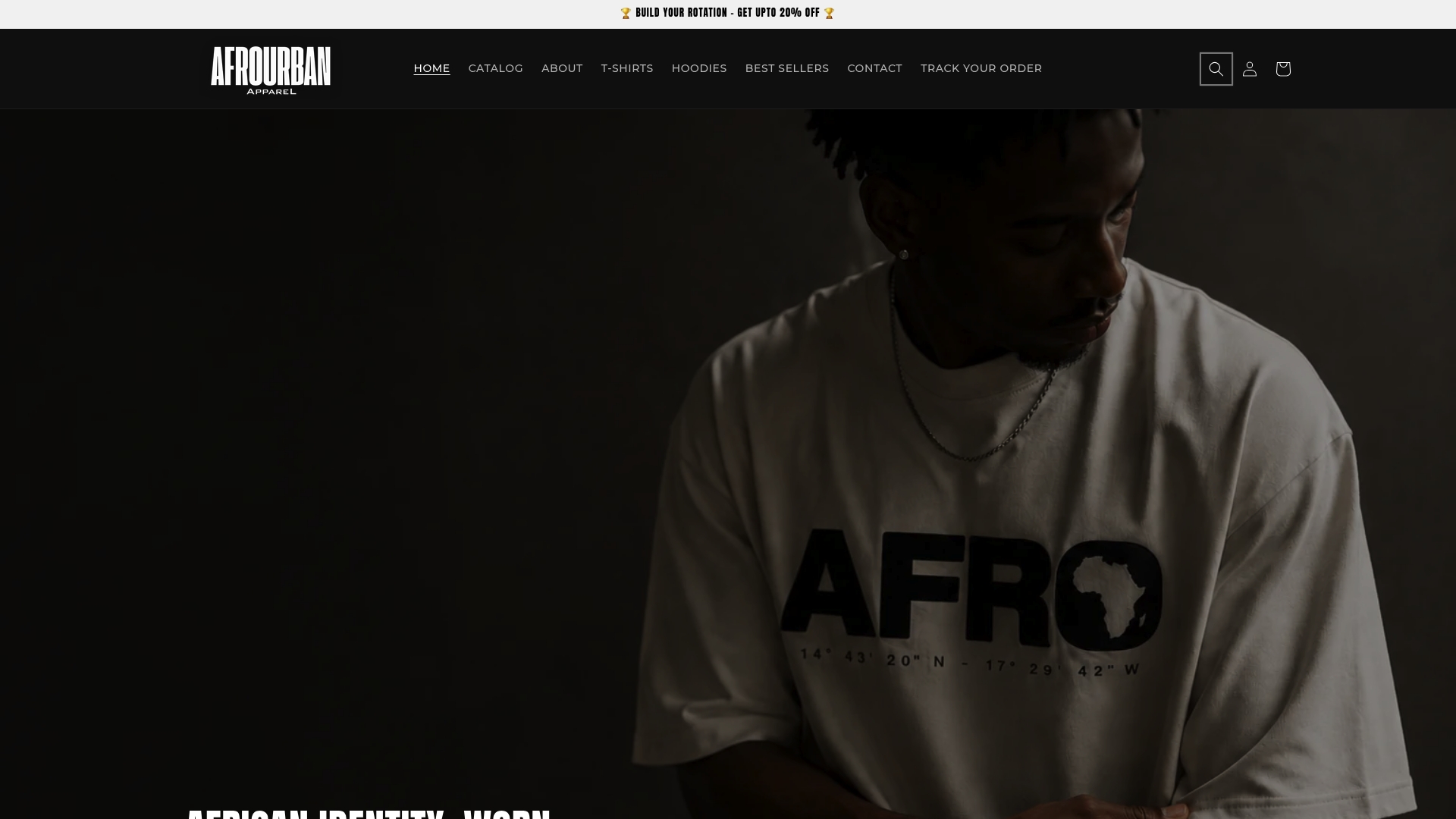
If Sankofa’s message about learning from the past resonates, or Wawa Aba’s lesson on quiet toughness feels familiar, you’ll find pieces built around those ideas rather than a vague approximation of them. Pair that with practical styling guidance for a heritage-rooted wardrobe if you’re building out a full rotation, not just a single statement piece. Visit the Afro Urban Apparel storefront to see current designs and pick a piece that carries a story you’re ready to explain when someone asks about it.
Sources
- Tecnologia Ancestral Africana: Símbolos Adinkra – Espaço do Conhecimento UFMG
- Adinkra symbols – Wikipedia (English)
- 12 Símbolos Adinkra with meanings – Dicionário de Símbolos