

Natural fibers — cotton, linen, hemp, silk, and wool — are the strongest material choice for comfortable, culturally expressive streetwear because they breathe, biodegrade, and carry centuries of textile heritage that synthetic fabrics simply cannot replicate. If you’re building a wardrobe that says something real about who you are, start with a 100% cotton or linen shirt. That single swap covers the natural fiber benefits fashion explained most clearly: better comfort, lower microplastic risk, and a fabric that ages with you rather than against you.
- Cotton and linen regulate body temperature through air pockets and vapor permeability, keeping you cooler in summer heat
- Natural fibers biodegrade at end-of-life and release no plastic microfibers during washing, unlike polyester
- Afrourbanapparel builds its collections around heavyweight natural-fiber fabrics precisely because they hold cultural motifs better and last longer
Pro Tip: When shopping online, filter by fabric composition first. If the label reads “100% cotton” or “100% linen,” you’re already ahead of most fast-fashion alternatives.
Table of Contents
- How do natural fibers actually perform in everyday streetwear?
- What are the real environmental trade-offs of natural fibers?
- When do synthetics or blends actually make more sense?
- How do you choose the right fiber for each streetwear piece?
- How do natural fibers support culturally expressive streetwear?
- How do you care for natural-fiber streetwear so it lasts?
- A capsule of natural-fiber pieces every diaspora wardrobe needs
- Key Takeaways
- Why material choice is identity choice
- Afrourbanapparel: streetwear built from the fabric up
- Useful sources and further reading
How do natural fibers actually perform in everyday streetwear?
The physical reason natural fibers feel different comes down to structure. Wool’s crimped fibers and cotton’s hollow convolutions trap air and allow vapor to escape, which lets your body shed heat without soaking through your shirt. Linen does this even faster because its bast fibers wick moisture away from skin and dry quickly. That mechanism, vapor permeability combined with air-gap insulation, is what researchers call thermoregulation, and it matters every time you’re moving through a city in August or layering up for a cold evening.
Fabric construction amplifies or limits these properties. A loosely woven linen overshirt breathes better than a tightly knit linen blend, even from the same plant. How a fiber is spun, woven, and finished determines the final thermal and moisture behavior, which is why GSM (grams per square meter) and weave density matter when you’re reading a product page.
| Fiber | Breathability | Moisture handling | Biodegradable | Care difficulty | Best streetwear use |
|---|---|---|---|---|---|
| Cotton | High | Absorbs well, dries slowly | Yes | Easy (machine wash) | Tees, hoodies, trousers |
| Linen | Very high | Wicks fast, dries quickly | Yes | Moderate (hand wash or gentle cycle) | Overshirts, wide-leg pants |
| Hemp | High | Similar to linen | Yes | Easy (machine wash cold) | Trousers, outerwear shells |
| Wool | Moderate | Absorbs without feeling wet | Yes | Delicate (hand wash or dry clean) | Caps, layering pieces |
| Silk | High | Regulates well in heat and cold | Yes | Delicate (hand wash) | Scarves, accent pieces |
Thermoregulation insight: Wool, cotton, and linen support controlled venting of metabolic heat through structural air pockets and high water vapor permeability — a physical advantage no petroleum-based fiber replicates passively.
What are the real environmental trade-offs of natural fibers?
Natural fibers don’t release plastic microfibers during laundering, and they break down biologically at end-of-life. Those two facts alone separate them from polyester, which sheds between 640,000 and 1.5 million plastic microfibers per wash load, according to Scientific American. For a wardrobe built to last and leave less behind, that difference is significant.
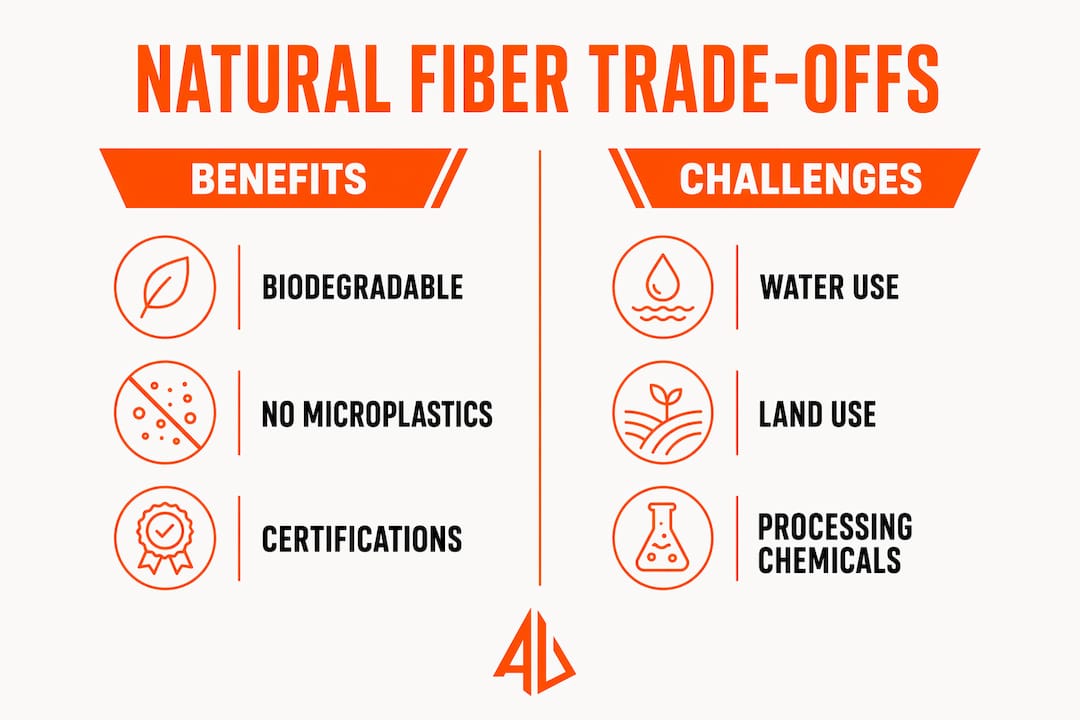
The honest caveat: “natural” doesn’t automatically mean low-impact. Full lifecycle assessments show conventional cotton farming can be water-intensive and reliant on agrochemicals. Hemp and organic cotton score better on both counts. Processing energy and synthetic dyes add further impact after the fiber leaves the field. The CFDA’s sustainability framework recommends evaluating cultivation, chemical inputs, processing, and end-of-life together, not just fiber origin.
Use this checklist when reading a label or brand page:
- Does the brand list fiber percentage and country of origin?
- Is there a GOTS (Global Organic Textile Standard) or OCS (Organic Content Standard) certification?
- Does the product page mention dyeing process or chemical finishing?
- Is the garment designed to be repaired, resold, or composted?
Pro Tip: GOTS certification covers both organic fiber content and restricted chemical use in processing. It’s the single most reliable label to look for when buying cotton or linen streetwear.
When do synthetics or blends actually make more sense?
Natural fibers have real weaknesses. They stretch out and don’t always bounce back, they abrade faster under heavy friction, and they dry slowly after a soaking rain. Industry analyses confirm that synthetics retain clear advantages for shape recovery and abrasion resistance, which matters in specific garment categories.
High-stretch activewear, technical outerwear with abrasion panels, and anything that needs to hold a precise silhouette after repeated wear often performs better with a synthetic or blended construction. A cotton-elastane hoodie, for example, keeps its cuffs and waistband tight far longer than 100% cotton.
A useful rule of thumb: choose pure natural fibers for relaxed, drape-focused pieces (shirts, wide-leg trousers, scarves). Reach for blends in fitted or high-movement garments where shape retention matters more than biodegradability.
How do you choose the right fiber for each streetwear piece?
Match the fiber to what the garment actually has to do. Here’s a numbered framework:
- Shirts and tees: Cotton or linen, 180–220 GSM for everyday wear. Heavier weights hold prints and motifs better.
- Trousers: Linen or hemp for warm months; heavyweight cotton twill year-round. Look for at least 240 GSM for durability.
- Hoodies and sweatshirts: Cotton fleece (300+ GSM) or a cotton-polyester blend if shape retention matters. Pure cotton is warmer but will shrink without pre-washing.
- Outerwear: Hemp canvas or waxed cotton for light weather; blends with nylon reinforcement for heavy use.
- Accent pieces (scarves, caps): Silk or wool. Both regulate temperature well and photograph beautifully against darker skin tones.
When reading labels, check: fiber percentage (aim for 85%+ natural), country of origin, fabric weight in GSM, and any certification mark. Bast fibers like linen and hemp vary significantly in quality depending on how they’re extracted, so a higher price from a certified supplier usually reflects real fiber quality, not just branding.
To spot genuine natural fiber garments in person: natural fibers wrinkle more than synthetics, feel slightly cooler to the touch, and burn cleanly (cotton smells like paper; wool smells like hair). A fabric that pills immediately or feels slick is almost certainly synthetic or a low-quality blend.
How do natural fibers support culturally expressive streetwear?
Natural fibers drape, print, and age in ways that make cultural expression more vivid. Cotton and linen hold Ankara and kente-inspired prints with sharp color retention. Silk catches light differently at every angle, which amplifies geometric and abstract motifs drawn from West and Central African textile traditions. Wool adds texture contrast when layered over a printed cotton base.
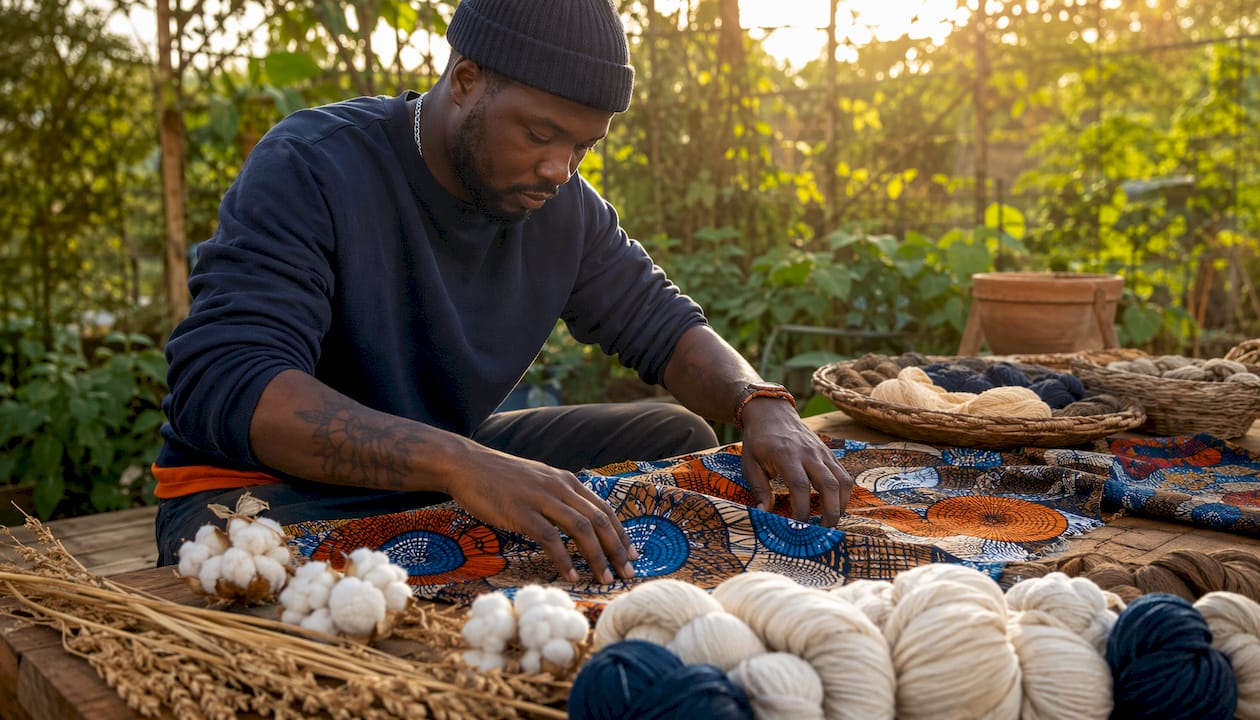
For African-diaspora streetwear, the most effective styling approach combines relaxed silhouettes with deliberate fabric pairings. A heavyweight cotton tee under a linen overshirt printed with traditional motifs gives you both comfort and visual depth. Wide-leg hemp trousers paired with a fitted silk scarf create a contrast of weight and sheen that reads as intentional, not accidental. This layering logic is increasingly used in modern African fashion to merge heritage aesthetics with contemporary streetwear silhouettes, as explained in Modern African fashion.
Pro Tip: Natural-fiber garments take botanical and low-impact dyes far better than synthetics. If you want to customize a piece or refresh its color, look for brands that use plant-based or OEKO-TEX certified dyes — the color stays truer and the fabric stays safer against your skin.
How do you care for natural-fiber streetwear so it lasts?
Care is where most natural-fiber pieces are lost prematurely. A few consistent habits extend lifespan significantly:
- Wash cotton and linen in cold water (30°C / 86°F max) on a gentle cycle; hot water causes irreversible shrinkage
- Turn garments inside out before washing to protect surface prints and reduce micro-abrasion
- Air-dry flat or on a wide hanger; tumble drying degrades fiber strength over time
- Hand-wash silk and fine wool in cool water with a pH-neutral detergent; never wring
- Spot-clean when possible to reduce full wash frequency
For mending: a small split seam or worn elbow on a cotton or linen piece is worth repairing. Natural fibers respond well to hand-stitching, and a visible mend in a contrasting thread can become a design detail rather than a flaw. Fabric care practices that prioritize gentle handling over convenience routinely double a garment’s useful life.
A well-cared-for heavyweight cotton tee or linen overshirt should last several years. When a piece is genuinely worn out, natural fibers can be composted or recycled through textile take-back programs rather than sent to landfill.
Pro Tip: Store wool and silk pieces folded, not hung. Hanging stretches the shoulder seam over time and distorts the silhouette.
A capsule of natural-fiber pieces every diaspora wardrobe needs
| Piece | Fiber | Price range | Why it works |
|---|---|---|---|
| Heavyweight graphic tee | 100% cotton, 220+ GSM | Budget–mid | Holds prints; breathes; lasts years with cold-wash care |
| Linen overshirt | 100% linen | Mid | Drapes well over any base; ideal for warm-weather layering |
| Hemp trousers | 100% hemp or hemp-cotton | Mid | Durable, breathable, softens with wear |
| Wool cap | 100% wool | Budget–mid | Temperature-regulating; holds shape; pairs with any silhouette |
| Silk accent scarf | 100% silk | Mid–premium | Adds luster and cultural motif detail without bulk |
Start with the cotton tee and linen overshirt. Those two pieces cover the widest range of styling options and give you the clearest sense of how natural fibers perform day-to-day. For sourcing, check thrift stores and vintage markets first for linen and wool, then small ethical brands and Afrourbanapparel’s collections for pieces designed specifically around African-diaspora identity and heavyweight fabric quality.
Key Takeaways
Natural fibers outperform synthetics on breathability, biodegradability, and cultural expression, making them the right foundation for a diaspora streetwear wardrobe built to last.
| Point | Details |
|---|---|
| Thermoregulation is structural | Air pockets and vapor permeability in cotton, linen, and wool regulate body heat passively. |
| No microplastics | Natural fibers biodegrade and release no plastic microfibers during washing, unlike polyester. |
| “Natural” needs verification | Look for GOTS or OCS certification; conventional cotton farming can be water and chemical intensive. |
| Blends have a place | A 95% cotton, 5% elastane piece that lasts five years beats a pure-fiber garment replaced in eighteen months. |
| Afrourbanapparel | Builds collections around heavyweight natural-fiber fabrics designed for cultural expression and long-term wear. |
Why material choice is identity choice
The conventional wisdom in streetwear is that fabric is a background decision, something you settle after you’ve locked in the silhouette and the graphic. That framing gets it backwards. For diaspora communities, the material is part of the message. A heavyweight cotton tee printed with kente geometry isn’t just comfortable because of the fiber; it’s durable enough to become a piece you keep, lend, and eventually pass on. That’s a different relationship with clothing than fast fashion offers.
What most guides miss is that natural fibers also age in ways that reinforce identity rather than erasing it. A linen overshirt softens and develops character over years of wear. Wool holds its structure. Cotton fades in ways that feel earned. Synthetics just pill and thin. When you’re building a wardrobe around cultural expression, longevity and material integrity matter as much as the initial design. The slow fashion principle applies here in a very literal sense: the slower a garment degrades, the longer it carries meaning.
Afrourbanapparel: streetwear built from the fabric up
Most culturally expressive streetwear brands get the design right and compromise on the material. Afrourbanapparel does the opposite: heavyweight natural-fiber fabrics come first, then the cultural motifs are built around what the fabric can actually hold and carry.
If you’ve read this far, you already know what to look for on a product page: fiber percentage, fabric weight, and care instructions that tell you the brand thought about longevity. Afrourbanapparel lists all of it. Browse the full collection at Afro Urban Apparel and check each product page for fiber content and washing guidance before you buy. For deeper context on how the brand approaches sourcing, the ethical fabric sourcing guide covers certifications and supply-chain decisions in plain language.
Useful sources and further reading
- PubMed: Microplastics and textiles analysis — supports microplastic avoidance and biodegradability claims
- IWTO: Breathability and wool — thermoregulation mechanisms (air pockets, vapor permeability)
- MDPI: A review of natural fibers — fiber classification, extraction, lifecycle impacts
- CFDA: Supply chain sustainability — lifecycle checklist and certification guidance
- Aerys Active: Benefits of natural fibres — lifecycle assessments and construction-level performance
- Scientific American: Fast fashion and sustainability — microfiber shedding data and consumer sustainability trends
- WONENA: What are natural fibers? — synthetic vs. natural performance comparison