

Wash dark streetwear inside-out in cold water with a liquid, low-pH detergent, keep the spin speed low, and dry in the shade. That four-part routine does more for dark color resistance than any product marketed specifically for black clothes.
Here’s what to do right now:
- Separate dark garments from lights and whites before every wash
- Turn every piece inside-out before it goes in the machine
- Place embroidered or printed items in a mesh laundry bag
- Add ½ cup of distilled white vinegar to the rinse cycle instead of fabric softener
- Use cold water only, no exceptions
Pro Tip: Chemical engineer Diego Fernández identifies hot water as the single biggest domestic enemy of dark colors — it opens textile fibers and pushes dye out faster than friction or sunlight alone. Cold water is non-negotiable.
Key Takeaways
Cold water, liquid low-pH detergent, inside-out drying in shade, and garments built with reactive dyeing are the four factors that determine how well dark colors survive regular wear and washing.
| Point | Details |
|---|---|
| Cold water is non-negotiable | Hot water opens fibers and accelerates dye release faster than any other domestic factor. |
| Liquid detergent, neutral pH | Powder detergents leave alkaline residue in cold washes that dulls dark fabric over time. |
| Inside-out, low spin | Turning garments inside-out and capping spin at 400–600 RPM reduces surface friction and dye loss. |
| Shade drying protects dye bonds | UV degrades dye bonds even during drying; always dry away from direct sun, indoors when possible. |
| Afrourbanapparel builds it in | Heavyweight construction and reactive dyeing mean the garment arrives with strong color retention built in. |
Table of Contents
- Why do dark colors fade in the first place?
- How to prepare dark streetwear before any wash
- Step-by-step washing routine for dark garments at home
- How to dry and finish dark garments so color and fit last
- Which fabrics and dye methods hold dark colors best?
- Common mistakes that actually accelerate fading
- Quick reference: exact settings for dark garment care
- How these tips were verified
- How Colombia’s climate affects dark color resistance
- Where to find durable dark streetwear in Colombia
- How frequent wear affects dark color resistance
- How to store dark garments without losing color
- Why colorfastness is built in, not washed in
- Afrourbanapparel: dark streetwear built for color that lasts
- Sources
Why do dark colors fade in the first place?
Dark color durability comes down to five culprits: heat, high-pH surfactants, friction, UV exposure, and weak dye-fiber bonding. Understanding which one is hitting your garment tells you exactly which step to fix.
The dye chemistry matters too. Reactive dyes bond covalently to cotton fibers, making them far more stable through repeated washes. Disperse dyes penetrate synthetic fibers like polyester and hold well when properly applied. Pigment dyes, by contrast, sit on the fiber surface and wash off with friction. That pigment dye vs reactive dye distinction is the single most important thing to understand when buying dark streetwear.
Each cause maps to a direct fix:
- Heat → cold water, every cycle
- High-pH detergent → switch to liquid, neutral-pH formula
- Friction → lower spin speed, don’t overload the drum
- UV exposure → dry in shade, store away from windows
- Poor dye bonding → buy garments with reactive or disperse dyeing, not pigment surface dyes
Lab-tested colorfastness data confirms that cold-water washes with compatible detergents retain significantly more original dye across multiple cycles compared with alkaline, high-temperature washes.
How to prepare dark streetwear before any wash
Sort first, always. Dark garments go in their own load. Even a single light-colored item in the drum can cause dye transfer in both directions.
- Turn every dark piece inside-out. This puts the outer dyed surface away from direct drum contact and agitation.
- Check for stains and spot-treat them with a small amount of liquid detergent applied directly to the fabric. Use your fingertip, not a brush — abrasive scrubbing on dyed surfaces removes color locally.
- Place hoodies, embroidered tees, or printed pieces in a mesh laundry bag before loading.
- Don’t overload. A drum that’s too full forces garments to rub against each other constantly, which is mechanical fading in real time.
Pro Tip: If a piece needs a pre-soak, use cold water with a capful of color-safe liquid detergent — never warm. A 15-minute cold pre-soak loosens dirt without opening fibers. Skip pre-soaking entirely unless the garment is visibly soiled.
Step-by-step washing routine for dark garments at home
The safest home wash: cold water, short cycle, liquid low-pH detergent, spin at 400–600 RPM, items inside-out, mesh bags where needed.
Machine wash steps:
- Load inside-out garments loosely into the drum
- Select cold water (30°C or below)
- Add liquid detergent formulated for dark clothes — neutral to low pH, no optical brighteners
- Choose a delicate or short cycle
- Set spin speed to 400–600 RPM maximum
- Add ½ cup distilled white vinegar to the rinse compartment — it removes detergent residue and acts as a mild natural fixative without the color-dulling residue that fabric softeners leave
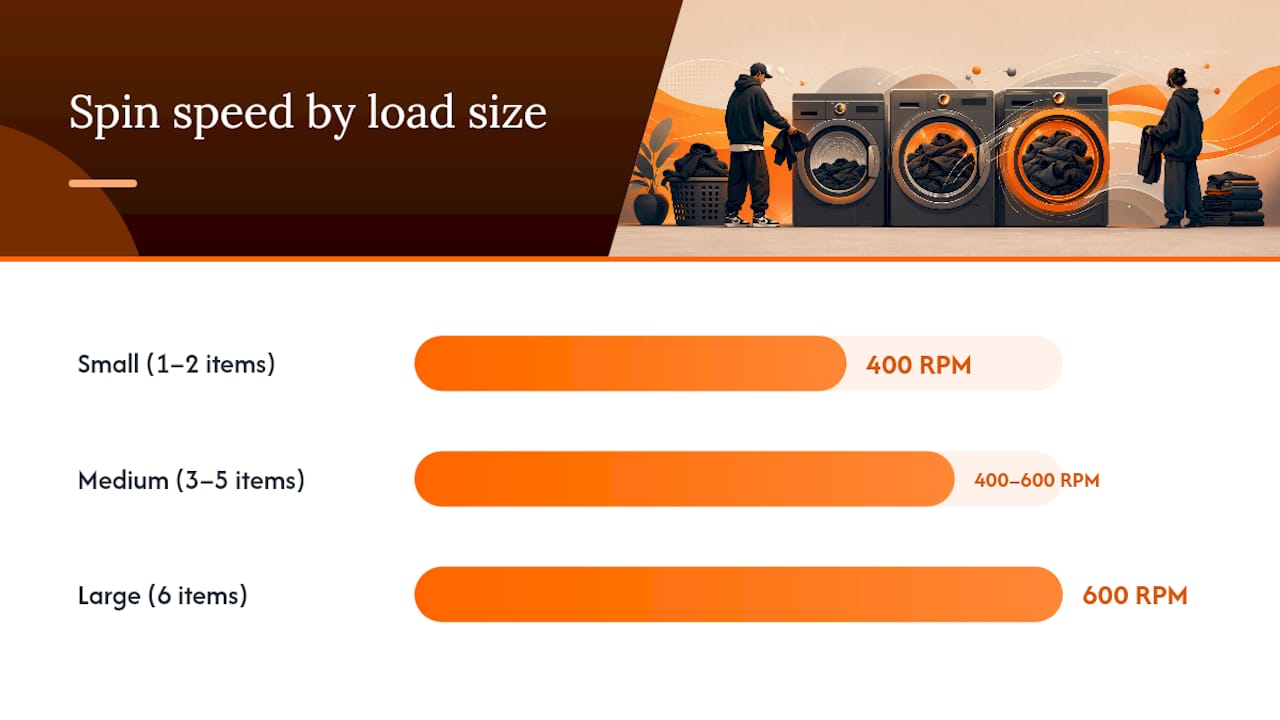
| Load size | Liquid detergent dose | Max spin RPM |
|---|---|---|
| Small (1–2 items) | ½ cup vinegar | 400 RPM |
| Medium (3–5 items) | ¼ cup vinegar | 400–600 RPM maximum |
| Large (6 items) | ½ cup distilled white vinegar | 600 RPM |
For hand washing: use a basin of cold water, add a small squeeze of liquid detergent, and agitate gently for 2–3 minutes. Don’t scrub. Rinse twice with cold water, then press water out gently — never wring, which twists and stresses dyed fibers.
Pro Tip: Powdered detergent dissolves poorly in cold water and leaves alkaline residue on dark fabric. Enzyme-rich formulas break down proteins effectively but also attack dye bonds at the same time. Neither is a good fit for dark loads.
How to dry and finish dark garments so color and fit last
Always dry inside-out, in shade, on a flat surface or hanger. High dryer heat does to dark fabric what hot water does in the wash: it opens fibers and pushes dye out.
Do:
- Hang or lay flat in a shaded, ventilated area
- Reshape heavy garments like hoodies while still damp to prevent distortion
- Use tumble-dry on the lowest heat setting only when the care label explicitly permits it
Don’t:
- Dry in direct sunlight — UV degrades dye bonds faster than almost any other factor
- Use high dryer heat on dark cotton
- Leave damp garments bunched up, which creates friction points and uneven drying
For aftercare: use a fabric comb or lint roller on pilling areas, which tend to appear first at high-friction zones like underarms and collar edges. Store dark pieces folded or hung away from windows. Dye migration between garments stored in contact is real, especially in humid conditions.
Pro Tip: Rotate your favorite dark pieces. Wearing the same hoodie three times a week concentrates friction, wash cycles, and UV exposure on one garment. Spreading wear across two or three pieces extends the life of each one noticeably.
Which fabrics and dye methods hold dark colors best?
Prefer reactive-dyed cotton or disperse-dyed polyester with a colorfast finishing step. Those two combinations outperform surface-dyed alternatives in wash-after-wash retention.
Fiber behavior by category:
- Heavyweight cotton (200+ gsm): Holds reactive dyes well; initial dye release in the first 1–2 washes is normal, then stabilizes. Natural fibers show early release unless reactive dyeing and proper fixation are used.
- Cotton-polyester blends: Combines cotton’s comfort with polyester’s dye stability; look for blends where the polyester content is disperse-dyed separately.
- Polyester: Holds disperse dyes tightly; less prone to early fading but can feel less breathable in Colombia’s warmer climates.
- Knit vs. woven: Knits have more surface area exposed to friction; wovens tend to hold color slightly longer under abrasion.
When shopping in Colombia, check the tag for fabric weight in gsm, fiber percentage, and any mention of pre-wash or fixation treatment. A garment labeled 220 gsm or above in heavyweight cotton signals a construction that supports better dark color durability over time. Features that improve color resistance include reactive dyeing, enzyme finishing, anti-fading coatings, and pre-shrunk construction.
Pro Tip: Look for natural fiber guides that explain gsm and dye method in plain language before you buy — a 10-second tag check saves months of disappointment.
Common mistakes that actually accelerate fading
Avoid hot water, powder detergent in cold cycles, bleach, and washing more often than necessary. Those four habits cause more fading than almost anything else.
Myths to stop following:
- Salt fixes dye: Chemical engineer Diego Fernández explicitly rejects salt as an effective domestic dye fixative. Salt has no meaningful covalent interaction with most modern dyes. Use cold water and reduce detergent dose instead.
- Fabric softener protects color: Softeners leave a coating that dulls dark fabric over time. Vinegar does the same softening job without the residue.
- “Safe for colors” means safe for dark colors: Many products with that label still contain optical brighteners, which work by reflecting UV light — visibly graying out dark fabric over repeated use.
Household-level fixes widely shared online lack lab support. Authoritative chemists recommend controlling temperature and detergent chemistry rather than relying on home remedies.
Powder detergent is a specific problem: it dissolves incompletely in cold water and leaves an alkaline film on dark fabric that dulls the surface and weakens dye bonds over time.
Quick reference: exact settings for dark garment care
Cold water, liquid neutral-pH detergent, low spin, dry in shade, always inside-out.
| Setting | Recommendation |
|---|---|
| Water temperature | Cold (30°C or below) |
| Detergent type | Liquid, neutral/low pH, no optical brighteners |
| Detergent dose | 20–½ cup distilled white vinegar depending on load size |
| Spin speed | 400–600 RPM maximum |
| Vinegar rinse | ½ cup distilled white vinegar in rinse compartment |
| Dryer | Avoid; air-dry in shade inside-out |
Colombia-specific notes:
- High humidity in coastal and tropical zones (Cartagena, Cali, Medellín valley areas) slows drying — make sure garments dry fully before folding to prevent mildew and dye migration
- Strong equatorial sun makes outdoor drying risky even in shade near open windows; dry indoors when possible
- Hard water in some Colombian municipalities can leave mineral deposits that dull dark fabric; a vinegar rinse helps counteract this
How these tips were verified
The recommendations in this guide come from textile science sources, detergent chemistry research, and direct quotes from chemical engineer Diego Fernández as published in La Vanguardia and El Confidencial. Colorfastness principles are drawn from standardized testing frameworks, where results are reported on a gray scale from 1 (severe change) to 5 (no change).
Key sources used:
- Diego Fernández’s expert analysis on hot water and dark color fading
- El Tiempo’s practical care guide for black garments
- Kangjie Washing’s detergent chemistry breakdown on pH and optical brighteners
- Testex’s colorfastness testing guide
- Ingeniero Agroindustrial’s dye-fiber compatibility explainer
Afrourbanapparel’s heavyweight fabric choices reflect these same principles: garments built at 220+ gsm with quality finishing hold dark dyes through repeated wear cycles in ways that lighter, surface-dyed alternatives don’t.
How Colombia’s climate affects dark color resistance
Colombia’s climate is not uniform, and that matters for how you care for dark streetwear. In high-humidity zones like the Caribbean coast or the Magdalena valley, dark garments stored while even slightly damp develop mildew and dye migration between folded layers. Always dry completely before storing.
Bogotá’s high altitude brings intense UV radiation even on overcast days. That UV load degrades dye bonds faster than in lower-altitude cities, making shade drying and indoor storage more important, not optional. In Medellín’s spring-like climate, the moderate temperature is friendlier to dark fabrics, but afternoon rains mean outdoor drying windows are short.
Hard water is common in parts of Colombia’s interior. Mineral buildup from hard water deposits on dark fabric creates a grayish cast that looks like fading but is actually surface scaling. The vinegar rinse addresses this directly by chelating mineral residue before it sets.
Where to find durable dark streetwear in Colombia
For shoppers in Colombia looking for dark garments built to resist fading, the key is finding brands that prioritize fabric weight, dye quality, and construction over price-per-unit. Afrourbanapparel is the clearest local option for heavyweight dark streetwear that combines cultural identity with construction quality. Their pieces are built at a fabric weight that supports reactive dyeing and colorfast finishing, which means the care routine in this guide works with the garment rather than against it.
When evaluating any dark garment in the Colombian market, ask for the gsm rating and fiber composition. A piece without that information on the tag is harder to care for correctly because you don’t know what dye method was used or how the fiber will respond to cold water.
For a quality-first approach to building your wardrobe, prioritize fewer, better pieces over a large rotation of lighter-weight garments that fade quickly.
How frequent wear affects dark color resistance
Every time a dark garment is worn, friction from movement, sweat, and contact with other surfaces removes microscopic amounts of dye from the outer fiber. This is normal. The problem is concentration: wearing the same piece daily means it absorbs all of that mechanical stress without recovery time.
Sweat is mildly acidic, which can interact with some dye types and accelerate surface fading at collar edges, underarms, and cuffs. Rinsing those areas with cold water after heavy wear, before a full wash cycle, extends the garment’s color life without adding a full laundry load.
Rotation is the practical answer. Three dark pieces worn in rotation receive one-third the mechanical stress of a single piece worn daily. That math translates directly into longer color retention across all three. For styling ideas that also reduce abrasion from layering, the African textiles layering guide covers how to combine pieces without creating friction points.
How to store dark garments without losing color
Store dark pieces folded or hung in a cool, dark space away from direct light. Dye degradation from UV continues even through glass windows during storage.
Avoid storing dark garments in contact with light-colored pieces for extended periods. Dye transfer between folded items is slow but real, especially in humid conditions. Use a breathable cotton storage bag or a dedicated shelf for dark pieces.
Cedar blocks or lavender sachets work as natural moth deterrents without the chemical residue that synthetic moth repellents leave on fabric. Synthetic repellents can react with some dye types and cause localized discoloration.
Don’t hang heavy knit pieces like hoodies on thin wire hangers for long periods. The shoulder stress distorts the shape and creates tension lines that wear through dye faster. Fold them flat or use wide, padded hangers.
Why colorfastness is built in, not washed in
Most care guides treat fading as a laundry problem. It isn’t, not entirely. The real determinant of how long a dark garment holds its color is what happened in the factory: which dye was used, how it was applied, whether fixation was done correctly, and what weight of fabric it went onto.
A reactive-dyed heavyweight cotton tee washed carelessly will outlast a pigment-dyed lightweight tee washed perfectly. That’s not an opinion — it’s what colorfastness testing consistently shows. The care routine matters, but it’s working with or against the garment’s built-in color retention, not replacing it.
This is why buying decisions matter as much as washing decisions. Shoppers who choose garments based on price alone often end up spending more on replacements than they saved upfront. For the African diaspora community specifically, dark streetwear that carries cultural meaning deserves to be built to last, not just styled to look good on day one.
Afrourbanapparel: dark streetwear built for color that lasts

Afrourbanapparel’s heavyweight streetwear is the practical answer for shoppers who want dark garments that hold up through real use in Colombia. The brand’s pieces are constructed at fabric weights that support reactive dyeing and proper colorfast finishing — the same production factors that textile science identifies as the primary determinants of long-term dark color retention.
Every hoodie, tee, and accessory in the collection is designed for daily cultural expression, not occasional wear. That means the fabric, the dye process, and the construction are chosen to survive the wash routine described in this guide. Follow the care label, use the cold-water liquid detergent routine above, and these pieces stay deep and saturated through repeated cycles.
Browse the full collection and find your next dark piece at Afrourbanapparel — built for identity, built to last.
Sources
- Diego Fernández, chemical engineer, on hot water and dark colors — La Vanguardia
- How to prevent black clothes from losing color — El Tiempo
- Best detergent for dark clothes: science-backed tips — Kangjie Washing
- Color fastness: the ultimate guide — Testex
- Color fastness: what it is and how to improve it — Ingeniero Agroindustrial