

Ankara is a cotton wax-print textile, bold, two-sided, and unmistakably vivid, worn across West Africa and the diaspora for various garments from tailored dresses to everyday hoodies. The name is shorthand for a fabric whose real story starts not in Africa but in Indonesia, then winds through 19th-century European factories before landing in West African markets where it was claimed, renamed, and made entirely its own.
Key Takeaways
Ankara is a cotton wax-print textile with Indonesian and European industrial roots, adopted and culturally transformed across West Africa and now central to diaspora streetwear identity in the United States.
| Point | Details |
|---|---|
| What Ankara is | A two-sided cotton wax-print fabric, originating from Indonesian batik and industrialized by European firms in the 19th century. |
| Quality cues to check | Look for print clarity on both sides, heavy cotton weight, the crackle effect, and 100% cotton fiber content. |
| Care basics | Cold gentle wash, air-dry, iron on the reverse side at low heat, and always pre-wash before tailoring. |
| Styling rule | One patterned piece per outfit; pair Ankara with solid basics and let the print lead. |
| Afrourbanapparel | Offers heavyweight, culturally informed streetwear that makes Ankara-inspired design wearable every day. |
Table of Contents
- What is Ankara fabric, and where does it actually come from?
- How wax prints work as a coded cultural language
- How do Vlisco, Woodin, Uniwax, and imi-wax compare?
- How to spot quality Ankara and buy it in the United States
- Caring for Ankara at home: washing, ironing, and tailoring notes
- Styling Ankara in everyday U.S. streetwear
- The Afrourbanapparel perspective on wearing Ankara every day
- Afrourbanapparel brings Ankara-inspired streetwear to everyday wear
- Sources
What is Ankara fabric, and where does it actually come from?
The technical roots of wax-print cotton trace to Indonesian batik, a resist-dyeing method that creates patterns by applying wax to cloth before dyeing. European manufacturers, particularly Dutch firms, industrialized that process in the 1800s to produce two-sided, brightly colored cotton prints at scale. The goal was to sell to Asian colonies, but West African buyers turned out to be the most enthusiastic market. Local traders and consumers adopted the cloth, gave prints local names, and built an entire visual culture around it.
That three-continent journey matters because it shapes every quality and authenticity debate you will encounter when shopping today.
A quick timeline
- Indonesian batik tradition develops over centuries as a hand-resist dyeing craft.
- 19th century: Dutch and British textile firms mechanize the process, producing factory-made wax prints for export.
- Late 19th to mid-20th century: West African traders, many of them women, establish distribution networks through hubs like Lomé and Accra.
- Late 20th century onward: Chinese manufacturers enter the market with lower-cost versions, now widely called imi-wax, expanding access but widening quality gaps.
The colonial commerce that introduced the cloth to West Africa was extractive by design. What local communities did with it was something else entirely.
How wax prints work as a coded cultural language
Ankara is not decoration. Fashion and culture experts describe wax prints as a genuine channel of cultural communication, where motifs and colors carry social meanings that go well beyond aesthetics.
Specific patterns have historically signaled marital status, economic conditions, or emotional states. A print gifted at a wedding carries different weight than one worn to a market. Certain motifs reference work, crisis, or community unity, and experienced wearers in communities across Ghana, Côte d’Ivoire, and Nigeria read those signals the way others read a headline.

For the diaspora in the United States, Ankara functions as a visible identity marker, a way of saying something specific about heritage without words. That communicative dimension is part of why cultural identity clothing built around wax prints resonates so differently from generic printed fabric. The print has a history the wearer carries with them.
Experts who study African textiles consistently stress one thing: appreciating the cultural richness of wax prints and acknowledging their colonial origins are not contradictory positions. Both are true at once.
How do Vlisco, Woodin, Uniwax, and imi-wax compare?
Not all Ankara is the same fabric. The market runs from heirloom-quality Dutch wax to mass-produced imi-wax, and the difference is visible, tactile, and financial.
Premium Dutch-style wax, associated with brands like Vlisco, tends to be brighter and more durable, with consistent dye penetration on both sides of the cloth. Reputable African manufacturers like Uniwax (Côte d’Ivoire) and Woodin (Ghana) produce mid-range wax prints that balance quality and accessibility. Imi-wax from Asia is cheaper and widely available but typically uses lower-grade cotton, prints only on one side, and fades faster.
| Category | Key attributes | Typical uses | Durability |
|---|---|---|---|
| Premium (Dutch-style, e.g., Vlisco) | Heavy cotton, two-sided print, vivid color, stiff hand | Formal wear, statement pieces, heirlooms | High |
| Mid-range (e.g., Uniwax, Woodin) | Good cotton weight, two-sided or near-two-sided, reliable color | Everyday garments, streetwear, accessories | Moderate to high |
| Low-cost imi-wax (Asian-made) | Lighter cotton or blends, one-sided print, softer hand | Budget pieces, linings, short-term use | Low to moderate |
For streetwear built to last, mid-range African-made fabrics hit the best balance of price and longevity. Premium Dutch wax is worth the investment for a statement piece you plan to keep for years.
How to spot quality Ankara and buy it in the United States
Buying Ankara in the U.S. requires a little more homework than picking it up at a local market in Accra, but the quality cues are the same wherever you shop.
- Check both sides of the fabric. On genuine wax print, the pattern is clear and bright on both faces. A faded or blurry reverse side signals imi-wax.
- Feel the weight. Premium and mid-range wax prints use heavier cotton. If the fabric feels thin or flimsy, the grammage is low.
- Look for the crackle effect. Authentic wax prints have a subtle crinkle or crackle in the pattern caused by the wax-resist process. Flat, uniform prints lack this.
- Ask about fiber content. Genuine Ankara is 100% cotton. Blends with polyester are a sign of lower-grade production.
- Verify the seller’s sourcing. Reputable vendors will tell you whether the fabric is Dutch-made, African-manufactured, or imported from Asia. Transparency is itself a quality signal.
- Set realistic price expectations. Premium Vlisco-style fabric runs significantly higher per yard than imi-wax. Mid-range African-made prints sit between those points. If a price seems too low for “authentic” wax, it probably is.
In the U.S., diaspora fabric markets, African cultural festivals, and vetted online retailers are your best sources. When buying online, check return policies carefully, since fabric color can read differently on screen, and confirm whether customs or import fees apply to your order.
Pro Tip: When shopping online, ask sellers for a photo of the fabric’s reverse side before purchasing. That single image tells you more about quality than any product description.
Caring for Ankara at home: washing, ironing, and tailoring notes
Ankara is cotton, which means it behaves like cotton: it can shrink, it can fade, and it rewards conservative care.
Wash in cold water on a gentle cycle, or hand-wash if the piece is a statement item worth protecting. Hot water accelerates color loss, especially in mid-range and imi-wax prints. Air-dry flat or on a hanger rather than machine-drying, which adds unnecessary heat and stress to the weave. Textile guidance consistently recommends low-heat ironing on the reverse side to preserve the print surface and prevent shine.
For tailoring, pre-wash the fabric before cutting. Ankara can shrink up to a full size on first wash, and discovering that after you have sewn a hoodie is a painful lesson. Heavier premium cotton is less prone to significant shrinkage, but pre-washing is good practice regardless. When pattern-matching panels, account for the bold repeat in Ankara prints: what looks aligned on a flat table can shift once the fabric is cut and sewn. Budget extra yardage for matching.

Styling Ankara in everyday U.S. streetwear
The strongest Ankara streetwear looks follow one consistent rule: let the print be the focal point, then build everything else around it.
- One patterned piece per outfit. A wax-print hoodie or jacket paired with solid black or white bottoms reads sharp. Two patterned pieces competing for attention usually do not.
- Accent details work well. Ankara pocket panels, cuff trim, or bag accents on otherwise neutral pieces are an accessible entry point if you are new to wearing the fabric.
- Headwraps and accessories extend the look. A wax-print headwrap or tote bag paired with a plain outfit is a clean, confident way to carry the fabric daily.
- Mix silhouettes, not patterns. Pair an oversized Ankara piece with fitted basics to keep proportion balanced in a streetwear context.
For color-blocking strategies that work specifically with Ankara prints, the key is pulling one color from the print and repeating it in a solid piece elsewhere in the outfit.
Pro Tip: Before wearing a print in a community context, spend five minutes learning what the motif means. Some patterns carry specific social signals. Wearing one knowingly is cultural literacy; wearing one accidentally is a missed opportunity.
Authenticity matters in sourcing too. Choosing ethically sourced fabric from African manufacturers supports local industry and keeps revenue closer to the communities the textile represents.
The Afrourbanapparel perspective on wearing Ankara every day
At Afrourbanapparel, the position is straightforward: cultural identity should not be reserved for special occasions. The brand builds heavyweight streetwear, t-shirts, hoodies, and accessories using bold, culturally informed designs that members of the diaspora can wear on a Tuesday, not just at a festival.
The fabric weight is a deliberate choice. Heavier cotton holds its shape, survives repeated washing, and signals quality in a way that thin, fast-fashion prints do not. The design approach draws on African visual traditions without reducing them to surface decoration. Customers consistently note that the pieces feel like something worth keeping.
The contemporary Afrocentric fashion space is growing, and the brands doing it well are the ones that treat cultural representation as a core product decision, not a marketing layer.
Afrourbanapparel brings Ankara-inspired streetwear to everyday wear
For diaspora shoppers who want the cultural weight of Ankara without hunting for raw fabric and a tailor, Afrourbanapparel offers a direct path: heavyweight t-shirts, hoodies, and accessories that fuse wax-print aesthetics with modern streetwear cuts, built for daily wear rather than display.
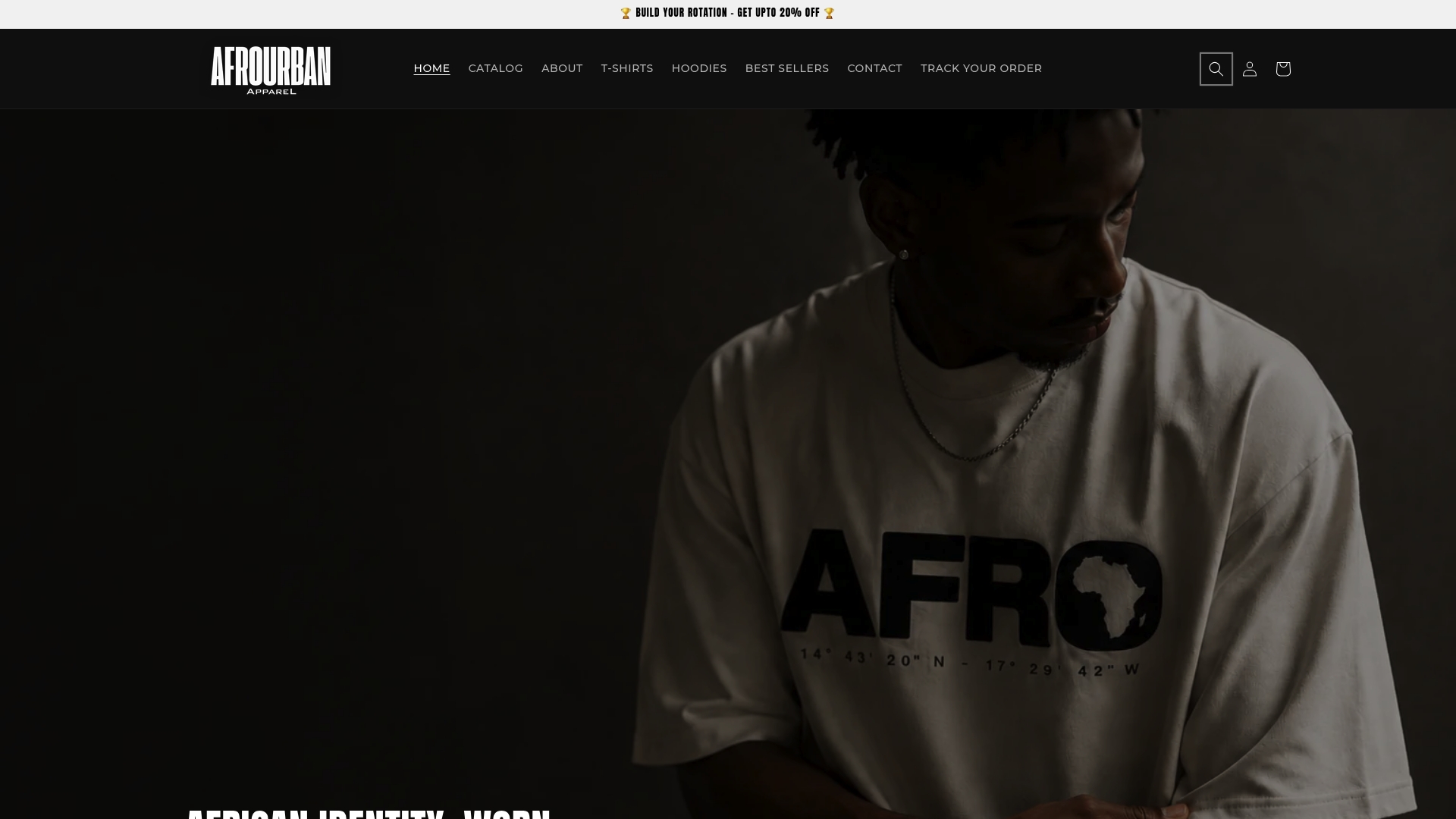
The practical advantages are real. Heavyweight cotton construction means these pieces hold up through regular washing and wear. The designs draw on African visual traditions with intention, not as trend-chasing. You get cultural expression that fits into your actual wardrobe, not just your special-occasion rotation.
Browse the full collection at Afrourbanapparel and find the piece that fits how you move through the world every day.
Sources
- Telas wax: una historia escrita entre tres continentes | ANESVAD
- Las telas africanas y su mercado | Wiriko
- Las Nanas Benz y el tejido wax - Mujeres con ciencia
Recommended
- Why Wear Heritage Inspired Streetwear: A Diaspora Guide – Afro Urban Apparel
- Cultural Identity Clothing: 10 Examples for the Diaspora – Afro Urban Apparel
- African Textile Traditions Explained: A Cultural Guide – Afro Urban Apparel
- Natural Fiber Benefits for Streetwear: Your 2026 Guide – Afro Urban Apparel