

Everyday cultural dressing is the intentional practice of wearing traditional garments, cultural motifs, or heritage symbols as part of regular daily clothing. It is not reserved for festivals or ceremonies. It is how you carry your identity into every room you walk into. Research shows that over 90% of respondents in Nigerian heritage communities view traditional elements as essential to daily pride. That figure tells you something important: cultural dress is not nostalgia. It is a living, daily act of self-definition. Governments have recognized this too. Ghana’s “Fugu Day” initiative mandates traditional batakari wear every Wednesday, turning cultural attire into a nationwide statement of belonging.
What is everyday cultural dressing made of?
Cultural dressing meaning goes beyond the garment itself. It includes the colors, patterns, fabrics, and symbols that carry a community’s history. Understanding what these elements look like across cultures helps you recognize them and wear them with intention.
Common garments and elements found in everyday cultural dressing include:
- Fugu/Batakari (Ghana): A hand-woven smock worn by men and women, now promoted as standard workplace attire through Ghana’s Fugu Day program.
- Hāku Patāsi sari (Nepal): A black and red traditional attire worn by Newah women, originally associated with labor, now adapted for professional and public settings.
- Maya huipils (Central America): Hand-woven blouses with community-specific geometric patterns that identify the wearer’s village and lineage.
- Kente cloth patterns (West Africa): Woven silk and cotton strips with color-coded meanings. Gold signals wealth, green represents growth, and black connects to ancestral spirits.
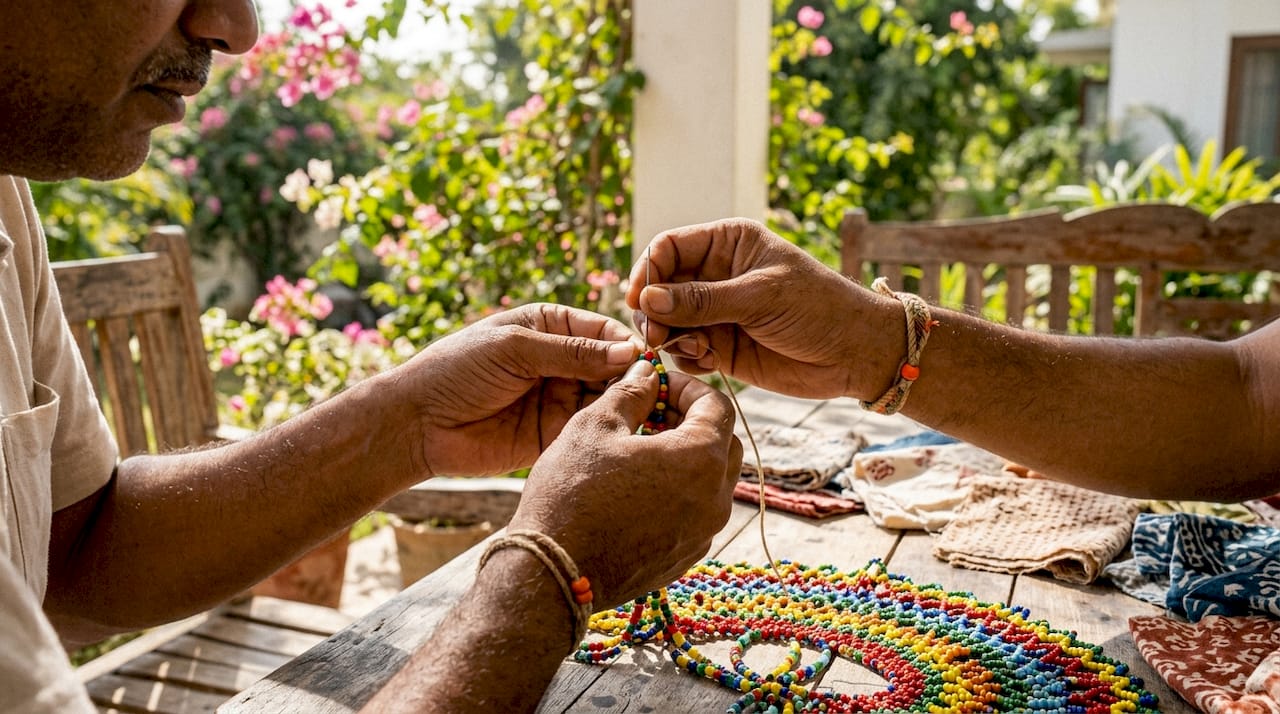
- Symbolic accessories: Beaded jewelry, headwraps, and carved pendants that carry spiritual or social meaning within specific communities.
Colors and motifs are not decorative choices. They are a coded language. The black and red of Newah attire signals specific social roles within the community. Kente’s color combinations communicate status and occasion. When you wear cultural symbols in everyday clothing, you are speaking that language in public spaces, not just at cultural events.
Pro Tip: Start with one element, such as a pattern or color, rather than a full traditional outfit. A hoodie in kente-inspired print or a headwrap in your community’s signature colors carries the same cultural weight with far less friction in daily wear.
How does cultural dressing build pride and belonging?
Cultural dress does more than signal identity. It actively builds it. Research on clothing preference factors confirms that people use attire to signal social and cultural belonging, not just to cover their bodies. That means every outfit choice is also a social act.
“Fashion helped the pride come out. For First Nations communities, wearing cultural dress in everyday settings is an act of resistance, healing, and reconnection with history and identity.” — Fashion researcher Treena Clark, as cited in First Nations fashion as resistance
This insight applies far beyond First Nations communities. For the African diaspora, for South Asian immigrants, for Indigenous peoples worldwide, the role of clothing in cultural pride is direct and measurable. Wearing your heritage daily reinforces it. It tells younger generations that their culture is not something to hide or save for special occasions.
Cultural dressing also functions as resistance. Marginalized communities have long used dress to reclaim autonomy when other forms of expression were suppressed. The act of wearing a traditional garment in a corporate office or a city street is a quiet but firm statement. It says: this culture is present, it is valid, and it belongs here.
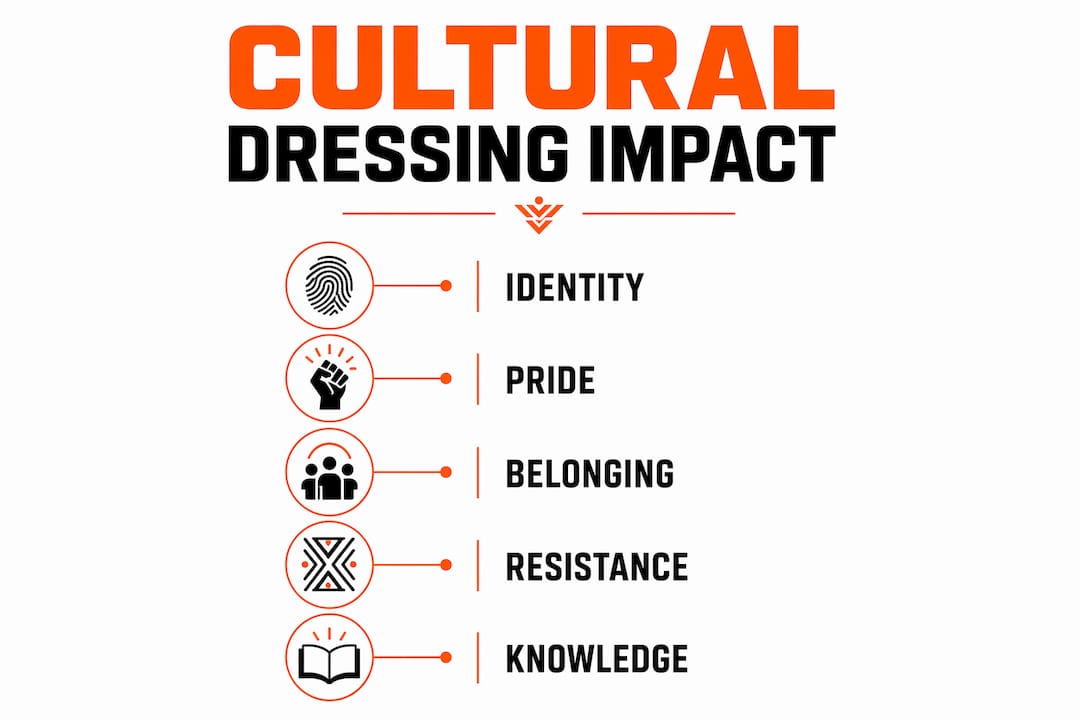
Intergenerational knowledge transfer happens through dress as well. When a grandmother teaches her granddaughter how to tie a headwrap or select the right kente pattern for an occasion, she is passing down cultural literacy. That knowledge does not survive in museums. It survives in daily practice.
How can you incorporate cultural elements into daily wear?
The most common barrier to everyday cultural dressing is the belief that it requires full traditional regalia. It does not. Cultural motifs blend naturally with modern streetwear, and that combination is where most people actually live their cultural identity day to day.
Here is a practical framework for building cultural dress into your regular wardrobe:
- Start with fabric and pattern. Choose modern cuts in culturally significant prints. A plain hoodie in Ankara print or a graphic tee featuring traditional symbols counts as cultural dressing. Afrourbanapparel builds this principle into every piece it produces.
- Use intentional fabric choices. Lightweight, breathable adaptations of traditional fabrics make everyday wear practical. You do not need to sacrifice comfort to honor your heritage.
- Layer cultural accessories. A beaded bracelet, a symbolic pendant, or a patterned scarf adds cultural meaning to any outfit without requiring a full wardrobe overhaul.
- Wear it without over-explaining. Confidence in cultural dress means wearing your garments without feeling obligated to justify them to others. Authentic expression does not require a lecture.
- Build gradually. Swap one item at a time. Replace a plain cap with a kufi. Swap a generic tote for one featuring traditional weaving patterns. Small shifts accumulate into a full cultural wardrobe.
The goal is not to perform culture. The goal is to live it. When you build a streetwear wardrobe with cultural roots, the result is clothing that feels personal because it is.
Pro Tip: When blending traditional motifs with jeans or casual wear, match the weight of the cultural element to the occasion. A bold kente-print jacket works for a social event. A subtle Adinkra symbol on a tee works for a Tuesday at the office.
How have global movements shaped cultural fashion today?
Cultural dressing has moved from the margins to the mainstream, and that shift is not accidental. Government programs, social media, and the slow fashion movement have all pushed traditional attire into everyday visibility.
Ghana’s Fugu Day is the clearest government-backed example. Every Wednesday, Ghanaians across workplaces and schools wear the batakari smock. The program has created a nationwide cultural confidence that no advertising campaign could replicate. It normalizes cultural dress in professional settings, which is exactly where it has historically been excluded.
Social media has done the same work at the individual level. Platforms like Instagram and TikTok have made it possible for diaspora communities to share cultural outfits with global audiences. A Nigerian American wearing aso-oke to brunch in Brooklyn reaches thousands of viewers who may never have seen the fabric before. That visibility normalizes cultural dress outside ceremonial contexts.
The slow fashion movement has also aligned with cultural dressing values. Slow fashion prioritizes quality, longevity, and ethical production. Traditional garments are built on exactly those principles. Artisan-woven fabrics, hand-dyed textiles, and locally sourced materials are both culturally authentic and environmentally responsible. Brands that blend traditional African aesthetics with modern design are participating in both movements at once.
| Driver | Effect on everyday cultural dressing |
|---|---|
| Government programs (e.g., Fugu Day) | Normalizes cultural attire in workplaces and schools |
| Social media visibility | Expands cultural dress beyond diaspora communities |
| Slow fashion principles | Aligns traditional craftsmanship with modern ethics |
| Diaspora retail brands | Makes culturally inspired streetwear accessible daily |
| Cultural fashion designers | Bridges traditional motifs with contemporary silhouettes |
The economic impact is real too. When consumers buy culturally inspired pieces from brands rooted in their communities, they support local artisans and keep traditional craft techniques alive. That is a direct economic argument for choosing cultural fashion over generic fast fashion alternatives.
Key Takeaways
Everyday cultural dressing is the most direct way to live your cultural identity, not just display it on special occasions.
| Point | Details |
|---|---|
| Definition of cultural dressing | It is the intentional daily wear of traditional garments, motifs, or symbols to express heritage and identity. |
| Cultural pride through clothing | Over 90% of Nigerian heritage community members view traditional elements as essential to daily pride. |
| Practical integration | Blend one cultural element at a time, such as a printed hoodie or symbolic accessory, into existing outfits. |
| Global movements matter | Programs like Ghana’s Fugu Day and slow fashion principles have made cultural dress a daily norm, not a special occasion. |
| Confidence is the core skill | Wearing cultural dress without over-explaining it is the defining act of authentic cultural expression. |
Why I think everyday cultural dressing is the most honest fashion choice you can make
People ask me whether cultural dressing is a trend. My answer is always the same: trends are things you adopt. Cultural dress is something you return to.
What I have observed over years of watching this space is that the people who wear their heritage daily are not making a statement for anyone else. They are not performing identity for social media. They are simply refusing to split themselves into a “cultural self” and an “everyday self.” That refusal is powerful.
The shift I find most significant is the move away from occasion-based cultural wear. A generation ago, many diaspora individuals reserved traditional dress for weddings, funerals, and cultural festivals. The idea that a kente-print hoodie or an Ankara graphic tee belongs in a Monday morning commute felt radical. Now it feels obvious. That change did not happen because fashion changed. It happened because people got tired of compartmentalizing their identity.
The balance between preservation and adaptation is where the real creativity lives. Wearing a traditional garment exactly as it was worn 200 years ago is preservation. Wearing its colors and patterns on a heavyweight cotton tee is adaptation. Both are valid. Both keep the culture alive. The mistake is treating adaptation as dilution. It is not. It is how culture survives contact with the modern world.
My honest advice: stop waiting for the right occasion. Your heritage is not a costume you put on for special events. It is the fabric of who you are. Wear it on a Tuesday.
— Kebz
Afrourbanapparel: cultural identity you can wear every day
Cultural dressing should not require a special occasion or a full traditional outfit. Afrourbanapparel was built on exactly that belief.
Every piece in the Afrourbanapparel collection fuses traditional African cultural elements with modern streetwear silhouettes. The heavyweight fabrics are built for daily wear, not display cases. The designs carry real cultural weight, from Adinkra-inspired graphics to pan-African color palettes, without sacrificing the comfort you need for everyday life. Whether you start with a Legacy Hoodie or an African-inspired graphic tee, you are choosing clothing that represents who you are, not just what is trending. Visit Afrourbanapparel and wear your identity every single day.
FAQ
What is everyday cultural dressing?
Everyday cultural dressing is the practice of incorporating traditional garments, patterns, colors, or cultural symbols into regular daily clothing. It is distinct from ceremonial dress because it is worn consistently, not only at cultural events.
Why is cultural dressing important for identity?
Clothing is one of the most visible ways people signal cultural belonging and personal identity. Research on everyday clothing preference factors confirms that people choose attire to communicate social and cultural affiliation, not just for practical reasons.
How do I start wearing cultural elements daily?
Begin with one item, such as a culturally patterned accessory, a printed tee, or a symbolic piece of jewelry. Intentional fabric and pattern choices allow you to express heritage without requiring a full traditional outfit.
What is the difference between cultural dressing and cultural appropriation?
Cultural dressing means wearing elements from your own heritage or from a culture you have a genuine connection to. Cultural appropriation refers to adopting elements from another culture without understanding or respect for their meaning, often for aesthetic purposes alone.
Can cultural dress work in professional settings?
Yes. Ghana’s Fugu Day program demonstrates that traditional attire can be normalized in workplaces at a national scale. Lightweight adaptations of traditional fabrics and subtle cultural motifs make heritage dress practical for professional environments.
Recommended
- Slow Fashion Cultural Wear: What It Means and Why It Matters – Afro Urban Apparel
- Cultural Fashion Versatility Checklist for Urban Pros – Afro Urban Apparel
- Cultural Fashion Economics Explained for Emerging Designers – Afro Urban Apparel
- Why Quality Streetwear Transcends Casual Wear – Afro Urban Apparel